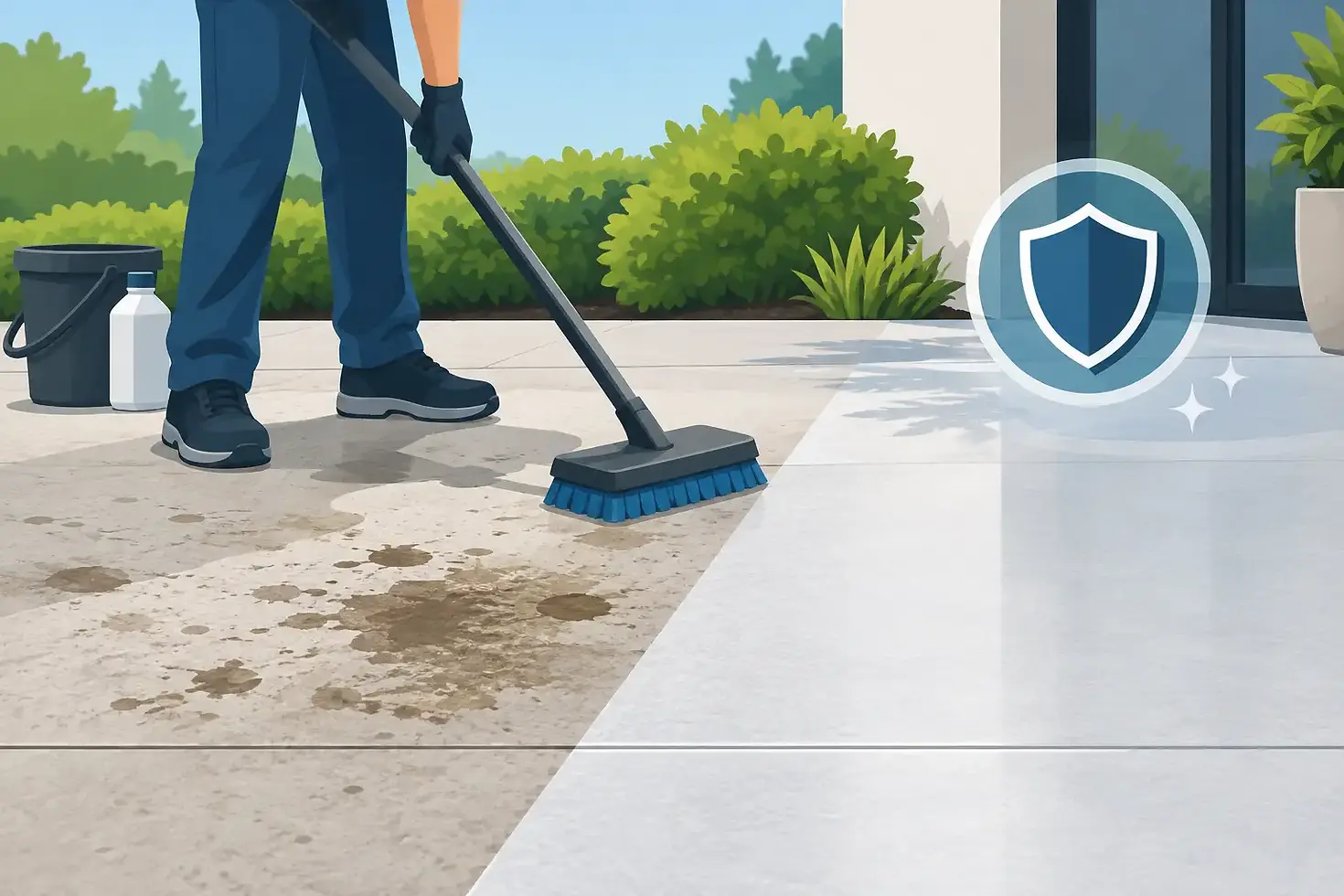
Concrete Stain Removal That Protects Your Outdoor Surfaces
A dark oil spot at the end of the driveway, rust streaks beneath a planter, or a green film across the patio can make an otherwise well-kept home look neglected. Effective concrete stain removal is not simply a matter of spraying harder. It requires identifying what caused the stain, choosing a cleaning method that suits the surface, and knowing when pressure can do more harm than good.
For homeowners in Hamilton and throughout central New Jersey, concrete takes a steady beating from changing seasons, parked vehicles, landscaping, foot traffic, and moisture. The right approach restores a cleaner, more inviting appearance while respecting the condition of the slab beneath it.
Why Concrete Stains Need a Careful Approach
Concrete may look solid and impenetrable, but it is naturally porous. Small openings in the surface allow water, oil, minerals, organic matter, and cleaning chemicals to move below the visible layer. That is why a fresh spill is often easier to remove than a mark that has been sitting through several hot summers or freezing winters.
The visible stain is only part of the issue. Moisture-related growth can make a walkway slick. Oil residue can keep attracting dirt. Rust stains may point to metal furniture, irrigation water, or exposed steel that needs attention. A harsh cleaning attempt can leave behind etching, uneven color, or distinct cleaning marks that are more noticeable than the original stain.
Experienced surface care begins with restraint. The goal is not to make every concrete surface look brand new at any cost. It is to improve its appearance safely, clean it evenly, and preserve its serviceable condition.
Match the Concrete Stain Removal Method to the Stain
A patio stain, driveway stain, and poolside discoloration may look similar from a distance, but they do not always respond to the same treatment. Applying the wrong cleaner is one of the most common reasons homeowners get disappointing results.
Oil, Grease, and Vehicle Fluid Stains
Driveways commonly collect motor oil, transmission fluid, grease, and tire marks. These stains bond to porous concrete, especially when heat bakes them in. Surface rinsing alone may lift loose dirt while leaving a dark shadow behind.
Oil treatment generally calls for a degreasing process designed to pull contamination from the pores before rinsing. Older stains may require more than one application, and a faint residual mark is sometimes realistic after years of absorption. The condition of the concrete, the age of the spill, and whether a sealer was previously applied all affect the outcome.
Rust and Mineral Discoloration
Orange-brown stains can come from metal patio furniture, tools, fertilizer, well water, or irrigation overspray. Rust removers can be effective, but strong acidic products need careful handling. Used incorrectly, they can alter the concrete’s finish, damage nearby plants, or create pale etched areas.
Mineral deposits often appear as white, chalky residue. These marks are especially common where water repeatedly evaporates on steps, walkways, and foundations. The source of the moisture should be considered along with cleaning. Otherwise, the stain may return shortly after the surface looks better.
Mold, Mildew, Algae, and Organic Stains
Shaded patios, north-facing walkways, and areas beneath trees are prime locations for green algae, black mildew, leaf tannins, and general organic buildup. These stains affect curb appeal, but they can also create slippery conditions when wet.
Organic cleaning should address the growth rather than merely blast away its top layer. A properly selected treatment, enough dwell time, and an even rinse can produce a more consistent result than pressure alone. Nearby landscaping, painted surfaces, and wood features should be protected throughout the process.
Paint, Sealers, and Construction Residue
Paint drips, old coating failure, mortar haze, and adhesive residue are more complicated. Their removal depends on the product involved and how deeply it has bonded to the concrete. Aggressive grinding or stripping may solve one problem while changing the surface texture or appearance.
This is a situation where testing a small, less-visible area is especially valuable. Some marks are best reduced rather than chased until the surrounding concrete becomes uneven.
Pressure Washing Is Useful, but It Is Not the Whole Job
Professional-grade pressure washing can transform weathered concrete when it is paired with proper preparation and control. It removes embedded dirt, rinses away treatment residue, and restores a cleaner, more uniform surface. Yet pressure is a tool, not a stain diagnosis.
Too much pressure or the wrong nozzle can cut lines into concrete, expose weak aggregate, and leave a striped finish. This is particularly risky on older slabs, decorative concrete, patched areas, and surfaces that have begun to wear at the top layer. A clean surface should look consistently refreshed, not scarred by the cleaning process.
Water flow, nozzle selection, cleaning chemistry, dwell time, and rinsing technique all matter. So does containment. Runoff should be managed with care around planting beds, siding, doors, and drainage areas. Quality work is visible not only in the finished patio or driveway, but also in how well the surrounding property is respected.
A Professional Process for Cleaner, More Even Concrete
The best results come from a deliberate sequence rather than a quick pass with a pressure washer. First, the area is inspected for stain type, surface wear, cracks, drainage concerns, and nearby materials that need protection. Loose debris is cleared so treatment can reach the concrete evenly.
Next, targeted cleaning solutions are applied where needed. Oil stains, biological growth, and mineral marks may each require different handling. The product must remain on the surface long enough to work, but not so long that it dries out or affects adjacent materials.
After treatment, the concrete is cleaned in controlled sections. This helps prevent visible overlap marks and missed areas. A thorough rinse follows, including edges, joints, and transitions where residue can collect. If a stain has been deeply absorbed, a second treatment may be more effective than turning up the pressure.
Finally, the surface is reviewed once it has dried. Wet concrete can temporarily hide discoloration, so a true evaluation should account for how the slab looks after moisture has evaporated. This attention to detail is what separates basic washing from appearance-focused restoration.
When a Stain May Not Fully Disappear
Homeowners deserve straightforward expectations. Not every stain can be erased completely, especially on older concrete. Deep oil penetration, long-term rust, failed coatings, and heavy weathering can leave permanent changes in color or texture.
A professional cleaning can still make a major difference. Removing surface contamination, reducing contrast, and restoring the overall uniformity of the area often improves the appearance more than homeowners expect. But when the concrete itself has been chemically altered or physically damaged, replacement, resurfacing, or a compatible coating may be the better long-term choice.
It also depends on the location. A faint remaining mark on a working driveway may be acceptable after cleaning, while a highly visible patio near an outdoor entertaining area may justify additional restoration work. The right recommendation should suit the surface, the budget, and the way the space is used.
Keep New Stains From Becoming Permanent
Concrete care does not end once the cleaning is complete. Address fresh oil spills promptly with an absorbent material and appropriate cleaner rather than allowing them to sit. Move metal furniture occasionally, use protective feet beneath planters, and avoid leaving wet leaf piles on patios through the season.
Good drainage matters as well. Water that continually pools against a walkway or patio encourages algae, mineral deposits, and freeze-thaw wear. Keeping gutters, downspouts, and landscape grading in good order can reduce the conditions that create recurring stains.
For suitable surfaces, a quality sealer can provide another layer of protection. Sealers are not a cure for existing damage, and they need to be selected carefully for the concrete’s age, finish, and use. Still, when properly applied, they can make future cleanup easier and help preserve a more consistent appearance.
Local Surface Care Built on Experience
Concrete is part of the larger picture of a home’s exterior. A clean driveway makes painted trim look sharper. A refreshed patio gives restored decking and outdoor furniture a better setting. These details work together to protect the pride homeowners take in their property.
With 33 years of hands-on exterior-care experience, Deck Wrangler Power Washing and Painting Co. approaches stained concrete with the same care given to decks, exterior woodwork, and painted surfaces. Tradition meets precision when each material is cleaned according to what it needs, not treated as another quick job.
A well-cleaned concrete surface should feel like it belongs with the rest of a cared-for home: safer underfoot, cleaner in appearance, and ready for the seasons ahead.


Comments