
Best Deck Stain for Old Wood That Lasts
An old deck does not need to look new to look well cared for. In fact, the best deck stain for old wood is usually the one that respects the wood's age, covers its imperfections appropriately, and protects it from the next round of New Jersey sun, rain, humidity, and winter moisture.
That choice is rarely as simple as picking a color from a paint-store display. Weathered boards absorb stain differently than newer lumber. Some decks are gray and dry but structurally sound; others have peeling finish, deep checking, soft spots, or years of neglected mildew. A good-looking finish begins with an honest reading of the surface beneath it.
The Best Deck Stain for Old Wood Depends on Its Condition
Before choosing a product, look closely at the deck itself. If the boards still have a fairly even tone and visible grain, a semi-transparent stain can preserve that natural character while adding water resistance and UV protection. It is a handsome option for a deck that has aged gracefully and has been properly cleaned.
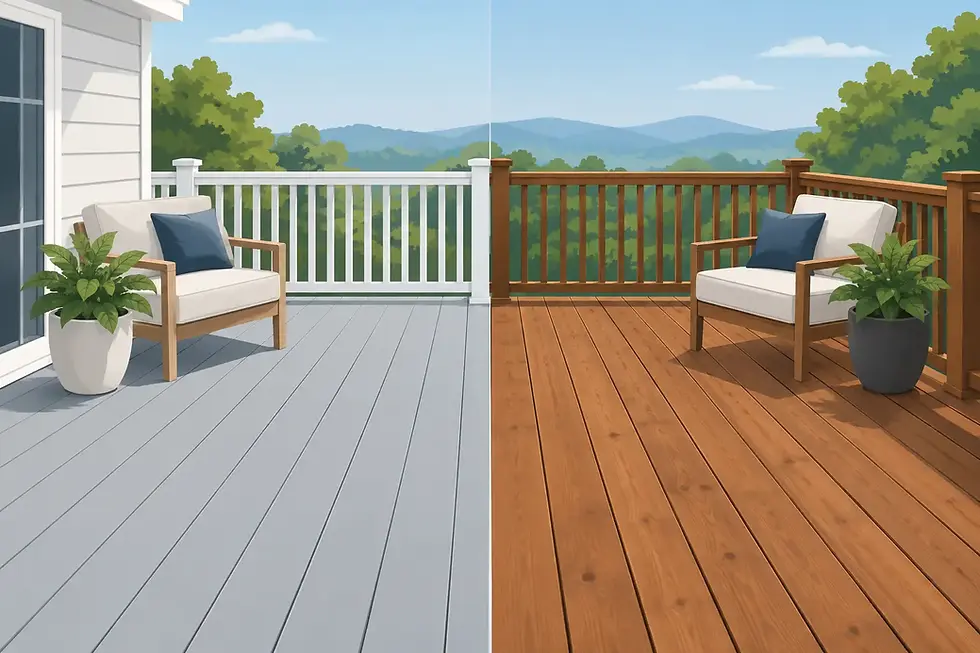
For wood with uneven fading, stubborn discoloration, old stain remnants, or small cosmetic flaws, a semi-solid stain is often the better balance. It provides more color consistency than a transparent product while still allowing some of the grain and texture to show through. Many older decks benefit from this middle ground because it refreshes the appearance without making the surface look coated in paint.
Solid-color deck stain offers the strongest coverage. It can be an excellent choice for older boards with significant color variation, patching, or visual wear, especially when the homeowner wants a clean, uniform finish. The trade-off is that solid stain hides more of the wood's natural grain and requires close attention to future maintenance. It should never be used to disguise boards that are rotten, loose, or unsafe.
The right stain is not simply the darkest or thickest one. It is the finish that fits the deck's actual condition and your expectations for appearance and upkeep.
Opacity Matters More Than a Perfect Color Chip
A color chip can be useful, but it cannot tell you how a stain will settle into old, thirsty wood. Aged boards often take in more product in some places than others. End grain, repaired areas, and high-traffic paths may darken differently from the rest of the deck.
This is why a test area is worth the effort. Apply the intended stain to a few representative boards after cleaning and drying the deck. Check it in direct sunlight and in shade. A warm cedar or brown tone that looks balanced on one board may appear much darker on a heavily weathered section.
For many established homes in Hamilton and surrounding New Jersey communities, natural brown, cedar, and driftwood-inspired tones remain practical choices. They complement brick, siding, and landscaping while handling ordinary dust and pollen better than very light finishes. Still, the home should lead the color decision. A deck is part of the property's architecture, not an isolated surface.
Oil-Based vs. Water-Based Deck Stain
Both oil-based and water-based stains can perform well when the preparation is right. The better choice depends on the wood, the existing coating, the desired appearance, and how the deck is used.
Oil-based penetrating stains are often valued for the way they soak into weathered wood and enrich the grain. On older, dry boards, that penetrating quality can provide a natural-looking finish rather than a surface film. They may also offer a forgiving appearance as the deck ages, since many penetrating products fade gradually instead of peeling dramatically.
Water-based stains have their own advantages. They generally dry more quickly, retain color well, and can be easier to maintain in the right application. Modern water-based formulas can provide excellent protection, but they need a clean, dry, properly prepared surface to bond correctly. Applying them over loose old coatings or damp wood invites uneven results.
The key is compatibility. If a deck has an existing finish, the new stain must work with what remains after surface preparation. Applying an incompatible product can lead to peeling, blotchiness, or premature failure. This is one reason experienced deck restoration work begins with evaluating the old coating rather than guessing at it.
Preparation Decides Whether Stain Lasts
No premium stain can make up for poor preparation. Old wood collects years of grime, mildew, sunscreen residue, leaf tannins, and failing finish. Those contaminants block penetration and interfere with adhesion.
A careful restoration process begins with appropriate cleaning, not aggressive blasting. Power washing can be useful, but too much pressure can fur up the grain, scar soft wood, and leave a deck looking rougher than it did before. The goal is to remove surface contamination and loose material while preserving the integrity of the boards.
After cleaning, the deck needs time to dry thoroughly. Staining damp wood can trap moisture and prevent a proper bond. The exact drying time changes with shade, temperature, humidity, and recent weather, which is why a fixed one-size-fits-all schedule is unreliable.
Once dry, the deck should be inspected again. Raised grain may need sanding for a smoother barefoot surface. Loose fasteners should be addressed. Cracked boards, soft areas, and decay should be repaired or replaced before staining begins. Stain protects wood from the elements, but it is not a structural repair product.
Look for Protection, Not Just a Fresh Appearance
The best deck stain for old wood should offer water repellency and UV defense while allowing the wood to breathe appropriately. Water that beads and runs off is helpful, but appearance alone is not the whole measure of protection. A quality stain should also reduce moisture absorption that can contribute to swelling, cracking, and seasonal movement.
Sun exposure deserves particular attention. Decks that receive full afternoon sun usually need more regular maintenance than decks protected by mature trees or a covered porch. Transparent and semi-transparent stains show more grain, but their lighter coverage may require more frequent refreshing on heavily exposed boards. Semi-solid and solid stains typically provide more UV shielding, which can be a worthwhile trade for a deck that bakes in summer sunlight.
Do not assume that a thicker application will last longer. Overapplying stain can leave a sticky or uneven surface, attract dirt, and create premature wear. Older wood should receive the amount of product it can properly absorb or support, following the product's application requirements and the deck's condition.
Maintenance Keeps an Older Deck Looking Intentional
A restored deck stays attractive through routine attention, not neglect followed by a major rescue every few years. Sweep away leaves and debris so moisture does not sit against the boards. Move planters periodically, clean spills promptly, and watch for areas where water consistently pools.
Spring is a smart time to assess the finish after winter. Look for fading in traffic lanes, worn steps, exposed end grain, and water that soaks into the wood quickly rather than beading. Addressing those areas early can extend the life of the overall finish and reduce the scale of future restoration work.
The maintenance interval varies widely. A covered deck may hold its finish much longer than one exposed to direct sun, rain, and snow. Wood species, prior coatings, foot traffic, and drainage all affect the schedule. A trustworthy recommendation should reflect those details rather than promise the same lifespan for every deck.
When Professional Evaluation Is Worth It
Some older decks are straightforward candidates for cleaning and staining. Others need a closer look before any finish is selected. Deep splits, soft boards, recurring mildew, widespread peeling, or an unknown history of coatings can all change the correct approach.
Deck Wrangler Power Washing and Painting Co. brings 33 years of skill and attention to detail to this kind of evaluation. A seasoned deck-care professional can identify when careful cleaning and a semi-solid stain will restore the surface beautifully, and when repairs, sanding, or a solid-color finish are the wiser investment.
Your deck has already carried years of family dinners, summer gatherings, wet boots, and changing seasons. Give its next finish the same level of consideration. With sound preparation and a stain chosen for the wood that is actually there, an older deck can remain a welcoming, durable part of the home for years to come.

Comments