
Deck Mold Removal That Protects Your Investment
A deck can look tired long before it is truly worn out. Dark green patches between boards, black spotting along railings, and a slick surface after rain are often signs that moisture has been allowed to settle in. Proper deck mold removal does more than improve the view from your back door. It helps protect the surface you walk on, preserves the character of the wood, and gives protective finishes a sound foundation.
For homeowners in Hamilton and throughout Central New Jersey, this is a familiar problem. Humid summers, shaded yards, leaf debris, snow, and wet spring weather can all create the conditions mold needs to grow. The right response is not simply blasting the deck with water. It is careful surface restoration - tradition meets precision.
Why Mold Builds Up on Decks
Mold needs moisture, organic material, and limited airflow. A deck offers all three when leaves collect along the edges, planters sit in one place for too long, or boards remain shaded beneath trees. Pollen, dirt, and airborne debris form a thin film on the surface. Once that film stays damp, mold and mildew have a place to take hold.
Wood decks are especially vulnerable because they absorb and release moisture with changing weather. Small gaps in a failing stain or sealer allow water to enter the grain. Composite decks do not absorb moisture in the same way, but they can still develop surface mold where dirt and moisture collect.
Not every dark mark is mold. Some stains come from tannins in the wood, rusting fasteners, ground-in dirt, or an aging finish. That distinction matters. Treating every discoloration the same way can leave behind stains, damage the finish, or create an uneven appearance once the deck dries.
Deck Mold Removal Is About More Than Appearance
A green or black deck surface can make an otherwise well-kept home feel neglected, but the concern is larger than curb appeal. Mold growth can make boards slippery, particularly near steps, handrails, and areas that receive little sun. For families, guests, and anyone carrying food or furniture outside, that loss of traction deserves attention.
On a wood deck, recurring mold also signals that the surface may not be shedding water as it should. If the protective coating has worn thin, moisture can remain in the wood longer and encourage more growth. Over time, this cycle can contribute to checking, splintering, fading, and premature finish failure.
A clean deck is not automatically a protected deck. The best restoration approach considers what caused the growth, whether the existing finish is still doing its job, and what the surface needs next. Sometimes a thorough cleaning is enough. In other cases, cleaning reveals that staining, sealing, or painting is the necessary next step.
Why Aggressive Pressure Washing Can Cause Damage
Pressure washing is useful when it is matched to the material and the condition of the surface. It becomes a problem when pressure is treated as the solution to every stain. Too much force can tear up soft wood fibers, leave wand marks, carve grooves in boards, and raise the grain until the deck feels rough under bare feet.
That damage may not be obvious while the boards are wet. Once the deck dries, fuzzy fibers and uneven cleaning patterns can stand out sharply. A deck may look cleaner for a day, then require extra sanding and preparation before it can be properly protected.
Experienced deck care begins with an inspection. The wood species, age of the deck, condition of the rails, existing coating, shaded areas, and degree of buildup all influence the method. A controlled application of the appropriate cleaner, sufficient dwell time, careful agitation where needed, and a measured rinse often produce a better result than raw pressure alone.
Composite decking also calls for a thoughtful approach. Certain cleaners or excessive pressure can affect its surface appearance, and mold may be concentrated in grooves or textured areas. The goal is always to remove buildup without creating a new problem.
A Careful Process for Removing Mold From a Deck
Professional deck mold removal follows a sequence because each stage supports the next. Skipping steps can produce a quick visual improvement without addressing the conditions that lead to repeat growth.
Inspection Comes Before Cleaning
The work begins by looking closely at the deck. Are there loose boards, popped fasteners, soft spots, peeling paint, or areas where water pools? Is the growth limited to surface mildew, or is the deck carrying heavy organic buildup beneath furniture and along the perimeter? These details determine how the surface should be cleaned and whether repairs or finish work should be planned.
Nearby landscaping, siding, windows, and outdoor furnishings also need protection. Detail work matters here. A deck is part of a larger outdoor space, not an isolated rectangle of boards.
Cleaning Should Respect the Surface
After the area is prepared, a suitable deck cleaner is used to break down mold, mildew, dirt, and organic residue. The product needs time to work, but it should not be allowed to dry on the surface. Stubborn spots may require careful brushing rather than more pressure.
The deck is then rinsed methodically so residue is not left in board gaps, around posts, or near the house. When cleaning wood, the rinse is controlled to protect the grain and avoid forcing water where it does not belong. This is where experienced hands make a visible difference.
Drying Reveals What the Deck Needs Next
Wet boards can hide the true condition of the wood. Once the deck is allowed to dry thoroughly, a clearer picture emerges. Some surfaces regain their natural warmth and only need routine maintenance. Others reveal worn stain, uneven color, exposed grain, or paint that has reached the end of its service life.
If a protective finish is needed, timing is essential. Applying stain, sealer, or paint before the deck is dry can trap moisture and shorten the life of the coating. Proper preparation may include spot sanding, addressing peeling areas, or conditioning the surface so the finish adheres evenly.
How to Keep Mold From Returning
No exterior surface stays maintenance-free in New Jersey weather, but a few habits can significantly reduce recurring mold. Keep gaps between boards clear so rainwater can drain. Sweep away leaves, acorns, pollen, and soil before they become a damp layer on the surface. Move rugs, planters, and furniture occasionally so those areas can dry.
Trim back dense vegetation when practical. Better airflow and a little more sunlight can make a noticeable difference in heavily shaded areas. Check gutters and downspouts as well. A downspout that empties near the deck can keep one section wet long after the rest has dried.
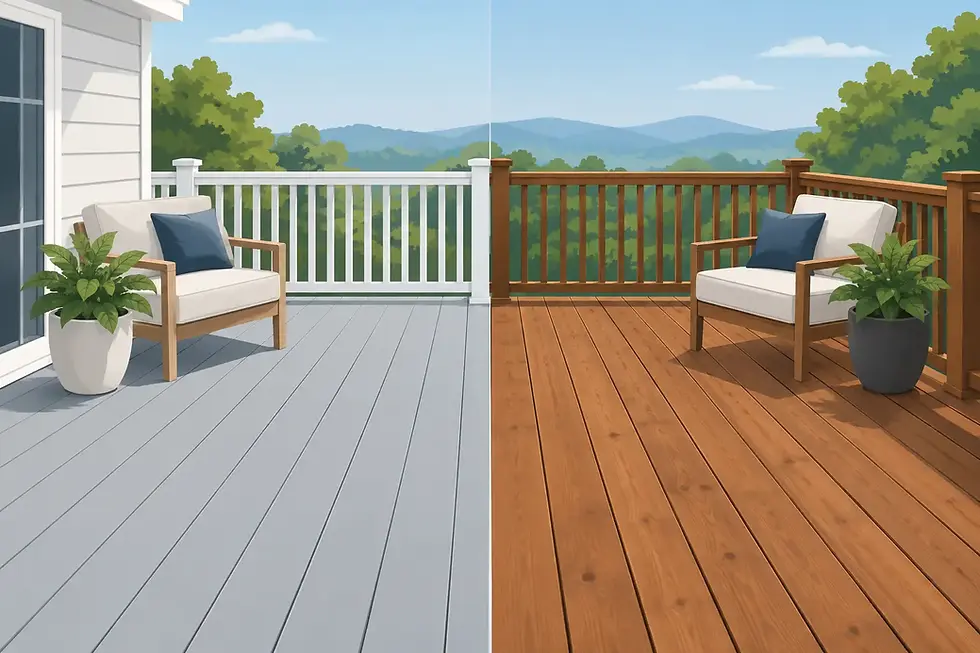
Protective coatings are part of prevention, not just decoration. A quality stain, sealer, or paint system helps manage water exposure while bringing back a finished appearance. The right choice depends on the material, the desired look, and how much wear the deck receives. A clear sealer may preserve a more natural wood look, while a solid-color coating can provide stronger visual coverage on an older deck with uneven color. Each option has trade-offs, and surface preparation determines how well either one performs.
When It Is Time to Bring in a Deck Care Professional
Routine light buildup can sometimes be managed with regular cleaning, but certain conditions call for a closer evaluation. Consider professional help when the deck is slippery, discoloration returns quickly, the surface has peeling paint or failing stain, boards feel rough after prior pressure washing, or mold is appearing around railings and structural connections.
It is also wise to call when you are preparing for a deck staining or painting project. Cleaning is not a separate chore to rush through before applying a finish. It is the preparation stage that affects the appearance, adhesion, and durability of the work that follows.
Deck Wrangler Power Washing and Painting Co. brings 33 years of skill and attention to detail to exterior surfaces throughout the Hamilton area. The focus is not high-volume cleaning. It is careful restoration that respects the materials, the home, and the years of enjoyment a well-kept deck can provide.
A clean, dry, properly protected deck makes it easier to enjoy the first warm weekend, host a family meal, or simply step outside without wondering what the weather has done to the boards. Address mold while it is a surface problem, and your deck has a far better chance to remain an attractive, dependable part of your home for years to come.

Comments