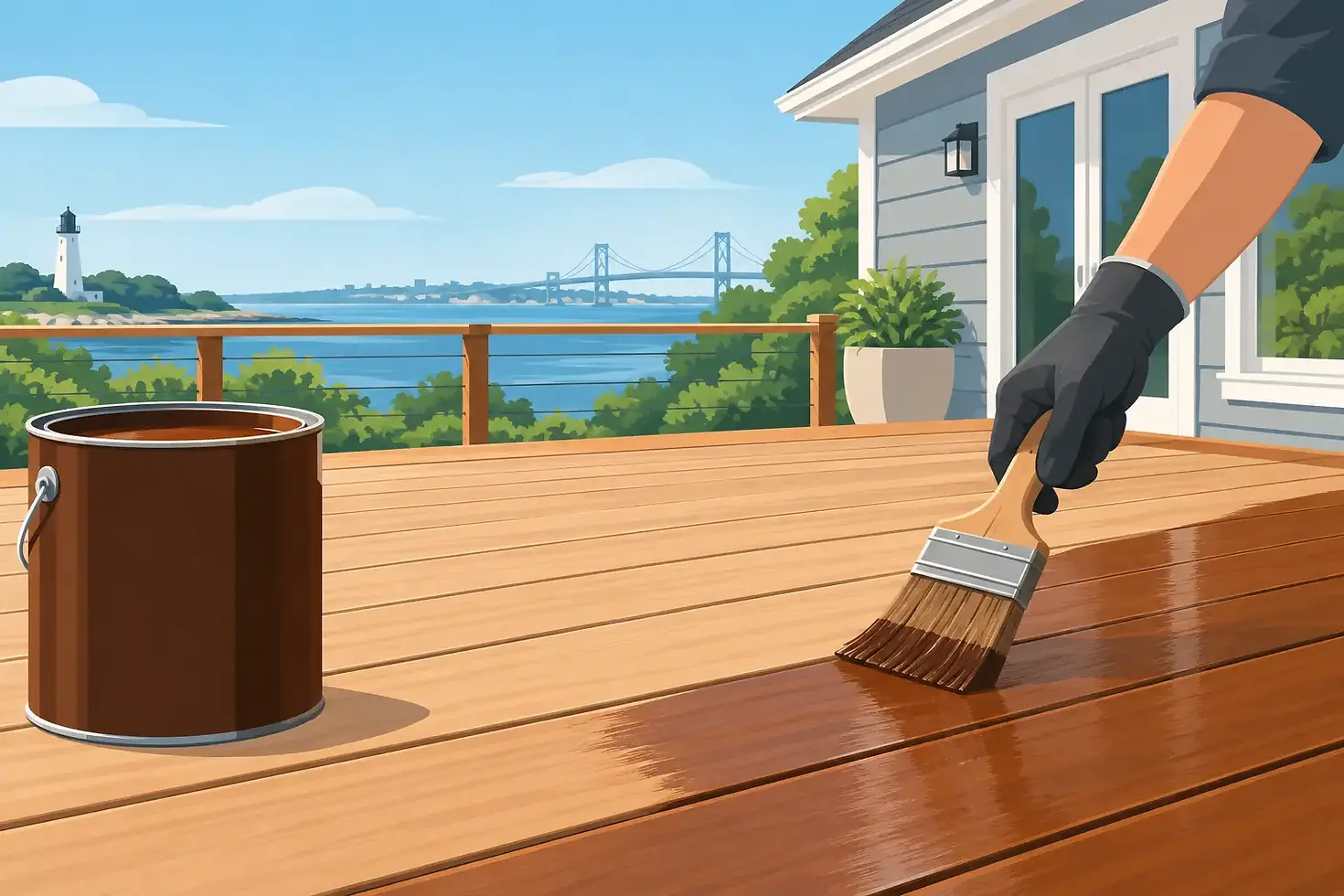
Deck Staining That Protects New Jersey Homes
A deck can go from a favorite gathering place to a tired-looking chore in just a few New Jersey seasons. Sun bleaches the boards, rain works into exposed grain, and shaded areas collect mildew that makes the surface look darker and feel less inviting. Proper deck staining does more than refresh the color. It places a protective finish between your wood and the weather that works on it every day.
For homeowners in Hamilton and throughout the surrounding area, the right stain can restore the character of a deck without hiding what makes real wood appealing. The key is not simply choosing a color. It is preparing the surface correctly, selecting a finish that suits the wood, and applying it with the care the material requires.
Why Deck Staining Is a Preservation Project
Wood is constantly responding to moisture and temperature changes. When rain, humidity, snow, and strong summer sun reach unprotected boards, the wood expands, contracts, dries out, and gradually loses its natural stability. That cycle can lead to fading, splintering, surface cracking, raised grain, and early deterioration.
A quality stain helps slow that process. Depending on the product selected, it can repel water, reduce UV damage, and add color that brings a weathered surface back into balance. It will not repair structural damage or reverse deeply rotted boards, but it can help sound wood remain attractive and serviceable for much longer.
This is why staining should be viewed as routine care, not a last-minute cosmetic fix. Waiting until a deck is peeling, severely gray, or soft underfoot often turns a straightforward maintenance project into a more involved restoration. Addressing wear at the proper time protects both the appearance of the space and the investment beneath it.
Preparation Determines the Finish
Even the best stain cannot perform well on a poorly prepared deck. Dirt, pollen, algae, old failing coatings, and loose wood fibers interfere with absorption. If a finish is applied over those problems, it may look acceptable at first but wear unevenly far sooner than it should.
A careful process begins with an honest inspection. Boards should be checked for cracks, loose fasteners, popped nails, damaged railings, and areas of rot. A deck with solid framing may only need cleaning and surface preparation. One with soft boards or unstable steps needs repairs before any stain is applied. Covering a problem with color is never a durable solution.
Cleaning also calls for judgment. Power washing can remove embedded grime and old surface residue, but excessive pressure can scar the wood and leave it fuzzy. Different woods, ages, and conditions require different approaches. The goal is a clean, even surface that is ready to receive stain, not wood that has been aggressively stripped or damaged.
After cleaning, the deck needs adequate dry time. This step is easy to underestimate, especially after a stretch of humid weather. Stain applied to damp wood may not penetrate evenly and can fail prematurely. A professional assessment considers more than the forecast. It considers shade, airflow, prior moisture exposure, and the condition of the boards themselves.
Choosing the Right Deck Stain
There is no single best stain for every deck. The right choice depends on the wood species, the deck's age, its exposure to sun and moisture, and how much natural grain the homeowner wants to see.
Transparent and semi-transparent stains allow more of the wood character to show through. They are often a good choice for newer wood or decks with attractive grain, but they may require more frequent maintenance in full sun. Semi-solid stains offer more color and greater coverage while still retaining some texture and grain definition. Solid stains provide the most uniform appearance and are often useful when boards have uneven color, old staining history, or visual imperfections.
The trade-off is simple: more opacity can offer a more consistent color and hide more weathering, while less opacity preserves more natural variation. Neither is automatically better. A deck that receives intense afternoon sun may benefit from a finish chosen for stronger protection, while a covered porch may allow for a more transparent look.
Color deserves consideration as well. Lighter shades can feel clean and traditional, while deeper tones can create a richer contrast with siding, stone, or landscaping. Very dark finishes may absorb more heat in sunny locations, which can make the boards uncomfortable on bare feet. The best result complements the home and fits how the space is actually used.
Timing Matters in New Jersey
Deck staining is not a job to rush between rainstorms. Temperature, humidity, direct sun, and expected rainfall all affect how a coating dries and cures. Conditions that are too hot can cause stain to dry before it has time to penetrate evenly. Conditions that are too damp can delay curing and affect adhesion.
Spring and fall are often productive seasons for exterior wood care because temperatures can be more moderate. Still, every project needs to be judged by the actual weather window, not the calendar alone. A protected deck in a breezy yard behaves differently from a heavily shaded deck surrounded by mature trees.
Homeowners can watch for early signs that it may be time to plan service. Water that no longer beads on the surface, noticeable fading, mildew growth, rough patches, and worn pathways near doors or stairs are all signals that the existing protection may be weakening. Acting before widespread peeling or deterioration appears usually gives better options for restoration.
What a Professional Finish Should Look Like
A well-stained deck should not look like it was covered in a thick layer of paint unless a solid-color system was intentionally selected. The finish should appear even, with no lap marks, puddling, sticky areas, or missed edges along railings and steps. On penetrating stains, the wood grain should remain visible in a natural, balanced way.
Details make the difference. Railings, balusters, fascia boards, stair risers, and the edges of deck boards need the same attention as the broad walking surface. Protecting nearby siding, landscaping, masonry, and outdoor furniture is equally important. A polished project respects the entire property, not only the boards being coated.
At Deck Wrangler Power Washing and Painting Co., that careful approach is grounded in 33 years of hands-on exterior-care experience. Preparation, product selection, and application are treated as connected parts of a restoration process. Tradition meets precision when each surface is evaluated for its own condition rather than handled with a one-size-fits-all method.
Keeping a Stained Deck Looking Its Best
A new stain job should make maintenance easier, but it does not make maintenance unnecessary. Sweep away leaves and debris so moisture does not sit against the boards. Move planters occasionally, especially if they trap water beneath them. Clean spills promptly, and keep an eye on areas under grills, near downspouts, and along shaded edges where moisture tends to linger.
Gentle periodic cleaning can remove pollen, dirt, and organic buildup before they become embedded. Avoid harsh cleaners or unnecessarily aggressive pressure, which can shorten the life of the finish. When the protective qualities begin to fade, a maintenance coat applied at the right time can be far simpler than waiting for full stripping or extensive repairs.
Your deck should feel like an extension of your home: a place for quiet mornings, family dinners, and time outdoors without worrying about splinters, fading, or neglected wood. When its finish begins to show wear, a thoughtful evaluation and skilled restoration can bring that space back to the condition it deserves.


Comments