Can Decks Warp? Causes, Repairs, and Prevention
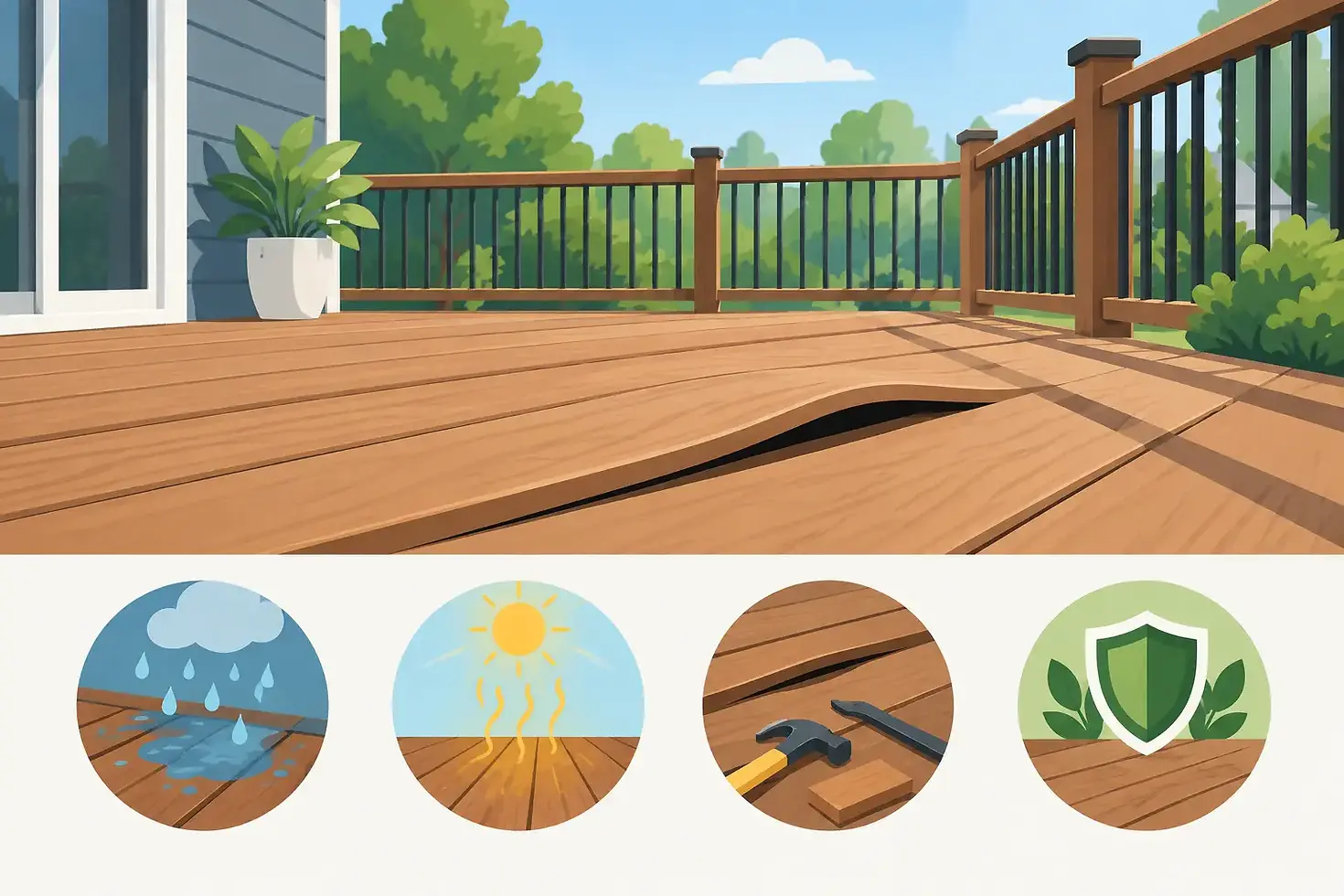
A deck can look perfectly sound in spring, then develop raised edges, crooked boards, or a wavy walking surface after a humid New Jersey summer. So, can decks warp? Yes. Wood decking can cup, bow, twist, and crown when moisture, heat, installation details, and years of exposure work against it. The good news is that early attention can often preserve both the appearance and useful life of the deck.
Warping is not always a sign that the entire structure is failing. Sometimes it is limited to a handful of boards. Other times, it points to ongoing moisture problems, poor drainage, deteriorated fasteners, or wood that has reached the end of its serviceable life. Knowing the difference matters before any cleaning, staining, painting, or repair work begins.
What Does a Warped Deck Look Like?
Homeowners often use the word “warped” to describe several different conditions. Cupping occurs when the edges of a deck board lift higher than its center. Crowning is the opposite, with the center standing higher than the edges. Boards may also bow from side to side, twist along their length, or pull upward around fasteners.
These changes affect more than curb appeal. Raised board edges can catch bare feet, loose fasteners can become a safety concern, and uneven boards can hold water where it should drain away. A deck that feels uneven underfoot deserves a closer look before it receives a new finish.
Why Deck Boards Warp
Wood is a natural material. It expands as it absorbs moisture and contracts as it dries. That movement is normal, but it becomes troublesome when one face of a board takes on or releases moisture faster than the other.
Rain, Humidity, and Slow Drying
Hamilton-area decks endure rain, summer humidity, leaf debris, snow, and repeated freeze-thaw cycles. When water sits on the deck surface, gathers between boards, or remains trapped beneath planters and outdoor rugs, the wood stays damp longer than it should. The top and bottom of the boards then dry at different rates, creating stress that can lead to cupping or twisting.
Shade can add to the problem. A deck beneath dense trees may be comfortable in July, but limited sunlight and restricted airflow can keep boards wet after rain. Mildew, algae, and surface grime can hold additional moisture against the wood.
Sun and Heat Exposure
Strong sun can dry deck boards quickly, particularly on open, south-facing decks. Rapid drying is hard on unprotected wood, especially when the underside remains damp. Dark finishes can also make the surface substantially hotter, which increases expansion and contraction over time.
Sun alone does not automatically warp a deck. The concern is the repeated cycle of wet conditions followed by intense drying. A properly maintained finish helps slow that moisture exchange and gives the boards more consistent protection.
Gaps, Fasteners, and Installation Details
Deck boards need appropriate spacing to shed water and allow seasonal movement. Boards installed too tightly can press against one another as they swell. That pressure may cause edges to lift or boards to buckle.
Fasteners matter as well. Corroded nails, screws that have loosened, or fasteners placed too close to an edge can allow boards to shift. Joist spacing, the direction of board installation, and the condition of the framing below also influence how flat a deck stays. A surface issue may be visible first, but a careful inspection should consider what is supporting it.
Aging Wood and Missed Maintenance
Even quality lumber has limits. Years of unsealed exposure can leave boards dry, checked, splintered, and more vulnerable to moisture penetration. Once a board has severely twisted, cracked deeply, or begun to decay, cleaning and coating alone will not make it reliable again.
This is why deck care is best treated as preservation, not a last-minute cosmetic project. Regular cleaning and protective maintenance cost less than allowing small surface problems to become widespread board replacement.
Can Warped Deck Boards Be Repaired?
It depends on the type and extent of the movement. Slight cupping may improve as the wood dries, although the board may not return fully to its original shape. If boards are still solid, securely attached, and only mildly uneven, a restoration professional may be able to address the surface as part of a broader preparation and finishing plan.
Severely bowed, split, loose, or rotten boards should generally be replaced. Trying to force a badly twisted board flat can crack the wood, damage adjacent boards, or leave a short-lived repair. Replacement is often the better value when the defect creates a trip hazard or compromises the deck’s finished appearance.
A reliable assessment also checks the joists, ledger area, stairs, railings, and hardware. If several boards are warping in the same area, there may be a drainage issue or framing concern beneath them. Replacing only the visible boards without correcting the cause can lead to the same problem again.
Why Aggressive Pressure Washing Can Make Matters Worse
A weathered deck should not be treated like a driveway. Excessive pressure, the wrong tip, or washing too close to the surface can fur up wood grain, gouge softer areas, and drive water into vulnerable boards. That can leave the deck rougher, less even, and harder to finish well.
Professional power washing is about controlled cleaning, not brute force. The right method accounts for the wood species, board condition, existing coating, and the level of buildup. After cleaning, the deck needs sufficient drying time before protective treatments are applied. Rushing from wash day to coating day can trap moisture and undermine the finish.
For painted decks, preparation requires the same patience. Loose paint must be removed responsibly, damaged areas need repair, and the surface must be clean and dry enough for new coatings to adhere. A fresh color can be beautiful, but it should never be used to hide loose or failing boards.
How to Help Prevent Deck Warping
The most practical protection is consistent moisture management. Keep leaves, pollen, and dirt from collecting between boards. Move planters and furniture occasionally so those areas can dry. Avoid leaving waterproof rugs in place through wet seasons, since they can trap water against the deck surface.
Pay attention after storms. If puddles repeatedly form in one location, identify why. The solution may be as simple as clearing a blocked gap, or it may involve correcting a board, a nearby gutter discharge, or the drainage around the deck.
A well-maintained protective finish is another essential layer of defense. Stains, sealers, and paint systems do not stop wood from moving altogether, but they help reduce the speed and severity of moisture absorption. The right product depends on the condition of the surface and the look you want to maintain.
Finally, inspect the deck at least once each year. Look for lifting edges, popped fasteners, soft spots, deep checks, peeling coating, and areas that remain damp. Small repairs made early are usually cleaner, safer, and more economical than widespread restoration later.
When to Call a Deck Care Professional
A few minor board imperfections may be manageable, but certain signs call for an experienced inspection: widespread cupping, recurring standing water, boards pulling free, spongy areas, rot, loose railings, or visible movement around stairs and connections. These are not conditions to cover with a quick coat of stain.
Deck Wrangler Power Washing and Painting Co. approaches worn deck surfaces with 33 years of hands-on skill and attention to detail. Proper restoration starts with understanding what the wood needs, then cleaning, preparing, repairing, and protecting it with care.
A deck should feel like a dependable extension of your home, not a surface you hesitate to walk across. Addressing warped boards while the issue is still localized gives you the best opportunity to preserve the deck’s character, safety, and enjoyment for the seasons ahead.


Comments