
Deck Sealer Versus Stain: Which Protects Best?
A deck can look weathered long before the boards are truly worn out. In New Jersey, spring rain, humid summers, falling leaves, and winter moisture steadily work their way into unprotected wood. The deck sealer versus stain decision is not simply about choosing a color. It is about selecting the right level of protection for your deck’s current condition, the look you want to preserve, and the maintenance you are prepared to provide.
For homeowners who value an attractive, durable outdoor space, the best answer often begins with the wood itself. A clear product may be right for one deck, while a quality stain is the wiser choice for another. Careful preparation and proper application matter just as much as what is in the can.
Deck Sealer Versus Stain: The Core Difference
Deck sealer is primarily a protective coating. Its job is to limit water absorption, helping reduce swelling, cracking, warping, and damage related to moisture. Most clear sealers leave the natural character of the wood visible, which makes them appealing when boards are newer, clean, and evenly colored.
Deck stain adds color while also providing protection. Depending on its opacity, stain can lightly tint the grain, enrich the wood’s natural tone, or provide more substantial coverage that evens out a weathered surface. Many deck stains include water-repellent ingredients, but their greatest advantage is usually protection from ultraviolet sunlight. UV exposure breaks down wood fibers and causes the familiar gray, faded appearance seen on neglected decks.
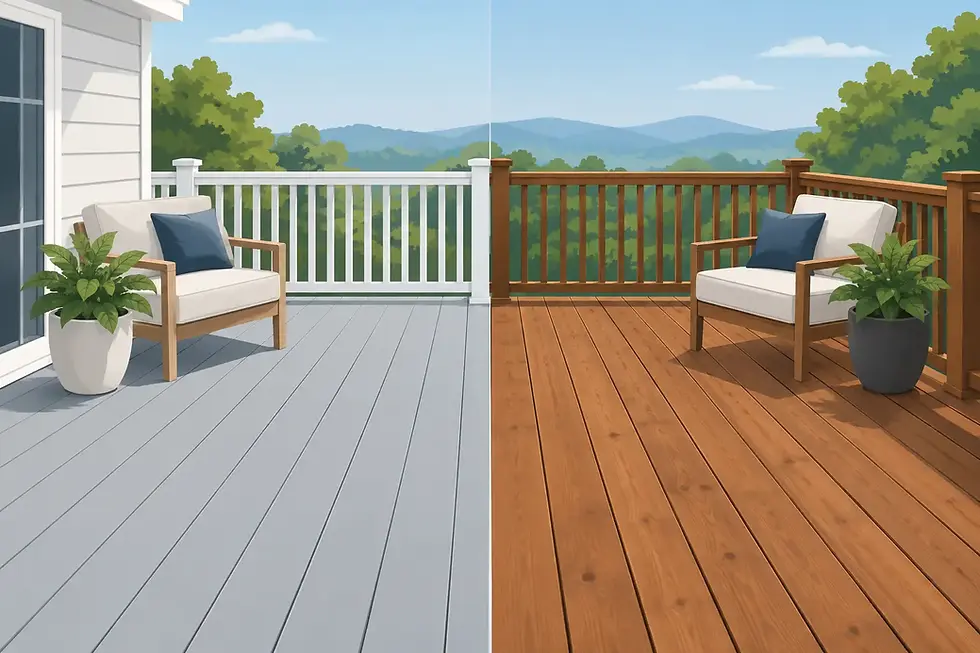
In practical terms, a sealer is often chosen to preserve a clean, natural appearance. A stain is often chosen when a deck needs both protection and visual renewal. Neither is automatically better. The right product depends on exposure, wood condition, and the finish already on the deck.
When a Clear Sealer Makes Sense
A clear or lightly toned sealer can be an excellent choice for newer wood that has a consistent, attractive color. It lets the grain remain the focal point and gives a deck a fresh, understated finish. Homeowners who prefer the look of natural cedar, redwood, or well-maintained pressure-treated lumber often appreciate this result.
The trade-off is sunlight. Clear sealers generally offer less UV defense than pigmented stains. On a deck with full afternoon sun, the wood can fade and weather more quickly even if it is protected from water. That may mean more frequent cleaning and resealing to keep the surface looking its best.
Sealer also does not hide imperfections. If boards have dark water marks, uneven graying, old finish residue, or mismatched replacement boards, a transparent product will leave those details visible. That is not a flaw in the product. It is a reminder that clear finishes demand better surface preparation and more uniform wood.
A sealer is often a good fit when the deck has been recently built, thoroughly cleaned and brightened, or restored to a naturally even appearance. It can also work well on covered porches and lower-sun areas where preserving the wood’s original tone matters more than adding color.
When Deck Stain Is the Better Choice
Stain is frequently the more practical option for an established deck in Hamilton and throughout Central New Jersey. It adds visual consistency while helping the wood stand up to sun and weather. The amount of pigment determines how much grain remains visible and how much protection the finish offers.
Transparent and semi-transparent stain
Transparent stain provides a subtle tint and keeps the grain very visible. Semi-transparent stain brings more color and stronger UV protection while still allowing the character of the wood to show through. These finishes are often well suited to decks that are structurally sound but have begun to fade or look uneven.
They require the surface to be properly cleaned, stripped when necessary, and allowed to dry fully. Stain cannot correct poor preparation. In fact, a semi-transparent finish can make lap marks, leftover mill glaze, or areas of old coating more obvious if the wood was not prepared with care.
Semi-solid and solid stain
Semi-solid and solid stains contain more pigment. They are useful for older decks with significant discoloration, mixed board colors, stubborn sun fading, or cosmetic imperfections that do not affect structural soundness. A solid stain creates a more uniform, painted appearance while still being formulated for exterior wood movement.
More coverage can be a benefit, but it also changes the look. Homeowners who love prominent grain may find a solid stain too opaque. On the other hand, a deck that has reached the point where every board shows a different shade can look renewed and intentional with a quality solid-color finish.
Do Not Choose a Finish Before Evaluating the Wood
The condition of the deck should guide the product decision. Start by looking beyond surface color. Check for loose fasteners, popped nails, cracked or soft boards, splintered walking areas, mildew, and signs of standing water. No sealer or stain can solve a drainage problem or restore wood that has begun to rot.
Then consider the existing finish. Water that beads on the surface may indicate an active sealer, but it does not reveal whether a new coating will adhere properly. If the deck was previously coated with a film-forming product, applying a penetrating stain over it without suitable preparation can lead to uneven absorption and early failure. Likewise, placing a clear sealer over a weathered or incompatible coating can create a disappointing result.
A simple water test can offer a clue: sprinkle a small amount of water onto several boards. Fast absorption suggests thirsty wood, while persistent beading suggests a remaining barrier. It is only one part of the evaluation. Different areas of the same deck can behave differently because of sun exposure, foot traffic, and prior spot repairs.
Preparation Is Where Lasting Results Begin
The finish gets the attention, but preparation determines whether it performs as intended. A deck needs a methodical approach: remove furniture and debris, protect nearby landscaping, clean away dirt and organic growth, address failed coatings, and allow the wood to dry adequately before applying protection.
Pressure washing can be valuable, but excessive pressure can fur the wood, carve soft grain, and leave a surface that looks rougher than when the work began. The objective is clean wood, not maximum pressure. The right technique, detergent, and rinse process should match the species and condition of the boards.
For weathered decks, a wood brightener may be used after cleaning to help neutralize cleaners and restore a more even appearance. Sanding may also be necessary where fibers have lifted, old coatings remain at edges, or walking surfaces need to be made smoother. These steps take time, but they are what allow a sealer or stain to absorb and wear more evenly.
Drying time deserves patience. Wood can appear dry on top while moisture remains below the surface, particularly after humid or rainy weather. Applying finish too soon may trap moisture, interfere with penetration, or shorten the coating’s life. Experienced deck care is as much about knowing when to wait as knowing when to apply.
Maintenance Expectations Should Shape Your Choice
Every exterior wood finish needs maintenance. A clear sealer may need attention sooner on sunny, exposed deck boards. Semi-transparent stain often provides a useful balance of natural appearance and UV protection, but it can fade in traffic lanes and on rail caps. Solid stain can deliver longer-lasting color coverage, though it may eventually require more involved preparation when the coating begins to wear or peel.
The best maintenance plan is not waiting until the deck looks neglected. Regular sweeping prevents leaves and debris from holding moisture against the boards. Promptly moving planters, rugs, and furniture helps avoid uneven fading and trapped water. An annual inspection can catch small concerns before they become costly repairs.
For many homeowners, the question is not which finish lasts forever. It is which finish will age gracefully and can be maintained without sacrificing the deck’s character. That answer is personal, but it should be grounded in a realistic view of the deck’s exposure and condition.
Choose Protection That Respects the Deck
A beautifully restored deck should feel like a natural extension of the home, not another item on a repair list. Clear sealer preserves a clean, natural look when the wood is ready to be seen. Stain brings color, UV defense, and renewed consistency when time and weather have left their mark.
With 33 years of skill and attention to detail, Deck Wrangler approaches this choice as restoration work, not a quick coating job. A careful assessment of the wood, thoughtful preparation, and the right protective finish can help your outdoor space remain welcoming through every New Jersey season.

Comments