
How to Fix Peeling Deck Paint the Right Way
A few loose paint chips on a deck rail can quickly turn into bare, weathered wood under New Jersey sun, rain, and winter moisture. Knowing how to fix peeling deck paint means looking beyond the flakes themselves. A lasting repair starts by finding out why the coating failed, then preparing the surface with the same care you expect from the finish.
Peeling paint is not just a curb-appeal concern. Once water reaches exposed wood, it can encourage splitting, soft spots, mildew growth, and further coating failure. Addressing it early protects the character of your outdoor space and helps preserve the deck for the seasons ahead.
Why Deck Paint Peels in the First Place
Deck paint usually peels because the coating has lost its grip on the surface beneath it. Moisture is often the main culprit. Water can enter through unsealed end grain, gaps around fasteners, cracks in boards, or the underside of the deck. When damp wood is painted, trapped moisture can push the coating upward as the wood expands and dries.
Poor surface preparation is another common reason. Paint needs a clean, sound, dry surface to bond properly. If a deck was painted over dirt, mildew, chalky old paint, sanding dust, or leftover cleaner, the new coat may look good initially but fail sooner than it should.
The product itself matters, too. A solid deck stain, porch and floor paint, exterior latex paint, and specialty deck coating do not all behave the same way. Applying an incompatible product over an older finish, or using a coating not designed for horizontal walking surfaces, can lead to cracking and peeling under foot traffic. Excessively thick coats may also skin over before the material beneath has cured correctly.
Before reaching for a scraper, inspect the deck in good daylight. Check whether the peeling is limited to a few boards or appears across broad sections. Look closely at joints, stairs, rail caps, post bases, and the ends of deck boards. Those areas often reveal whether water management, failed caulk, or aging wood is behind the problem.
How to Fix Peeling Deck Paint Without Shortcuts
The best repair depends on how widespread the failure is. If paint is lifting in one small, isolated section and the surrounding finish is secure, a localized repair may be appropriate. If paint comes off easily across the deck, a patch is likely to stand out and fail again. In that case, stripping or removing loose material across the affected area is the more durable decision.
Start With a Safety and Condition Check
Do not paint over boards that are soft, deeply split, warped, or rotted. Press a screwdriver into suspicious areas, especially near fasteners and where boards meet the house. Sound wood resists pressure. If the tip sinks in easily, that board should be repaired or replaced before any finish work begins.
For decks painted before 1978, assume there may be lead-based paint until testing proves otherwise. Avoid dry sanding or aggressive scraping that creates airborne dust. Lead-safe work practices and qualified help are the responsible choice when older coatings are involved.
Also consider the deck material. Natural wood can often be cleaned, sanded, and recoated successfully. Composite decking requires products specifically approved for composite surfaces, and some manufacturers do not recommend paint at all. The wrong coating can create a peeling problem where none existed before.
Remove Every Loose Edge
Scrape all peeling, blistered, cracked, and poorly bonded paint until you reach a firm edge. A carbide scraper works well on broad flat areas, while a smaller putty knife can help around balusters, corners, and fasteners. The goal is not to remove sound paint simply because it is old. The goal is to eliminate anything that no longer has a dependable bond.
Feather the remaining edges with sanding so the transition from bare wood to old paint is smooth. A rough edge will show through fresh paint, collect water, and invite the new coat to lift at the same line. For most deck work, medium-grit sandpaper is appropriate for smoothing weathered wood and blending edges; finish with a careful cleanup so no sanding dust remains.
Do not use a pressure washer as a substitute for scraping. Pressure washing is valuable when performed correctly, but too much pressure or a nozzle held too close can gouge wood fibers and force water deep into the boards. That damage can create an even harder surface-preparation problem.
Clean the Surface Thoroughly
Once loose paint is removed, wash away dirt, pollen, mildew, and residue. Use a deck cleaner suited to the existing surface and follow its directions closely. Mildew must be treated, not merely painted over, because it can continue to interfere with adhesion beneath the new coating.
Rinse thoroughly and allow the deck to dry completely. This step cannot be rushed. Drying time depends on recent rain, shade, humidity, board thickness, and airflow beneath the deck. A deck can feel dry on top while moisture remains within the wood. Painting too soon is one of the most expensive shortcuts a homeowner can take.
If the deck has an ongoing moisture issue, address that before refinishing. Improve drainage around the structure, clear debris from between boards, repair leaking gutters, and make sure soil is not holding water against posts or framing. Finish work can protect wood, but it cannot solve a water problem that remains active.
Repair Small Defects Before Priming
Set or replace protruding fasteners, and replace any damaged boards that cannot hold a finish. Fill only small, stable defects with an exterior-rated wood filler intended for painted surfaces. Large cracks and soft areas are better handled with board replacement than with filler. A deck needs to withstand movement, foot traffic, heat, and moisture, and cosmetic patching has limits.
Bare wood should receive a compatible exterior primer when the chosen topcoat calls for one. Primer is especially helpful on weathered areas, repaired spots, and exposed end grain. It creates a more uniform surface and helps the topcoat adhere evenly. Skipping primer may save an afternoon, but it often costs years of finish life.
Choose a Coating Made for Your Deck
For a painted deck, select a quality exterior porch and floor paint or deck coating rated for horizontal surfaces. Railings, posts, and trim may use a compatible exterior paint, but deck boards need a product that can handle regular traffic. Check the label for application temperature, recommended primer, recoat timing, and whether the product can be used over the existing finish.
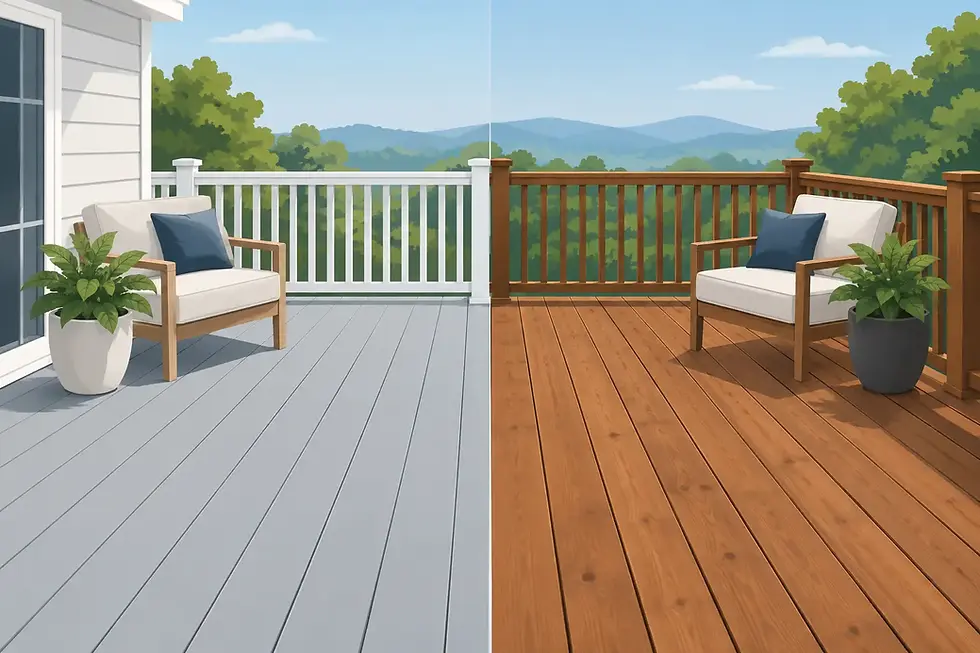
Color affects performance as well as appearance. Dark colors can become notably hotter in direct summer sun, which may increase stress on older boards and make barefoot use less comfortable. Lighter colors are often easier on a sun-exposed deck, though they may show dirt and leaf stains more readily. The right choice depends on the deck's condition, exposure, and how your family uses the space.
Apply thin, even coats rather than one heavy coat. Work a few boards at a time from one end to the other to avoid lap marks. Brush coating into cracks, board ends, and around fasteners, then maintain a wet edge as you continue. Respect the manufacturer's recoat window and keep foot traffic, furniture, pets, and falling leaves off the surface until it has cured.
When a Full Restoration Is the Better Answer
A spot repair is sensible when failure is limited and the remaining paint is sound. But if more than a small portion of the deck is peeling, the more reliable approach is usually a full preparation and refinishing project. Partial touch-ups over widespread failure can leave an uneven appearance and create a cycle of annual repairs.
This is where experienced surface care makes a visible difference. Proper restoration considers the wood species, age of the deck, prior coatings, moisture exposure, cleaning method, repair needs, and finish system as one connected job. Deck Wrangler Power Washing and Painting Co. brings 33 years of hands-on attention to these details for homeowners who want their outdoor spaces restored with care, not rushed through with a quick coat of paint.
Protect the New Finish From Peeling Again
After the deck is refinished, simple maintenance helps the coating last. Sweep away leaves and standing debris, especially near walls and rail posts. Move planters occasionally so moisture does not remain trapped beneath them. Clean spills promptly, and inspect high-traffic paths each spring for early wear.
A well-painted deck should not be ignored until paint is visibly coming off again. Small touch-ups, clear drainage, gentle cleaning, and timely repairs keep minor wear from turning into a full restoration project. The best-looking decks are rarely the ones that received the most paint. They are the ones that received patient preparation, appropriate protection, and continued care.

Comments