
Deck Waterproofing Homeowner Guide for NJ
A deck can look weathered long before it is truly failing, but water has a way of turning cosmetic wear into expensive damage. This deck waterproofing homeowner guide is designed for New Jersey homeowners who want to protect the outdoor space they use, enjoy, and rely on without guessing at what the wood needs.
Waterproofing is not simply a matter of applying a product from the hardware store. A lasting result depends on the deck's condition, the material underfoot, the quality of surface preparation, and the kind of weather it faces year after year. In Hamilton and across central New Jersey, decks endure humid summers, driving rain, fallen leaves, freeze-thaw cycles, and plenty of moisture that can settle where it should not.
What Deck Waterproofing Really Protects Against
Most deck protection products are better described as water-resistant rather than completely waterproof. A properly selected stain, sealer, or coating helps prevent liquid water from soaking deeply into the boards while still allowing the wood to release normal moisture vapor. That balance matters. A coating that traps moisture beneath its surface can peel, blister, or contribute to decay.
The goal is to reduce water absorption before it causes familiar problems: raised grain, cracking, splintering, fading, mildew growth, cupping boards, and soft areas around fasteners. On an elevated deck, protection also matters underneath. Water held against joists, beams, and ledger connections can quietly shorten the life of the structure.
Composite and PVC decks need a different approach. Their walking surfaces generally do not need a wood sealer, but framing, stair stringers, rail components, and the area below the deck may still require attention. Treating every deck the same is how good intentions become poor results.
Deck Waterproofing Homeowner Guide: Start With Inspection
Before choosing a finish, inspect the deck on a dry day and again after rainfall. Look for areas where water pools, boards that stay dark or damp longer than the rest, and debris caught between boards or against the house. These are early signals that drainage and airflow need attention.
Press a screwdriver gently into suspicious areas, particularly near posts, stairs, railings, and the ledger board where the deck meets the home. Solid wood resists pressure. Soft, crumbly, or spongy material deserves a closer professional evaluation before any cleaning or sealing begins. A new coat of stain cannot repair rot.
Pay attention to fasteners as well. Popped screws, rust stains, loose railings, and split boards are not merely appearance concerns. Water entering through failed fasteners or cracks can spread into the surrounding wood. Replacing damaged boards and correcting loose hardware first gives a protective finish a sound surface to work with.
Preparation Determines Whether Protection Lasts
The work done before sealing is often more important than the product chosen afterward. Dirt, mildew, gray oxidation, old peeling coatings, and loose wood fibers prevent a new finish from bonding evenly. Applying sealer over a contaminated surface may make the deck look better briefly, but the failure usually returns quickly.
A careful restoration process begins with the right cleaning method for the material and condition. Pressure washing can be useful, but excessive pressure or an incorrect tip can scar wood, raise the grain, and leave permanent lap marks. Older softwood decks are especially vulnerable. Experience matters because the objective is to clean the surface, not carve into it.
After cleaning, the deck needs adequate drying time. The exact window depends on the wood species, weather, shade, and recent rainfall. Wood that appears dry on top may still hold too much moisture below the surface for a stain or sealer to bond correctly. Rushing this stage is one of the most common reasons finishes peel or wear unevenly.
Sanding may be needed when boards are rough, heavily weathered, or coated with failed paint or stain. It is also an opportunity to ease sharp splinters and create a more comfortable surface for bare feet. Once sanding is complete, remove dust thoroughly. Even fine dust can interfere with adhesion.
Choose the Finish for the Deck You Have
There is no single best waterproofing product for every deck. The right choice depends on whether the wood is new or aged, whether a previous coating remains, how much direct sun it receives, and whether you prefer a natural wood appearance or a painted finish.
Clear water repellents offer limited color change but usually provide the least UV protection. They can work on newer wood when preserving a natural look is the priority, though they tend to require more frequent maintenance in sunny locations.
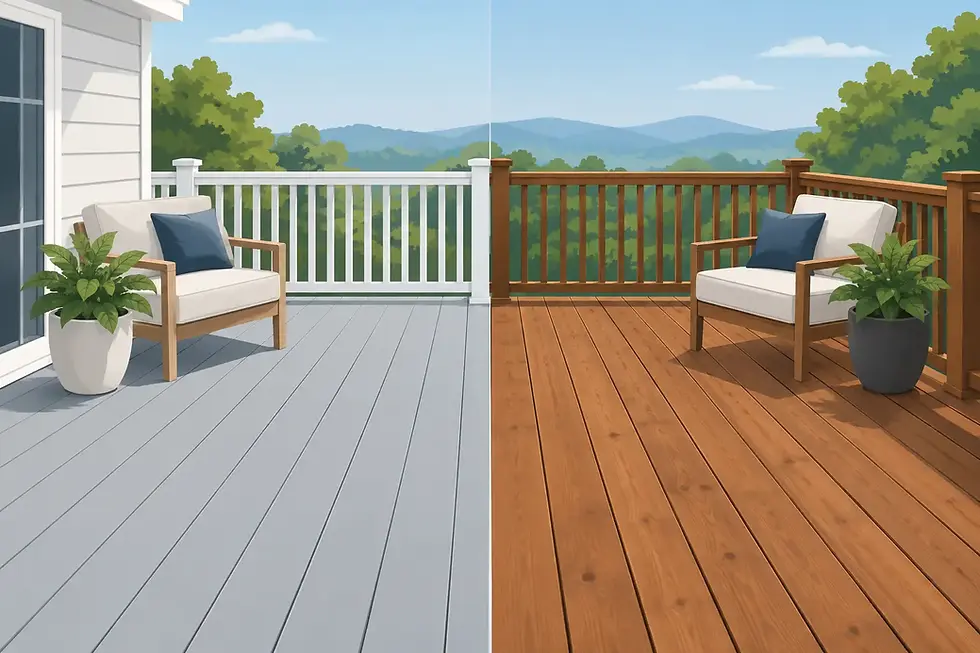
Semi-transparent stains add pigment that helps shield wood from ultraviolet damage while allowing much of the grain to remain visible. They are a strong choice for homeowners who appreciate the character of real wood but want more dependable color retention.
Solid stains and quality deck coatings provide more coverage and can give heavily weathered boards a more uniform appearance. They are useful when color consistency matters or when the deck has visible repairs. The trade-off is that opaque finishes can eventually show peeling if preparation, product compatibility, or moisture management is poor.
Paint is sometimes appropriate for railings, trim, and select deck surfaces, but it should never be used as a shortcut over failing material. A painted deck needs disciplined prep and ongoing inspection, especially where water can work into board ends and horizontal seams.
Do Not Ignore Water Below the Deck
A dry walking surface is only part of the picture. If your deck sits over a patio, finished lower-level entry, storage area, or frequently used outdoor space, an under-deck drainage system may be worth considering. These systems channel water away from the area below the deck and can make that space more usable during wet weather.
They do not replace maintenance above the deck. Leaves, clogged gaps, failing flashing, and deteriorating framing still need correction. Instead, under-deck drainage addresses a different problem: where rainwater goes after it passes between the boards.
The ledger board deserves particular care. This is the structural connection between the deck and the house, and proper flashing is essential to direct water away from the home. If you see staining, gaps, softness, or water entering near that connection, pause any cosmetic project and have the area assessed.
Maintain Protection Before It Fails
A protected deck still needs routine attention. Sweep away leaves, pollen, and soil buildup, especially in corners and between boards. Organic debris holds moisture against the surface and gives mildew an easy place to grow. Move planters, rugs, and furniture occasionally so moisture does not remain trapped in one spot.
During spring and fall, inspect the finish for fading, worn paths, peeling, cracks, and dark water-absorbing areas. A simple water test can help: sprinkle a small amount of water on clean, dry boards. If it beads and remains near the surface, the protection is still working. If it darkens the wood and absorbs quickly, it may be time to plan maintenance.
Most decks benefit from a professional cleaning and condition check before neglect takes hold. The right interval varies. A shaded deck under trees may need attention more often than a sunny deck with good airflow, while a high-traffic family deck can wear faster around stairs and seating areas.
When Professional Restoration Is the Better Choice
Homeowners can handle light cleaning and basic maintenance, but certain conditions call for skilled evaluation: widespread peeling, deep cracking, possible rot, prior coatings of unknown type, major color inconsistency, or structural concerns. These situations require more than a new can of sealer.
Deck Wrangler Power Washing and Painting Co. brings 33 years of hands-on exterior-care experience to the preparation and protective treatment process. The focus is not simply on making a deck look freshly coated. It is on identifying what the surface can accept, preparing it with care, and helping homeowners preserve the beauty and usefulness of their outdoor space.
A well-cared-for deck invites people outside. Give it the attention before the next wet season that lets every board, railing, and step continue serving your home with confidence.

Comments