How to Wash Painted Siding Without Damaging It
Painted siding does more than give a home its finished appearance. It is the protective layer standing between your exterior surfaces and New Jersey rain, pollen, humidity, road dust, and summer sun. Knowing how to wash painted siding means removing that buildup without stripping paint, forcing water behind boards, or creating a streaky finish that makes the home look worse than before.
The best results come from a gentle, deliberate approach. This is not a job where more pressure automatically means a cleaner house. On painted wood, fiber cement, and older siding in particular, patience and proper technique protect the finish that protects your home.
Why painted siding needs a careful wash
Dirt and pollen are usually harmless at first, but they trap moisture against the surface. Over time, that moisture can encourage mildew, leave dark streaks, and dull the paint color. Cobwebs, insect residue, and airborne pollutants can also cling to sheltered areas under eaves and around trim.
A regular wash preserves curb appeal, but it also gives you a close look at the condition of the exterior. While cleaning, you may spot peeling paint, open caulk joints, soft wood, loose boards, or cracked trim. Those are repair concerns, not cleaning concerns, and addressing them early is far less costly than waiting for water damage to spread.
How often depends on the setting. A home shaded by trees or located near busy roads may need a gentle wash every year. A more open, well-maintained property may only need it every two to three years. If mildew is returning quickly, the issue may be excess shade, poor drainage, or moisture being held near the siding.
Prepare the home before you start washing
Choose a mild, overcast day whenever possible. Direct sun can dry cleaner onto the siding before you have time to rinse it, leaving visible residue. Avoid washing when temperatures are near freezing or when rain is expected immediately afterward.
Walk around the house first and look for loose paint, cracked siding, damaged caulk, or openings around windows and doors. Washing will not fix these issues. In fact, water directed into gaps can make them worse. Repair vulnerable areas before cleaning, or avoid them until they can be properly addressed.
Move patio furniture, grills, décor, and other items away from the work area. Close windows and exterior doors, cover or move delicate electrical items, and protect nearby plants with a thorough rinse of plain water. Keep plants wet before, during, and after cleaning so they are less likely to absorb cleaning solution.
For supplies, use a garden hose with an adjustable spray nozzle, a soft-bristle brush with an extension pole, a bucket, and a mild exterior cleaner suitable for painted surfaces. A microfiber cloth can help with trim and small detailed areas. Do not reach from a ladder while handling a hose or brush. Use an extension tool from stable ground, or leave high sections to an experienced exterior-care professional.
How to wash painted siding safely
Start with a low-pressure rinse
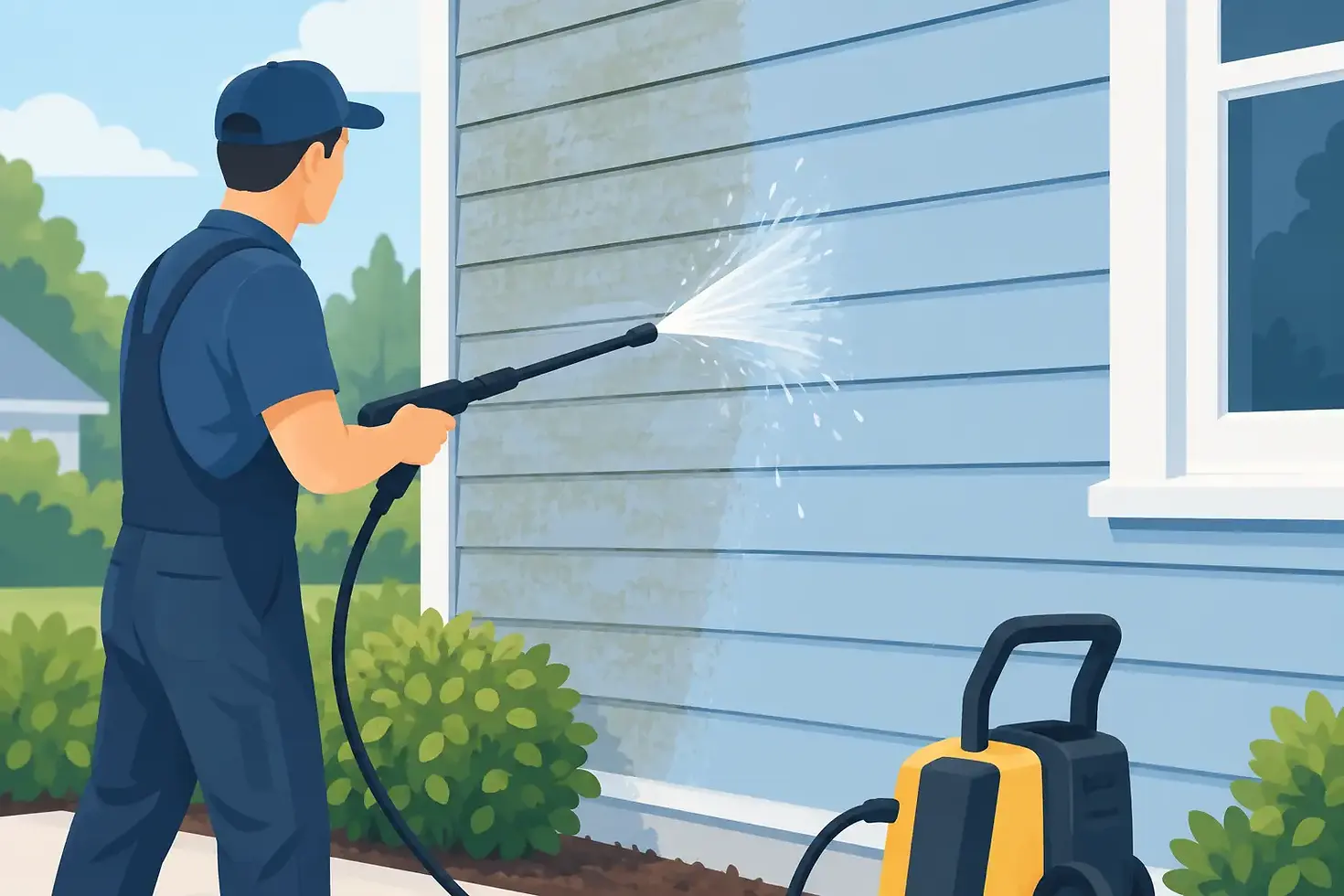
Rinse one manageable section at a time, working from the top down. Use a broad, gentle fan of water rather than a concentrated stream. The goal is to loosen surface dirt and wet the siding evenly, not blast contaminants away.
Always aim the water downward or straight across the siding. Spraying upward can drive water behind lap boards, beneath trim, and into vent openings. That risk is especially important on painted wood siding, where trapped moisture can contribute to paint failure and decay.
Apply a mild cleaning solution
Mix the cleaner according to its label directions. More product is not better. A solution that is too strong can leave residue, fade paint, harm landscaping, or create uneven results.
Apply the solution to a small area, beginning near the bottom and working upward. This helps prevent dirty runoff from creating long streaks on dry siding. Let the cleaner sit only for the recommended dwell time. Do not allow it to dry on the wall.
If the siding has mildew or algae, use a cleaner specifically made to address organic growth on exterior painted surfaces. Bleach-heavy mixtures are often treated as a shortcut, but they can discolor materials, stress nearby plants, and fail to solve the moisture conditions that caused the growth. The right product and a complete rinse are the safer route.
Agitate only where needed
Most painted siding benefits from light brushing rather than aggressive scrubbing. Use a soft brush and gentle, overlapping strokes. Focus on shaded areas, the lower courses of siding, around downspouts, and locations where dirt collects beneath windows.
Do not use wire brushes, abrasive pads, or gritty scouring powders. They can scratch the paint film and create small openings where moisture can work underneath. If a mark does not release with a mild cleaner and soft brush, test a slightly stronger siding-safe cleaner in a hidden spot before treating a larger area.
Rinse thoroughly from the top down
Rinse away all cleaner and loosened soil before moving to the next section. Again, keep the spray low-pressure and pointed downward. Incomplete rinsing is one of the most common reasons siding looks chalky or streaked after it dries.
Step back periodically as you work. From close range, a wall can look clean while missed patches remain visible from the curb. A final rinse of windows, trim, foundation plantings, and walkways helps leave the property looking cared for as a whole.
Should you pressure wash painted siding?
A pressure washer can be useful, but it is not automatically the right tool for painted siding. High pressure can remove loose paint, etch softer wood, scar fiber cement, damage window screens, and push water behind the exterior. The damage may not be obvious until paint begins peeling or moisture problems appear later.
If a pressure washer is used, the method should be closer to soft washing than forceful blasting. Use the lowest effective setting, a wide-angle tip, and enough distance to keep the water gentle on the surface. Test an inconspicuous section first. Never concentrate the stream on edges, seams, caulk lines, vents, or areas where paint is already failing.
Older homes deserve added caution. If paint may date from before 1978, do not pressure wash, sand, scrape, or disturb it casually. Lead-based paint can create a serious contamination concern when it is broken into dust or chips. A qualified professional can help determine the appropriate next step.
Match the method to your siding material
Painted wood siding requires the greatest attention to water direction and drying time. Keep water out of seams, inspect for failing paint, and avoid harsh brushing that can lift the finish at board edges. Fiber cement is durable, but its painted coating still needs low-pressure cleaning and a full rinse.
Painted vinyl siding is often easier to clean, although it can still be damaged by excessive pressure or strong chemicals. Avoid cleaners that are not approved for painted vinyl, and never use hot water. Aluminum siding may show oxidation or chalking, which can be mistaken for ordinary dirt. In that case, a careful test area is essential because aggressive scrubbing can make the finish appear uneven.
Common mistakes that shorten paint life
The most damaging mistakes are usually simple: using too much pressure, washing upward into siding laps, letting cleaner dry on the surface, and ignoring peeling paint or failed caulk before washing. Another common issue is cleaning only the visibly dirty spot. That can leave a noticeably brighter patch once the wall dries.
Avoid working in full sun when possible, and do not wash just before a cold snap. Give the exterior time to dry fully, especially if painting or caulking is planned next. Clean siding is only ready for a new coating when the surface is sound, dry, and free of loose paint.
When it makes sense to call a professional
A professional assessment is worthwhile when siding is heavily stained, paint is peeling, mildew returns repeatedly, or the home has high and difficult-to-reach walls. It is also the better choice when you are preparing for painting. Proper washing is only one part of surface preparation. Repairs, scraping, sanding, caulking, and drying conditions all affect how long a new finish will last.
At Deck Wrangler Power Washing and Painting Co., 33 years of hands-on experience informs a careful approach to exterior cleaning and restoration. The goal is not simply to make a wall look brighter for a day. It is to preserve the character, protection, and lasting appearance of the home.
A gentle wash done at the right time can make painted siding look refreshed without asking it to endure more than it should. Treat the finish as a protective investment, and every cleaning becomes part of keeping your home looking cared for year after year.

Comments