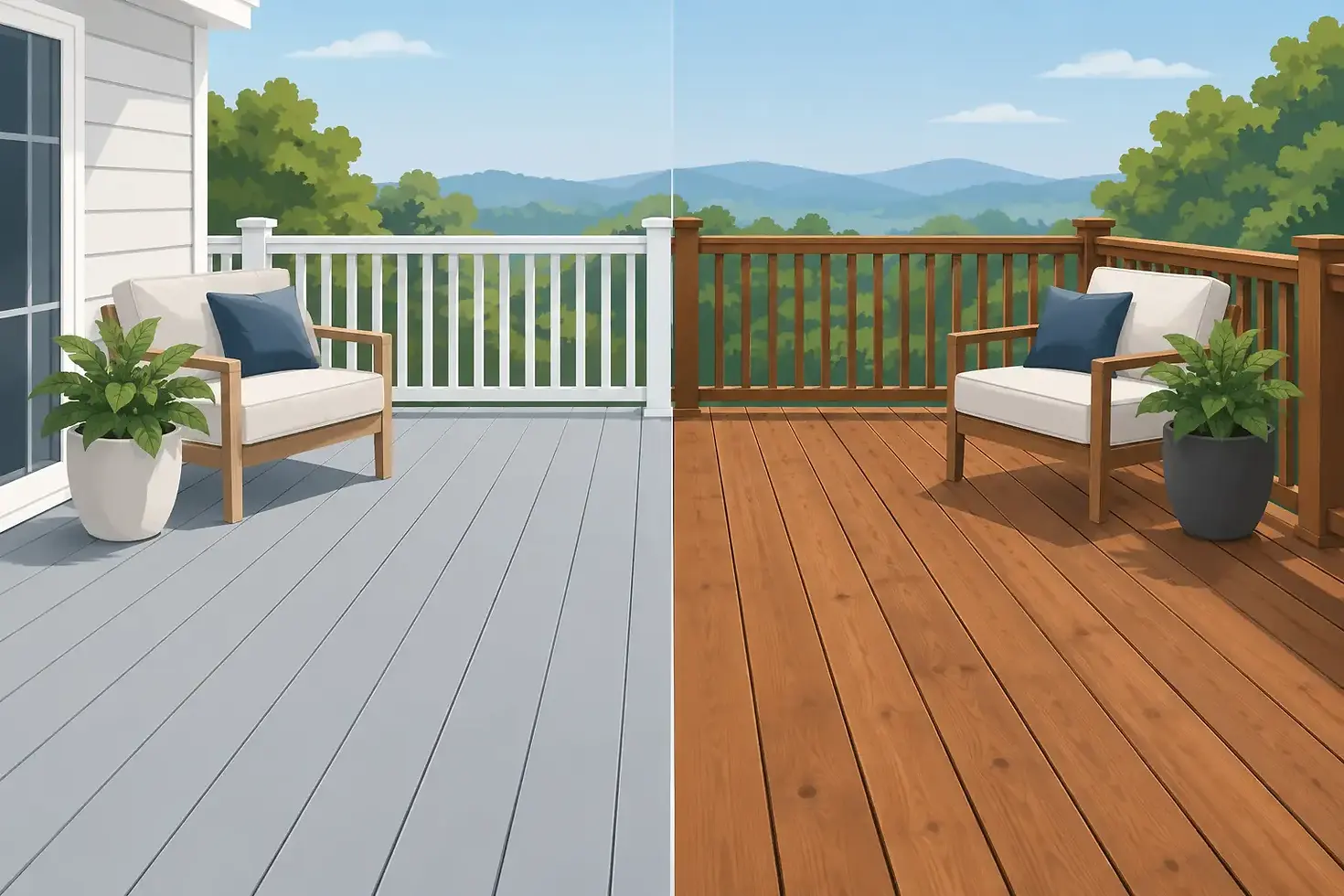
Painted Versus Stained Deck: Which Lasts?
A deck can look tired long before its structure is beyond saving. Faded boards, peeling color, gray wood, and water stains all raise the same question for homeowners: should you choose a painted versus stained deck finish? The right answer depends less on trends and more on the deck’s current condition, the wood beneath it, how you use the space, and how much maintenance you are prepared to give it.
For homes in Hamilton and throughout central New Jersey, decks face humid summers, heavy rain, freeze-thaw cycles, fallen leaves, and strong sun. A finish needs to do more than look attractive on day one. It needs to protect the surface while fitting the character of your home and the realities of outdoor living.
Painted Versus Stained Deck: The Core Difference
Paint sits on top of the wood and forms an opaque protective film. It provides solid color, hides uneven tones, and can give an older deck a clean, finished appearance. Stain penetrates the wood to varying degrees, depending on whether it is transparent, semi-transparent, or solid-color. It protects while allowing at least some of the wood’s grain and texture to remain visible.
That difference affects nearly every part of the decision. Paint is often chosen for a uniform, polished look and for boards with cosmetic imperfections. Stain is often the better fit for homeowners who value the natural appearance of wood and want a finish that tends to wear away gradually rather than peel in sheets.
Neither option is automatically better. A well-prepared painted deck can look exceptional, while a carefully selected stain can preserve the warmth and character that made wood the right material in the first place. The condition of the deck should lead the conversation.
When Painting Is the Better Choice
Painting makes sense when the deck surface has a patchwork appearance, including old repairs, mismatched replacement boards, lingering discoloration, or heavily weathered areas that no longer look consistent. A quality exterior paint can bring visual order to a surface that clear or semi-transparent stain would only emphasize.
It also gives homeowners more control over color. Soft grays, classic white railings, deep browns, and coordinated trim colors can help the deck feel like a deliberate extension of the home. For a covered porch or a deck with limited direct exposure, paint can be especially appealing because the surface may see less punishing sun and standing water.
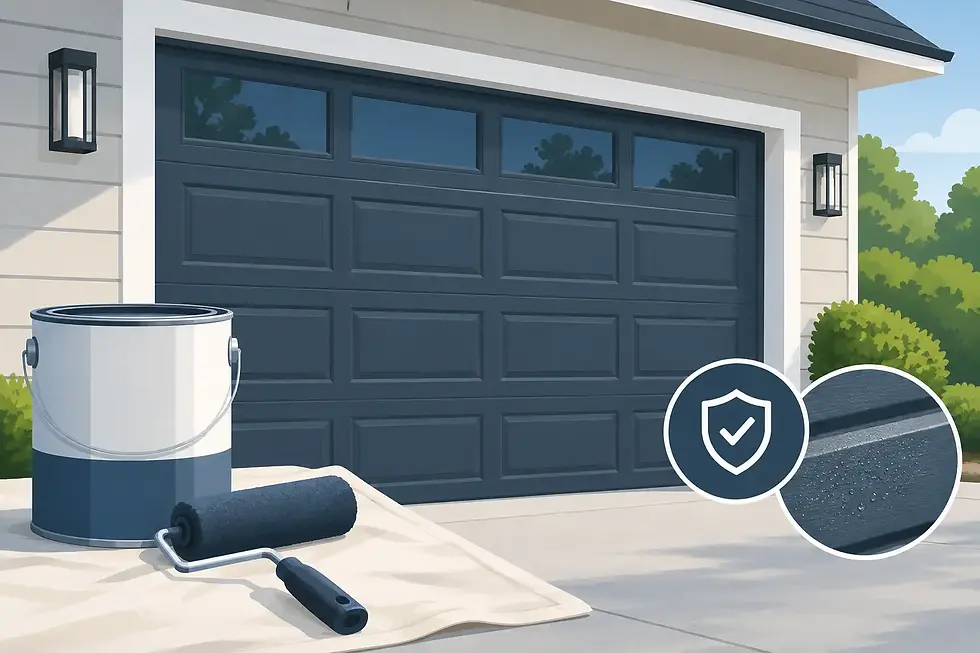
The trade-off is preparation. Paint depends on a clean, dry, stable surface and a coating system that adheres properly. If old paint is failing, loose material must be removed and problem areas addressed before a new coat goes on. Painting over peeling paint without proper preparation may produce a short-lived improvement, but it does not solve the reason the finish failed.
Paint can also trap moisture when applied to damp wood or where drainage is poor. That does not mean paint is unsuitable for decks. It means workmanship matters. Proper cleaning, drying time, surface preparation, and the right product for horizontal walking surfaces are what separate a lasting result from a finish that begins lifting after one difficult season.
Paint offers a more uniform finish
If your goal is to conceal visual flaws and create a crisp, consistent color, paint has the advantage. It is often a strong option for railings, posts, and trim even when the deck floor itself receives a different treatment. Those vertical surfaces are easier to protect and generally experience less foot traffic and standing water than deck boards.
When Staining Is the Better Choice
Stain is often the natural choice for a sound wood deck with attractive grain and relatively even boards. It enhances rather than covers the material, making it a good fit for homeowners who want their outdoor space to feel warm, natural, and connected to the landscape.
Semi-transparent stain offers color while showing the grain. Transparent stain offers the most natural effect but provides less ability to hide unevenness. Solid-color stain sits closer to the surface and delivers much more coverage, making it a useful middle ground for aging wood that still benefits from a stain system rather than paint.
One practical benefit is how stain typically ages. Instead of forming a thick film that can crack or peel, many stains fade or wear down gradually in high-traffic areas. Maintenance may still be necessary, but future preparation can be more manageable when there is no widespread peeling coating to remove.
Stain is not a cure for damaged wood. Cracked, splintered, soft, or deteriorated boards should be evaluated before any finish is applied. Protective treatments help preserve sound material. They cannot restore strength to boards that have begun to fail.
Stain works with the wood, not against it
A deck is exposed to movement. Wood expands and contracts as temperatures and moisture levels change throughout the year. Penetrating stain generally accommodates that movement better than a thick surface coating. For open decks exposed to regular rain and sun, this can make stain an appealing long-term maintenance choice.
Durability Depends on Exposure and Preparation
Homeowners often ask which lasts longer, paint or stain. The honest answer is that durability depends on where the finish is used and how the deck is prepared.
On railings and other vertical surfaces, paint may hold up very well because water sheds quickly and there is little abrasion. On horizontal deck boards, especially around grill areas, entry doors, steps, and pool access points, foot traffic and moisture create tougher conditions. A stain designed for deck surfaces may perform more predictably there because it is less prone to obvious peeling.
Sun exposure matters as much as traffic. A south-facing deck can fade faster than a shaded deck, while a heavily shaded deck may stay damp longer and become more vulnerable to mildew growth. Nearby trees can add leaf tannins, sap, and organic debris that discolor the surface and hold moisture against the boards.
Before choosing a finish, the deck should be carefully cleaned and inspected. Dirt, mildew, old failing coatings, and loose fibers interfere with adhesion and absorption. The deck must also be allowed to dry properly. Rushing this stage is one of the most common reasons a new finish does not perform as expected.
Consider the Maintenance You Want to Own
Every exterior finish needs attention. The question is what kind of maintenance feels reasonable for your household.
A painted surface may eventually need scraping, sanding, spot priming, and repainting where coatings begin to lift. It can remain beautiful for years when maintained early, before a small failure spreads. Ignoring peeling paint, however, usually creates a more involved restoration job later.
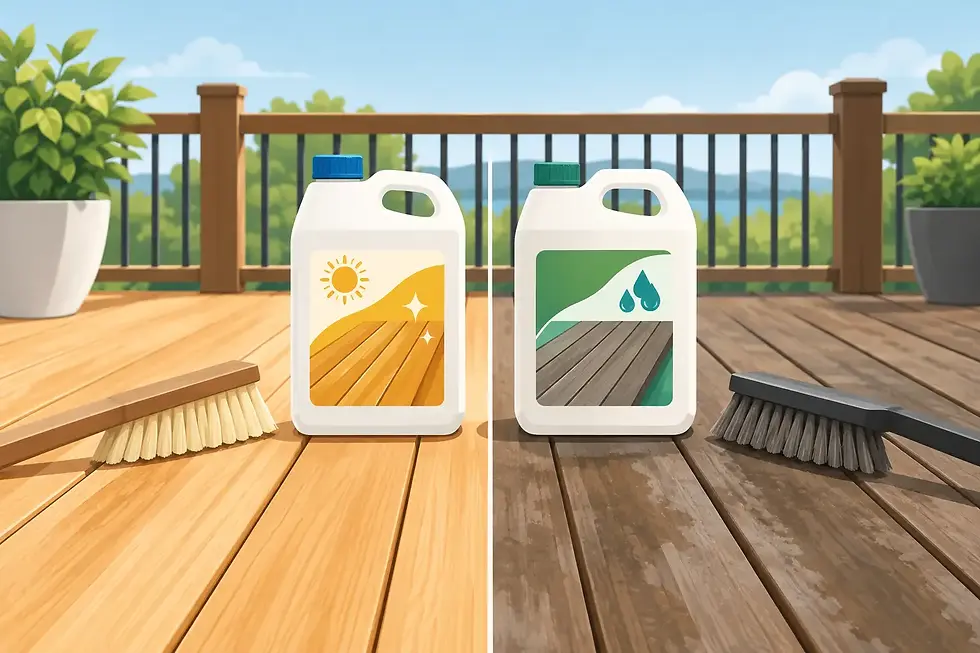
A stained deck often needs periodic washing and reapplication as color fades or water stops beading on the surface. Because the finish is usually less opaque, spot repairs may blend more naturally, though this depends on the stain color, age, and sun exposure. A solid-color stain may require more surface preparation than a semi-transparent stain, but it can hide more imperfections.
No finish should be treated as permanent. Regular cleaning, clearing leaves from between boards, keeping furniture feet from trapping moisture, and watching for standing water will extend the service life of either choice. Small maintenance habits protect both appearance and the wood itself.
Let the Deck’s Condition Guide the Finish
A newer deck with healthy, visually appealing boards often deserves a stain that shows off the wood. An older deck with repairs, uneven coloration, or past coating problems may benefit from the coverage and visual renewal paint can provide. In some cases, the best result is a combination: painted railings and trim with stained deck boards.
The prior finish also matters. Moving from paint to stain is not as simple as applying stain over old paint. The painted coating generally needs to be removed or substantially addressed so stain can penetrate and look even. Likewise, painting over an old stain requires checking whether the surface is clean, dry, and able to accept a coating.
This is where experienced evaluation saves homeowners from an expensive do-over. A close look at wood condition, drainage, previous finishes, sun exposure, and the way your family uses the deck leads to a recommendation based on the surface, not a one-size-fits-all sales pitch.
A Finish Should Protect the Time You Spend Outside
The best deck finish is the one that suits the wood, supports your maintenance expectations, and makes you want to use the space more often. Whether your deck needs the clean coverage of paint or the natural depth of stain, careful preparation is the foundation of a result worth keeping. Deck Wrangler brings 33 years of skill and attention to detail to that work, helping local homeowners preserve outdoor spaces with the care their homes deserve.

Comments