How to Clean Deck Railings Without Damage
A deck can have clean boards and still look tired if the railings are gray with pollen, mildew, hand oils, and winter grime. Because railings sit at eye level, they often show neglect first. Knowing how to clean deck railings properly helps protect their finish, improve the appearance of the entire outdoor space, and prevent small maintenance issues from becoming restoration work.
The right approach depends on what your railings are made of and what is on them. Painted wood, stained wood, vinyl, composite, aluminum, and wrought iron all need a slightly different touch. The goal is not simply to make a surface look brighter for a day. It is to remove buildup without stripping protective coatings, forcing water into joints, or damaging the material underneath.
Start by Identifying the Railing Material
Before bringing out a cleaner or pressure washer, look closely at the railing. A method that works well on vinyl can dull a painted finish. A cleaner strong enough to remove mildew from unfinished wood may be too aggressive for an older stain.
Wood railings require the most care. Check for peeling paint, worn stain, raised grain, loose fasteners, cracks, soft spots, and splinters. Cleaning can reveal these issues, but it should not make them worse. If the finish is failing extensively, cleaning alone may not deliver an even result. The railing may need proper surface preparation and refinishing once it has dried.
Vinyl and composite railings are generally easier to wash, but they are not maintenance-free. Pollen and mold can cling to textured surfaces, while certain harsh chemicals and abrasive pads can leave dull areas or permanent scratches. Aluminum and metal railings stand up well to gentle washing, though chipped paint and early rust deserve attention before they spread.
Gather Simple, Surface-Safe Supplies
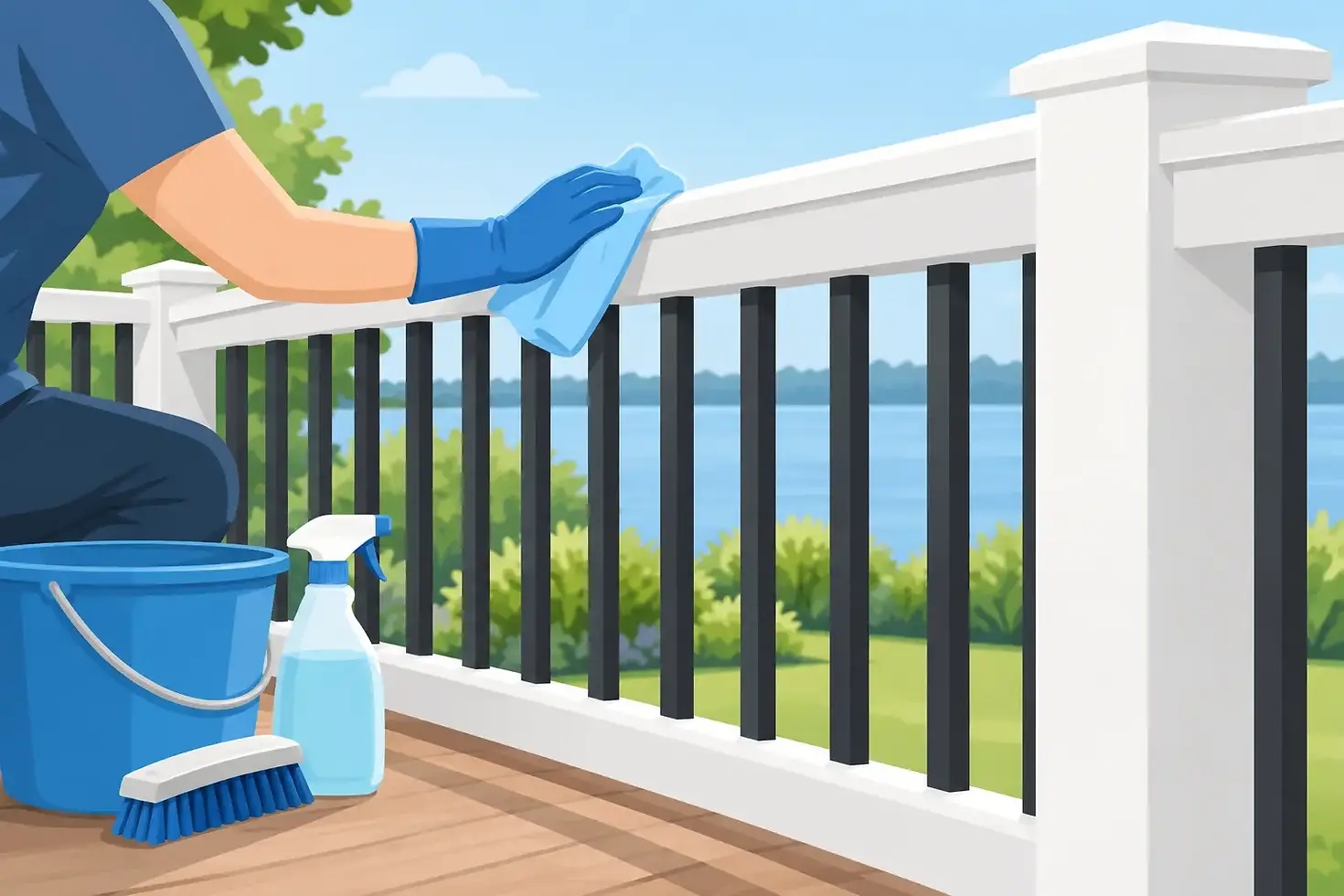
For most routine cleaning, a bucket of warm water, a mild exterior-safe detergent, a soft-bristle brush, microfiber cloths, a garden hose, and gloves will do the job. A small detailing brush is useful around balusters, post caps, hardware, and decorative features where dirt tends to collect.
Choose a cleaner suited to the surface and the type of staining present. Mild soap is often enough for everyday grime. For mildew, use a product labeled for exterior surfaces and follow its dilution and dwell-time instructions. Avoid assuming that stronger is better. Highly caustic cleaners can discolor wood, weaken paint, damage nearby plants, or leave a railing looking blotchy.
If you use a pressure washer, treat it as a rinsing tool rather than a cure-all. Railings have narrow edges, joints, and finishes that can be easily damaged by excessive pressure. A garden hose and brush are often the safer choice for homeowners, especially on older woodwork.
How to Clean Deck Railings Step by Step
Choose a dry, mild day when the railing will have time to dry completely. Avoid cleaning in direct, intense sun if possible. Cleaners can dry too quickly on hot surfaces, leaving residue or uneven marks.
First, clear the area beneath and around the deck. Move cushions, planters, furniture, and decorative items away from the railing. Cover or thoroughly wet nearby landscaping before using any cleaning solution. Pre-wetting plants helps reduce the chance that cleaner residue will cling to leaves.
Rinse the railing gently from top to bottom to loosen loose dust, pollen, and cobwebs. Starting at the top prevents dirty runoff from streaking areas you have already cleaned. Do not aim a strong stream upward into seams, under caps, or behind trim pieces.
Mix your cleaning solution according to the manufacturer’s instructions. Apply it in manageable sections, beginning with one post and a few balusters at a time. Let the solution sit briefly if directed, but do not allow it to dry on the surface.
Use a soft brush with light, steady pressure. Work along the grain on wood railings. On vinyl, composite, and metal, use small circular motions on stubborn areas, then smooth the section with a final pass. The purpose is to lift surface buildup, not grind the finish away.
Pay close attention to the spots hands touch most: top rails, stair rails, gate latches, and post caps. These areas commonly collect body oils, sunscreen residue, and dark grime. Also inspect the lower ends of balusters and the shaded side of the deck, where moisture can support mildew growth.
Rinse each section thoroughly before moving on. Leftover cleaner can attract dirt, leave a hazy film, or interfere with stain and paint if restoration is planned. Once finished, allow the railing to dry fully before replacing décor or deciding whether touch-up work is needed.
When Mildew or Green Growth Needs More Than Soap
In New Jersey, spring pollen, summer humidity, shade, and leaf debris create favorable conditions for mildew and algae. Green or black staining may look like ordinary dirt at first, but it often returns quickly when the underlying moisture issue is not addressed.
Clean the growth with an exterior-safe mildew cleaner appropriate for your railing material. Work carefully and rinse completely. Then look for the conditions that allowed it to form. Overhanging branches, blocked airflow, wet planters against the deck, clogged gutters, and damp leaves trapped near posts can all keep railings wet longer than they should be.
On wood, dark staining that remains after careful cleaning may be deeper than surface mildew. It can be tannin bleed, weathering, or a failed finish. Repeatedly applying stronger cleaner is rarely the right answer. At that point, professional evaluation can prevent unnecessary stripping or uneven color correction.
Should You Pressure Wash Deck Railings?
Pressure washing can be effective, but railing work calls for restraint. Wood fibers can be furred or gouged in seconds, especially on older lumber. Paint can lift at weak edges, water can be driven behind trim, and a narrow nozzle can leave visible wand marks that are difficult to correct.
If you decide to use a pressure washer, test an inconspicuous area first. Use the lowest effective setting, keep the nozzle moving, stand well back from the surface, and spray at a shallow angle rather than directly into joints. Never concentrate the stream on one spot to remove a stain.
For painted or stained wood railings, a gentle hand wash is usually the wiser route unless the surface is being professionally prepared for refinishing. The trade-off is time. Hand cleaning takes longer, but it gives you much better control around aging finishes, detailed trim, and vulnerable areas.
Protect the Finish After Cleaning
Cleaning is also an inspection opportunity. Once the railing is dry, look for peeling paint, bare wood, fading stain, rust spots, loose balusters, cracked caps, and softened areas around posts. Addressing these details early protects both the appearance and the safe use of the deck.
Painted wood may need spot priming and touch-up where bare wood is exposed. Stained wood may need a maintenance coat if water no longer beads on the surface. Metal railings with chipped paint should be cleaned, treated for rust where needed, and repainted before corrosion expands. Vinyl and composite usually need only periodic cleaning, though damaged sections should still be repaired rather than ignored.
Do not apply a new coating over a railing that is still damp or carrying cleaner residue. Proper drying time matters. It is one of the details that separates a finish that lasts from one that fails early.
A Seasonal Routine Keeps Railings Manageable
Most homeowners benefit from a light rinse and wipe-down during the active outdoor season, followed by a more complete cleaning once or twice a year. Homes under dense tree cover, near busy roads, or in consistently shaded areas may need attention more often.
A quick spring cleaning removes winter residue before outdoor gatherings begin. A fall check clears leaf debris and gives you a chance to spot failing paint or stain before cold, wet weather settles in. This steady maintenance is easier on the railing than allowing several years of buildup to accumulate.
When railings have widespread mildew, peeling finishes, severe discoloration, or signs of wood deterioration, it is worth bringing in an experienced deck-care professional. Deck Wrangler Power Washing and Painting Co. approaches these surfaces as restoration work, with the careful preparation and material-specific treatment that a lasting result requires.
A well-kept railing frames the entire deck. Give it the same attention you give the boards underfoot, and your outdoor space will look more inviting every time you step outside.

Comments