
Oil Versus Water Deck Stains: Which Lasts?
A deck can look tired long before the boards are truly worn out. Sunlight fades the color, rain raises the grain, and New Jersey's seasonal moisture gives mildew a foothold wherever water lingers. When it is time to restore the surface, the choice between oil versus water deck stains affects more than color. It determines how the finish enters the wood, how it handles weather, and what future maintenance may look like.
The right answer is rarely just "oil is better" or "water is better." A well-prepared deck finished with the right product can look handsome and stay protected for years. The key is matching the stain to the condition of the wood, the type of finish already present, the deck's exposure, and the homeowner's expectations for appearance and upkeep.
Oil Versus Water Deck Stains: The Essential Difference
Oil-based deck stains use oils or oil-modified resins that soak into porous wood. Rather than forming a pronounced film over the surface, a penetrating oil stain bonds below the grain. That deep absorption is why oil stains are often favored for older, dry, weathered boards that need nourishment as well as color.
Water-based stains use water as their primary carrier. Modern formulas can penetrate wood while also leaving more of a protective coating at the surface. They typically dry faster, hold color well, and offer low-odor cleanup. Advances in water-based technology have made them a strong choice for many residential decks, particularly when a clean, consistent appearance is the priority.
Neither category tells the whole story. A semi-transparent stain behaves differently from a solid-color stain, even when both are water-based. Wood species, age, previous coatings, drainage, shade, and preparation all matter. That is why a careful inspection comes before a product recommendation.
When an Oil-Based Stain Makes Sense
Oil-based stains have a natural affinity for bare, absorbent wood. On an older cedar, pressure-treated pine, or other deck that has begun to look dry and faded, a quality penetrating oil stain can enrich the grain instead of covering it. Homeowners who want to see the character of the wood often appreciate that result.
Because oil stains penetrate, they generally wear away gradually rather than peeling in large sheets. That can make maintenance more forgiving. When the time comes to refresh the finish, the surface may only need thorough cleaning, light preparation, and another coat in the areas that have faded most.
Oil is often especially useful where boards are weathered but still structurally sound. It can bring back visual warmth without creating a heavy surface layer that may crack if moisture moves through the wood. For decks with a traditional, natural-wood appearance, this is a meaningful advantage.
There are trade-offs. Oil-based products usually take longer to dry, and damp weather can complicate scheduling. Stronger odors and more involved cleanup are common. Their pigments may also fade sooner in areas that receive intense afternoon sun. Some formulas can support mildew growth when used in consistently shaded, damp locations, although product quality and proper cleaning make a significant difference.
Oil stain is not a shortcut for neglected wood. If boards are coated with a failing solid stain, glossy sealer, or layers of residue, fresh oil cannot reliably soak in. Applying it over a poorly prepared surface can leave a blotchy finish and short-lived protection.
When a Water-Based Stain Is the Better Fit
Water-based deck stains are often chosen for their color retention and fast drying time. For a family deck that needs to return to service promptly, that faster cure can be helpful when weather conditions cooperate. Water-based formulas also tend to resist fading well, an advantage for decks with broad, open sun exposure.
They are available in transparent, semi-transparent, semi-solid, and solid-color options. A semi-transparent water-based stain can preserve visible grain while providing more uniform color than many penetrating oils. A solid-color product can cover discoloration and blend repairs on an aging deck, provided the surface has been properly prepared and remains stable.
The surface-building nature of some water-based stains provides a more polished, even look. On newer lumber or wood with inconsistent porosity, that consistency can be valuable. It is also a practical option for homeowners who prefer a specific color that complements siding, trim, or outdoor furnishings.
The trade-off is that a surface film requires disciplined preparation. Loose fibers, failing old coatings, and embedded dirt must be addressed before staining. If water-based stain is applied too heavily or over incompatible residue, it can peel or flake as the deck expands and contracts. A deck that traps moisture underneath, lacks proper ventilation, or sits in deep shade needs the underlying moisture issue addressed first, regardless of stain type.
Water-based stains also dry quickly, which leaves less time to correct lap marks during application. That is not a concern when the work is planned carefully and applied board by board, but it is one reason professional technique matters.
The Existing Finish Often Decides the Choice
Before choosing a new deck stain, look at what is already on the wood. Water should bead or absorb differently depending on the remaining finish, but a simple splash test is not enough to identify every coating. A deck may have old stain in the grain, hidden sealers around railings, or multiple products layered over the years.
As a general rule, penetrating stains are best applied to clean, absorbent wood. Film-forming and solid-color stains need a sound, properly adhered base. Switching from one system to another may require stripping or sanding rather than simply washing the deck and applying a new coat.
This step protects the investment. A beautiful color applied over unstable coating may look good briefly, then fail when the first hot summer and wet winter put it to work. Skilled restoration begins by removing what no longer belongs on the surface and preserving what can still serve as a reliable foundation.
New Jersey Weather Calls for Thoughtful Preparation
Hamilton-area decks contend with humid summers, hard rain, leaf debris, freeze-thaw cycles, and shaded conditions that encourage algae and mildew. The product matters, but preparation is what gives either product a fair chance to perform.
A deck should be cleaned using methods appropriate for the wood and the level of buildup. High pressure used carelessly can scar boards, raise the grain, and create a fuzzy surface that holds moisture. After cleaning, the wood needs sufficient dry time. Staining damp lumber can lock in moisture and lead to uneven color or premature failure.
Board condition also deserves close attention. Cupped boards, popped fasteners, splinters, rot near posts, and poor drainage cannot be corrected by stain. Repairs should happen before finishing, and landscaping or debris that keeps the deck wet should be managed where possible. Protection works best on a sound surface.
Appearance, Maintenance, and Realistic Expectations
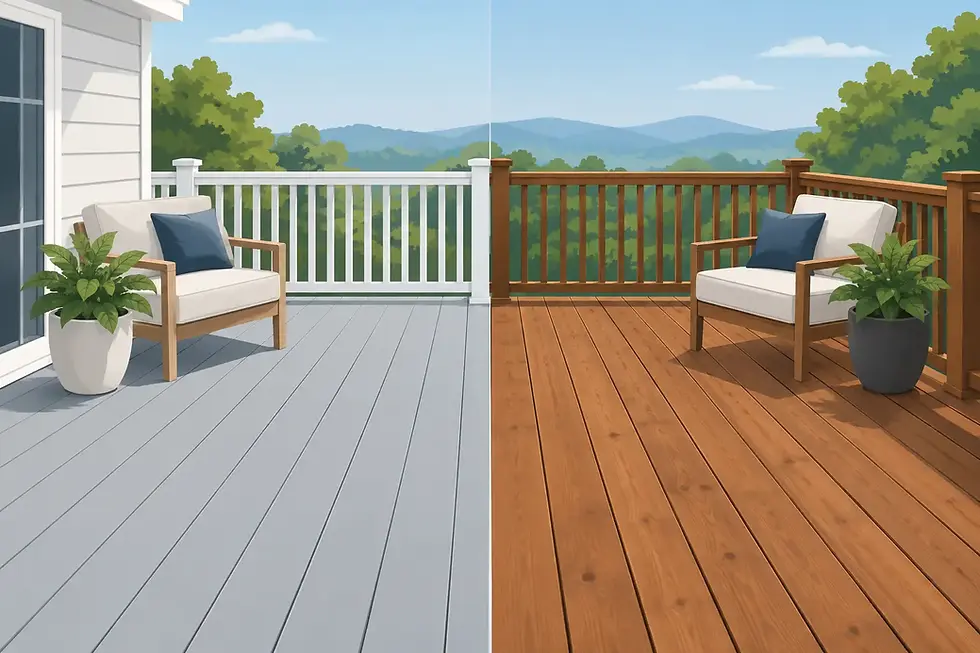
If you want a natural finish that lets aging wood show its personality, an oil-based semi-transparent stain may be the right direction. Expect a warm appearance and maintenance that usually involves refreshing worn areas before the deck looks neglected.
If lasting color consistency, faster drying, and a cleaner painted appearance matter more, a water-based stain may better suit the project. Semi-solid and solid-color options are particularly useful when boards have uneven coloration or old repairs that would distract from a transparent finish.
No stain makes a deck maintenance-free. Horizontal walking surfaces take more punishment than rails, posts, and vertical skirting. Areas near grills, planters, steps, and entry doors often wear first. Annual cleaning, prompt removal of leaves, and an occasional close inspection let homeowners address small concerns before they become a full restoration project.
A Finish Should Suit the Deck, Not the Label
The best stain is the one that fits the wood in front of you. That may be a penetrating oil finish for thirsty, weathered boards or a carefully applied water-based system for durable color and a more uniform look. What matters is honest evaluation, proper surface preparation, and application that respects the material.
With 33 years of hands-on experience, Deck Wrangler approaches deck restoration as preservation work, not a quick coating job. A careful estimate can clarify what your deck needs now and help keep the outdoor space attractive, safe, and ready for the seasons ahead.

Comments