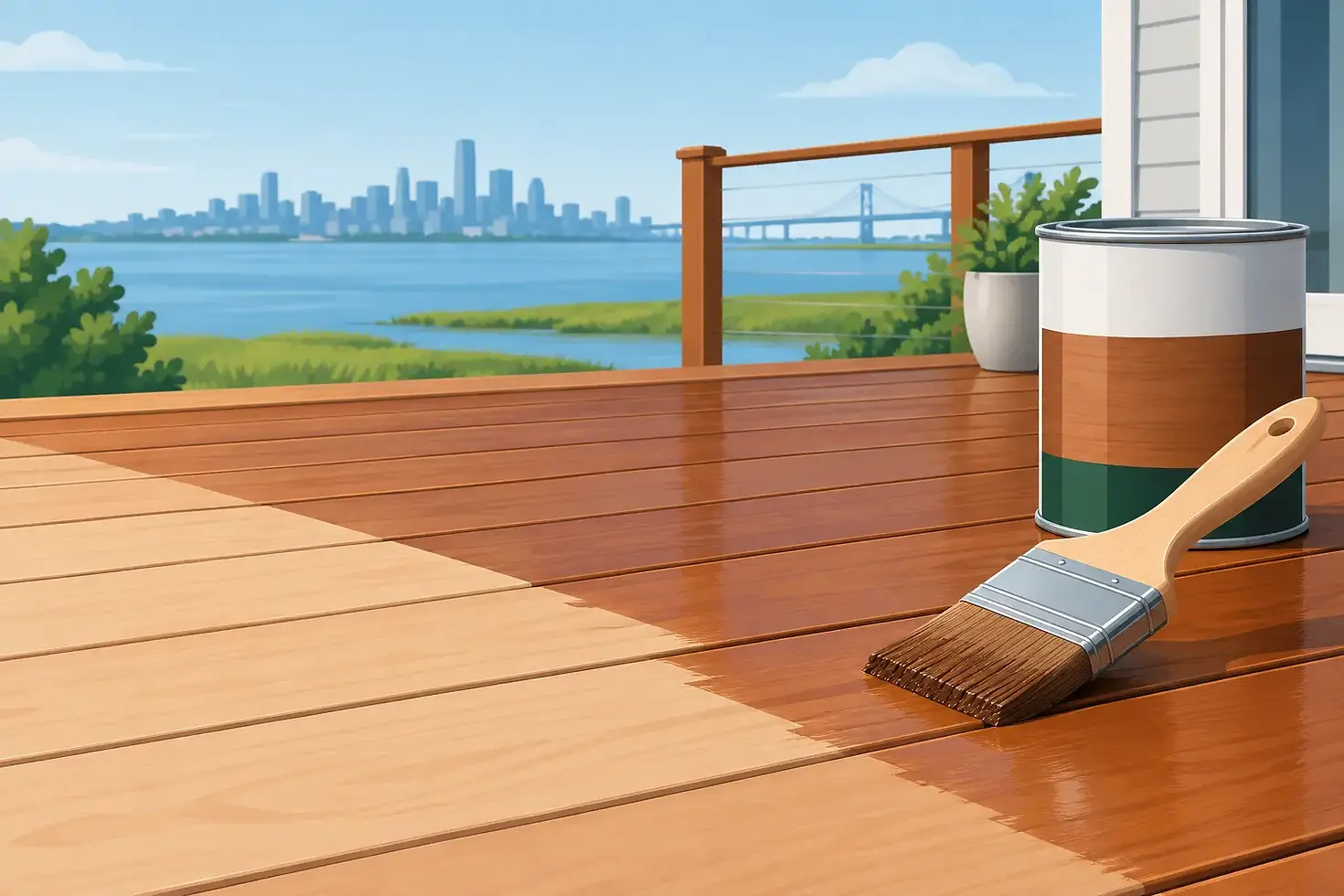
Best Wood Sealers Reviewed for New Jersey Decks
A deck can look clean on Saturday and still be headed for trouble by next season. In Hamilton and throughout central New Jersey, exterior wood faces a hard cycle of wet springs, humid summers, leaf-stained falls, and freeze-thaw winters. This best wood sealers reviewed guide looks beyond the label to help homeowners choose a finish that fits their deck, its condition, and the kind of protection it actually needs.
The right sealer does more than add color or make water bead for a few months. It slows moisture intrusion, limits sun damage, helps reduce surface checking, and makes routine cleaning less punishing. But there is no single best can for every board. A newer cedar deck, an older pressure-treated deck, and a weathered horizontal railing all ask different things of a protective finish.
What a Good Wood Sealer Must Handle in New Jersey
Most sealers fall into two broad groups: clear water repellents and penetrating stain-and-sealer products. Clear products preserve the wood's natural appearance at first, but they usually offer limited ultraviolet protection. On a sunny deck, that often means graying and fading arrive sooner than homeowners expect.
Semi-transparent and semi-solid products add pigment, which is what gives wood meaningful protection from sunlight. The trade-off is appearance. Semi-transparent finishes allow more grain to show, while semi-solid finishes hide more variation and can be a wiser choice for older boards with uneven color, repairs, or stubborn discoloration.
A dependable deck sealer should repel water without trapping it beneath a heavy surface film. It should also tolerate foot traffic, allow for proper maintenance, and match the species and condition of the wood. The product matters, but preparation matters just as much. A premium sealer applied over damp boards, mildew, loose fibers, or remnants of a failing finish will not deliver a premium result.
Best Wood Sealers Reviewed by Deck Need
These selections are reviewed by the job they are best suited to perform, not by the loudest promise on the can. Always confirm that a product is compatible with your wood species, previous coating, and local weather conditions before committing to a full deck.
Ready Seal Exterior Wood Stain and Sealer
Ready Seal is often a strong option for homeowners who want a penetrating, semi-transparent finish with a forgiving application process. Its oil-based formula is designed to soak into the wood rather than leave a thick coating on top. That can make future maintenance less complicated than stripping a peeling film-forming finish.
It tends to suit pressure-treated pine and cedar decks where the homeowner wants warmer color and visible grain. The application is relatively approachable, but “easy to apply” should not be confused with “apply it anytime.” The wood still needs to be clean, dry, and properly prepared. On intensely sunny or heavily used decks, expect maintenance sooner than you might with a more opaque finish.
Cabot Australian Timber Oil
Cabot Australian Timber Oil is a well-known choice for dense, attractive woods and projects where the richness of the grain is part of the appeal. It is commonly considered for mahogany, ipe, and other hardwoods, though it can also be used on suitable softwoods when the desired look calls for a deep, oil-finished appearance.
Its visual result is a major strength. The trade-off is that beautiful, richly toned wood needs attention. Dense hardwood can resist penetration, and excess product can remain tacky or dry unevenly if it is not applied carefully. This is not the finish to rush through on a hot afternoon. Careful wiping, proper coverage, and realistic maintenance expectations are part of the job.
Olympic Maximum Stain + Sealant
Olympic Maximum is worth considering for homeowners who prefer the convenience of a combined stain-and-seal product. Available in several opacity levels, it gives more flexibility than a clear water repellent alone. A semi-transparent version can be a practical fit for a deck with decent wood condition but some fading, while a more opaque option can help unify an older surface.
The appeal is straightforward: one product addresses color and water resistance. Still, the condition of the existing finish is decisive. If the deck has a failing solid stain, patchy paint, or a glossy old coating, applying a new product over it without proper removal can lead to uneven adhesion and premature failure. Compatibility testing on a small, hidden area is a sensible step.
Seal-Once Marine Premium Wood Sealer
For damp areas, shaded decks, and wood near pools, planters, or persistent moisture, Seal-Once Marine Premium is often a product homeowners investigate. It is water-based and positioned for high-moisture environments, making it a reasonable consideration when water exposure is the chief concern.
Its low-odor, water-based nature can be appealing for residential work, especially where ventilation and cleanup matter. But water resistance is only one part of deck preservation. On a full-sun deck, choose a tinted version or another product with sufficient UV defense. A clear finish may keep water out while doing little to prevent the gray, tired look caused by sunlight.
Thompson’s WaterSeal Clear Multi-Surface Waterproofer
Thompson’s WaterSeal is familiar for a reason: it is widely available, straightforward, and focused on water repellency. For vertical exterior woodwork, temporary protection, or a modest-budget project where preserving the natural tone is the priority, it can serve a purpose.
For an exposed deck floor, however, it is best viewed with realistic expectations. Clear waterproofers do not provide the same UV defense as pigmented stains, and traffic areas may need more frequent attention. If your deck receives several hours of direct summer sun, a quality semi-transparent or semi-solid deck stain is often the more durable choice.
Choosing Between Clear, Semi-Transparent, and Semi-Solid
The most attractive finish is usually the one that respects the deck's present condition. Clear sealers work best when wood is new or exceptionally uniform and when a natural appearance matters more than long intervals between maintenance. They are not a set-it-and-forget-it answer for sunny New Jersey decks.
Semi-transparent sealers are a practical middle ground. They preserve much of the grain while adding pigment for better UV protection. They are especially fitting for well-maintained cedar, redwood, and pressure-treated decks that have been cleaned and brightened correctly.
Semi-solid finishes offer greater color consistency and more protection from the sun. They are often the smarter choice for aging decks with mixed board colors, old water stains, or areas that have been repaired over time. You give up some grain visibility, but you may gain a more polished appearance and a finish that wears more evenly.
The Part the Can Cannot Do for You
A sealer cannot repair soft wood, erase deep rot, or bond properly to a surface that has not been prepared. Before sealing, the deck should be inspected for loose fasteners, damaged boards, raised grain, and problem areas around posts and railings. Cleaning must remove dirt, algae, and old loose finish without damaging the wood fibers.
Pressure washing requires restraint. Too much pressure or the wrong tip can fur the surface, carve softwood, and create a deck that looks rough even after it dries. After cleaning, wood needs adequate drying time. The exact window depends on the product, recent weather, shade, and moisture content, but sealing damp boards is a common and costly mistake.
Application conditions count as well. Avoid applying during rain, when rain is imminent, on scorching-hot boards, or when heavy dew is likely before the finish can set. Work in manageable sections and keep a wet edge to reduce lap marks. More product is not always better. With penetrating sealers, overapplication can leave shiny, sticky spots that collect dirt rather than protect the wood.
When Professional Deck Sealing Makes Sense
A straightforward, newer deck can be a reasonable homeowner project. A deck with peeling coatings, uneven weathering, extensive mildew, multiple prior finishes, or visible wood damage deserves a more experienced assessment. The difference between cleaning and restoring is often found in those details.
At Deck Wrangler Power Washing and Painting Co., 33 years of hands-on exterior-care experience has reinforced one principle: preservation starts before the finish goes on. The right cleaning method, surface preparation, and sealer choice help protect both the character of the wood and the investment beneath your feet.
Before choosing from the best wood sealers reviewed here, look closely at what your deck is telling you. Water that soaks in quickly, faded traffic paths, splintering boards, and blotchy old stain are not simply cosmetic concerns. Addressed with the right preparation and finish, they can become the beginning of a deck that looks cared for and remains ready for the seasons ahead.

Comments