
Wood Brightener Versus Deck Cleaner: What Works?
A gray, blotchy deck is not always a sign that the wood is ready for replacement. In many Hamilton-area backyards, it is the result of sun exposure, moisture, tracked-in soil, mildew, and an aging stain that no longer protects the surface. Understanding wood brightener versus deck cleaner helps homeowners make better decisions before applying a new finish or scheduling restoration work.
These products are often grouped together because both are used during deck preparation. They are not interchangeable, however. A deck cleaner removes contamination and failing coatings. A wood brightener restores the wood's natural tone after cleaning and helps create a more even surface for staining. Used in the right order, they can make a weathered deck look cared for again without disguising problems that need attention.
Wood Brightener Versus Deck Cleaner: The Core Difference
Deck cleaner is the workhorse of the preparation process. Its job is to loosen dirt, mildew, algae, pollen, surface grime, and remnants of old stain or sealer. Depending on the product and the deck's condition, a cleaner may also address dark organic staining and the gray oxidation that develops as bare wood weathers outdoors.
Wood brightener comes afterward. Cleaning can leave wood looking darker, uneven, or slightly dull, particularly on older boards. Brightener is generally an acid-based neutralizing treatment designed to bring the wood's color back toward a more natural, even appearance. It also helps correct the raised pH left by many alkaline cleaners, which matters when a new stain or protective treatment is planned.
Think of the difference this way: cleaner removes what should not be on the deck. Brightener refines the appearance of the wood that remains. One does the heavy cleanup; the other helps restore visual clarity and prepares the surface for its next protective layer.
A brightener will not remove a thick failed coating, heavy grease buildup, or deeply embedded mildew by itself. Likewise, a cleaner may leave a deck clean but still looking flat or uneven. The best choice depends on what the wood has been through and what you want the deck to look like when the work is complete.
When Your Deck Needs Cleaner First
Most decks that have spent a New Jersey winter outdoors need cleaning before any other treatment. Wind-blown debris, damp leaves, mildew, foot traffic, and airborne pollution settle into the grain and between boards. Even a deck that looks only lightly dirty can have buildup that interferes with stain adhesion.
Deck cleaner is usually the right starting point when you see dark staining, green growth, muddy traffic areas, peeling transparent stain, or a noticeable film on the boards. It is also appropriate before a maintenance coat of stain, provided the existing finish is still compatible and sound.
The condition of the coating matters. If water no longer beads on the surface, if color is wearing away in pathways, or if the deck has a patchwork look, a proper cleaning is often part of restoring it. Cleaning should be controlled, not aggressive. Too much pressure, the wrong tip, or an inexperienced hand can furrow soft wood fibers, leave wand marks, and create a rough surface that holds dirt even faster.
That is why power washing is not simply about making the deck look clean for the afternoon. The goal is to remove contaminants while respecting the wood. Cedar, pressure-treated pine, older softwood boards, railings, and steps can each respond differently to water pressure and cleaning solutions.
Cleaner is not always enough
A deck can appear cleaner after washing and still be poorly prepared for stain. Alkaline deck cleaners are effective at lifting grime, but they can alter the wood's surface chemistry and leave color variation behind. This is where brightener earns its place in a careful restoration process.
When Wood Brightener Makes the Difference
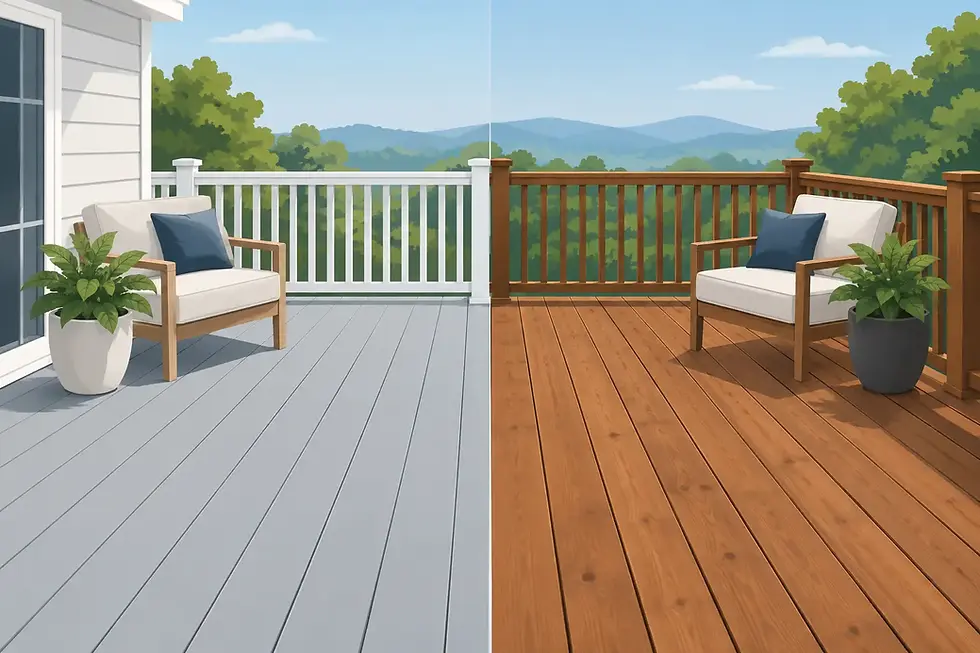
Wood brightener is especially useful after a deck has been cleaned or stripped. If the boards look darkened, orange-brown, blotchy, or washed out after cleaning, brightener can make a dramatic visual difference. It often brings out more consistent color in the grain and gives the deck a fresher, more uniform appearance before stain is selected.
For homeowners who prefer a semi-transparent stain, this step can be particularly valuable. Semi-transparent finishes allow the character of the wood to show through. If the underlying boards are uneven in color, the finished deck may look uneven too. A brightened surface gives that finish a better foundation.
Brightener is also useful when a deck has weathered gray after a previous finish failed. Gray wood fibers are not always permanent damage, but they should be properly cleaned and evaluated. Where the wood is sound, brightening can help recover warmth and character that has been hidden by exposure.
There are limits. Brightener cannot repair cracked boards, deep checking, rot, loose fasteners, or areas where water has caused structural deterioration. It cannot make mismatched replacement lumber blend perfectly with decades-old boards, either. Skilled preparation includes identifying those issues before cosmetic treatments move forward.
Does Every Deck Need Both Treatments?
No. A lightly soiled deck with a stable, compatible stain may need careful cleaning and a maintenance application, not a full cleaning-and-brightening sequence. A painted deck is another case where the process changes. The goal may be to clean the painted surface safely, correct peeling areas, sand where needed, and apply a suitable coating rather than brighten exposed wood across the entire deck.
On the other hand, a bare wood deck that has turned gray or a deck being prepared for a new semi-transparent stain often benefits from both products. Cleaner removes buildup and surface contaminants. Brightener follows to improve color consistency and prepare the wood for protection.
The species and age of the lumber also affect the decision. Older pressure-treated pine may have pronounced grain and prior coating buildup. Cedar can be more sensitive to aggressive washing. Composite decking should not receive traditional wood brightener as though it were lumber. A dependable contractor evaluates the material, finish history, drainage, exposure, and intended final appearance before choosing a method.
Timing matters before staining
After cleaning and brightening, wood needs time to dry properly before stain or sealer is applied. Rushing this stage can trap moisture beneath the finish, leading to poor penetration, premature peeling, or an uneven sheen. Drying time varies with weather, shade, humidity, and the condition of the boards.
This is one reason a clear forecast and patient scheduling matter. A deck in full summer sun may dry very differently from one shaded by mature trees or located near a damp area of the yard. Surface preparation is not glamorous, but it determines whether a beautiful new finish lasts through the seasons.
Why Professional Preparation Protects Your Investment
Store-bought cleaner and brightener can be useful products, but results rely on more than the label. Solution strength, dwell time, rinse technique, water pressure, and wood moisture all require judgment. An overly strong mix can discolor wood. Insufficient rinsing can leave residue. Excessive pressure can damage boards that were still structurally sound before cleaning began.
With 33 years of hands-on exterior-care experience, Deck Wrangler Power Washing and Painting Co. approaches deck preparation as restoration work, not a quick wash-and-go service. The objective is to preserve the wood's character, correct what can be corrected, and create a clean foundation for protection and color.
For homeowners, that careful approach also provides a clearer picture of the deck's real condition. Once soil, mildew, and failing finish are removed, concerns such as loose rails, split boards, nail pops, and water-prone areas are easier to see. Addressing them early helps protect both the appearance and the function of the outdoor space.
A well-cared-for deck should invite people outside, not create another item on the weekend repair list. Whether your boards need a thorough cleaner, a restorative brightener, or a more complete refinishing plan, the right preparation gives the next season of outdoor living a far better place to begin.

Comments