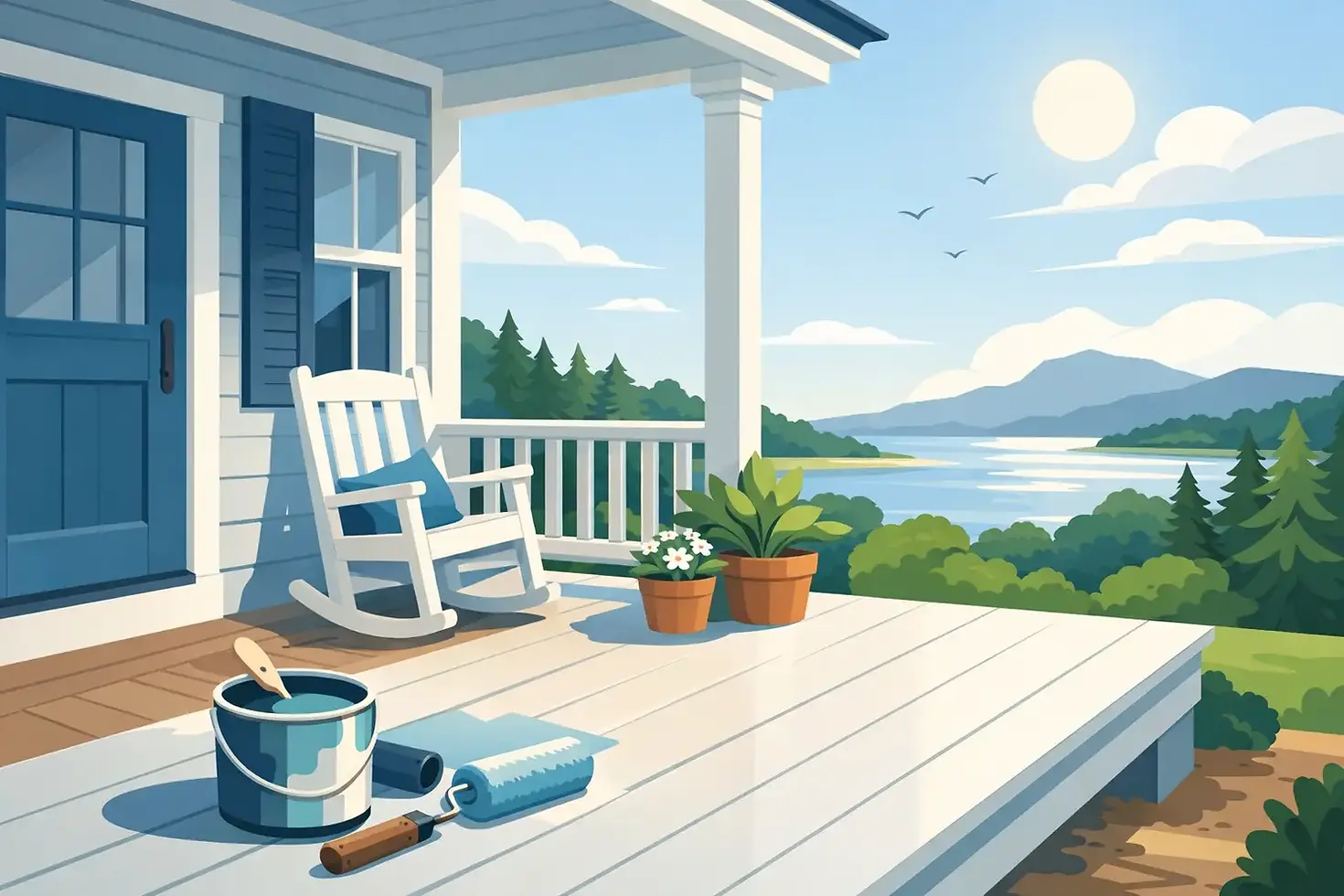
Porch Painting That Holds Up in New Jersey
A porch can look worn long before the rest of the house does. Foot traffic, wet shoes, leaf stains, furniture legs, summer sun, and New Jersey freeze-thaw cycles all work on the surface day after day. Quality porch painting does more than give the entrance a fresh color. Done properly, it helps protect the porch from moisture, makes the approach to your home more inviting, and extends the useful life of the surface beneath your feet.
The difference between a finish that looks good for a season and one that earns its keep for years is rarely the paint color. It is the preparation underneath it. A porch is a hardworking exterior surface, and it deserves the same careful attention as a weathered deck or exterior woodwork.
Why Porch Painting Requires More Than a Fresh Coat
Porch floors and railings face conditions that siding does not. Horizontal surfaces hold rainwater. They collect grit that acts like sandpaper under shoes. Painted steps receive concentrated wear at the leading edge, while railings can peel where water enters cracks and open joints.
Painting over these issues may improve appearances briefly, but the underlying problem remains. If boards are soft, paint is lifting, mildew is present, or moisture is trapped beneath the old coating, a new finish will struggle to bond. Peeling paint is often a symptom of poor adhesion, lingering dampness, or inadequate preparation rather than a simple need for another coat.
That is why an experienced exterior-care professional starts by reading the surface. The goal is not to cover every mark at once. The goal is to identify what the porch is made of, what has been applied before, where it is failing, and what will give the new coating a sound foundation.
The Surface Preparation That Determines the Result
A lasting finish begins with cleaning, but cleaning has to be appropriate for the material and condition of the porch. Dirt, pollen, algae, mildew, and chalky old paint can interfere with adhesion. Careful washing removes those contaminants without damaging wood fibers, forcing water behind trim, or roughening an already delicate surface.
After cleaning, the porch needs sufficient drying time. This step is especially important in Hamilton and throughout central New Jersey, where humid stretches and quick-moving rain can complicate exterior work. Paint applied to damp wood may blister, peel, or trap moisture below the coating. A surface can feel dry to the touch while still holding moisture where it matters.
Loose and failing paint should then be scraped or sanded away, with the edges feathered so the new finish does not telegraph harsh ridges from the old coating. Cracks, nail holes, and minor imperfections may need repair. Any damaged or deteriorated boards should be addressed before painting begins. No paint product can restore wood that has begun to rot.
The prep process often includes these essential checks:
Inspecting boards, steps, railings, and posts for decay or movement
Removing loose paint and smoothing unstable edges
Treating mildew or organic staining at the source
Allowing cleaned surfaces to dry properly before coating
Priming bare wood, repairs, and stain-prone areas as needed
These details take time, but they are where durability is built. Tradition meets precision when a porch is treated as a surface worth preserving, not merely one to make presentable before the weekend.
Choosing the Right Paint for a Porch
Not every exterior paint belongs on a porch floor. Railings, trim, ceilings, and floorboards have different demands, and using a single product everywhere can create avoidable problems. A porch floor needs a coating designed for foot traffic and weather exposure. Railings and vertical trim may call for a different finish that balances weather resistance with a clean, refined appearance.
Color also has practical consequences. Deep, dark shades can look striking, but they absorb more heat in direct sun and can make surface wear more visible. Very light colors can brighten a shaded porch and feel welcoming, though they may show muddy footprints or leaf stains more quickly. Mid-tone grays, muted blues, warm taupes, and traditional porch colors often provide a practical balance between character and maintenance.
Sheen deserves attention as well. A high-gloss finish can highlight architectural detail on a railing or front door, but it also reveals surface imperfections. On a walking surface, excessive gloss can be less forgiving when wet. The right choice depends on the porch material, sunlight, surrounding architecture, and how the family uses the space.
For older homes, the decision may be even more nuanced. Wood that has been coated repeatedly over many years may need a compatible system rather than an aggressive change in product type. An experienced painter considers the existing finish instead of assuming the newest product is automatically the best answer.
Timing Porch Painting Around New Jersey Weather
Exterior painting is a weather-sensitive trade. A bright morning is not enough reason to begin if rain is expected before the coating can cure or if the surface is still damp from the night before. Temperature, humidity, direct sun, wind, and the forecast all influence the outcome.
Spring and fall often offer favorable painting conditions in New Jersey, but each season brings its own challenges. Spring can bring heavy pollen and fluctuating temperatures. Summer may provide long dry days, yet high humidity and intense direct sunlight can cause coatings to dry too quickly on the surface. Fall can be excellent for exterior work, provided leaves, damp mornings, and cooling overnight temperatures are managed carefully.
The best schedule depends on the specific porch and forecast. Covered porches dry differently than open ones. A north-facing entry can stay damp longer than a sun-drenched front step. Proper planning protects the finish before the first brush or roller touches the surface.
Common Porch Painting Shortcuts That Cost More Later
The fastest-looking approach is often the one that fails first. Painting over dirt, skipping primer on bare repairs, applying a thick coat to hide peeling edges, or rushing a second coat before the first has properly dried can all shorten the life of the work.
Another common mistake is treating pressure washing as a cure-all. Used with care, modern cleaning equipment is valuable for preparing exterior surfaces. Used too aggressively, it can gouge wood, raise the grain, strip sound coatings, or drive moisture where it does not belong. The right method depends on the age and condition of the porch, not simply on how dirty it looks.
Homeowners should also be cautious with products marketed as one-step solutions. Some can be appropriate in the right situation, but no can of paint eliminates the need for a clean, dry, stable surface. Good materials matter. Skilled judgment matters just as much.
When Professional Porch Painting Makes Sense
A small, sound porch with minimal wear may be a manageable homeowner project. But professional help is worthwhile when paint is peeling across large areas, boards feel soft, old coatings are layered and failing, stains keep returning, or the porch includes detailed railings, steps, columns, and trim that require a polished finish.
It also makes sense when homeowners want the work evaluated rather than guessed at. A careful assessment can separate cosmetic wear from conditions that need repair. That protects the investment in paint and helps prevent a beautiful new surface from failing over an unresolved moisture or material issue.
For Hamilton-area homeowners, Deck Wrangler Power Washing and Painting Co. brings 33 years of hands-on skill to the preparation and restoration work that gives exterior finishes their staying power. The approach is deliberate: clean thoroughly, prepare carefully, protect the material, and leave the porch looking like it belongs with the home.
Keeping a Painted Porch Looking Its Best
Once the work is complete, simple habits can make a noticeable difference. Sweep away leaves and grit before they hold moisture against the coating. Clean up standing water after storms where drainage is poor. Use furniture pads or lift furniture instead of dragging it across painted boards. Check caulked joints, railing connections, and high-traffic step edges each season.
A painted porch will eventually need maintenance, particularly on walking surfaces. That is normal. Addressing a small chip or worn edge early is far easier than waiting for water to work beneath the coating and create broad peeling. With thoughtful care and the right preparation from the start, your porch can remain a welcoming, durable part of the home through many New Jersey seasons.
A well-painted porch should feel dependable underfoot and look cared for from the curb - a quiet sign that the home behind it has been maintained with the same attention.

Comments