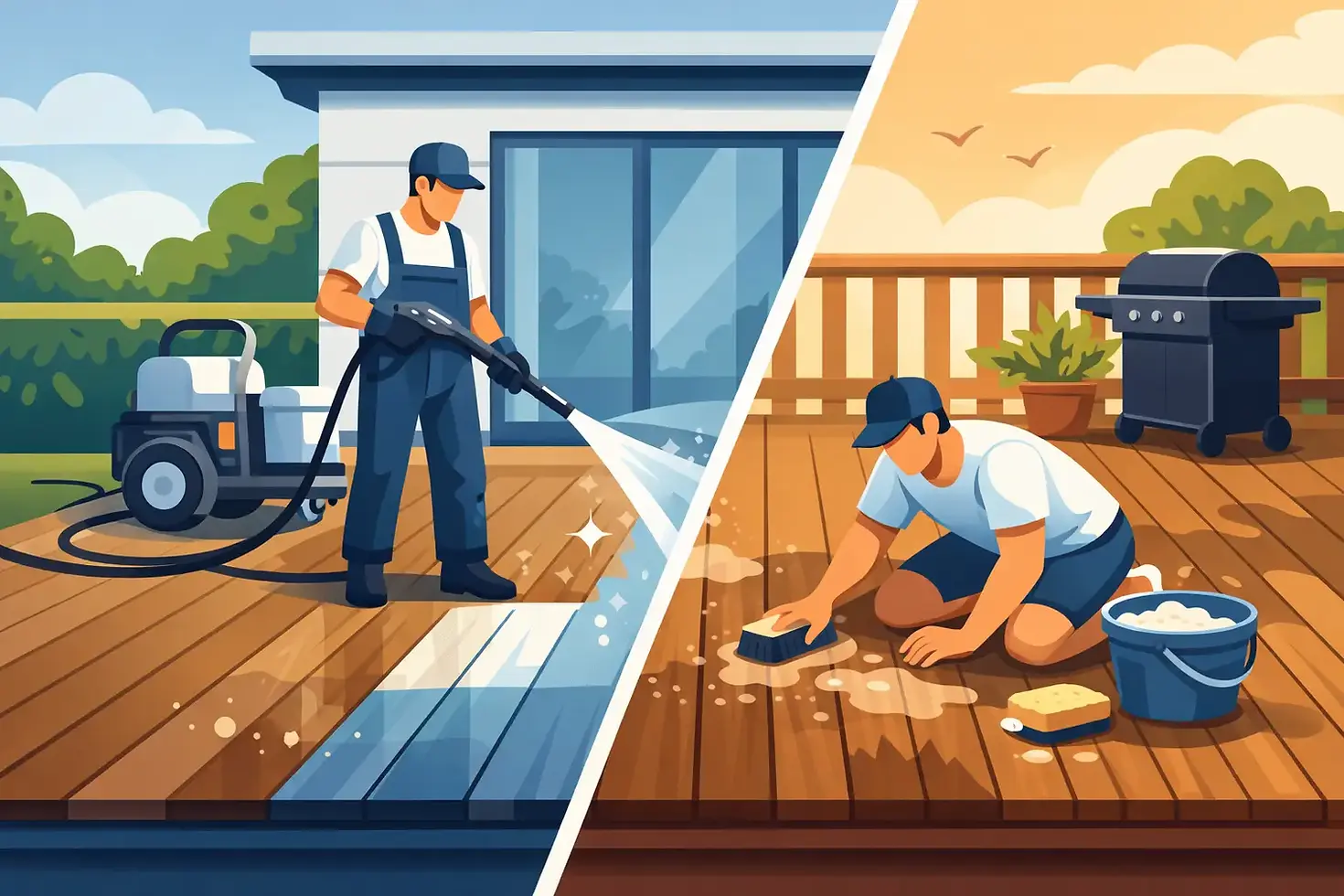
Professional Washing Versus DIY for Your Deck
A gray, slippery deck after a New Jersey winter is not simply an eyesore. It can be a warning that moisture, organic growth, and a failing finish are taking hold. The choice between professional washing versus DIY comes down to more than who operates the machine. It is about knowing what the surface needs, what it can safely withstand, and what should happen after the cleaning is done.
For some homeowners, a careful do-it-yourself wash is a reasonable way to freshen a small, sound surface. For weathered wood, stubborn staining, peeling paint, or a deck that has not been maintained in years, professional care can prevent an inexpensive cleaning job from becoming an expensive repair. Tradition meets precision when the work protects both the appearance and condition of the home.
Professional Washing Versus DIY Starts With the Surface
Not all exterior surfaces should be cleaned the same way. A concrete walkway can tolerate a different approach than cedar deck boards. Vinyl siding, painted trim, composite decking, brick, and older pressure-treated lumber each have their own limits.
This is where many DIY projects go wrong. A homeowner may rent or buy a powerful pressure washer, use the same setting throughout the property, and assume a clean-looking result means the job was successful. Yet excessive pressure can raise the grain of wood, leave wand marks, strip sound paint, force water behind siding, and weaken already worn deck fibers. Damage may not be obvious until the boards dry or the next finish is applied.
Professional washing begins with an assessment. The condition of the wood, the age of the coating, visible mildew, drainage patterns, and the surface material all guide the method. Cleaning chemistry, dwell time, water pressure, nozzle choice, and rinsing technique work together. The goal is not to use the most force. The goal is to remove contaminants while preserving the surface beneath them.
What DIY Washing Can Do Well
A homeowner who understands the equipment and works patiently can handle light maintenance on certain areas. For example, gently rinsing loose pollen from a newer composite deck, washing a small concrete pad, or cleaning lightly soiled outdoor furniture may be well within reach.
DIY can also make sense when the surface is in good condition and the task is strictly cosmetic. Using the manufacturer-approved cleaner, following dilution instructions, protecting nearby plants, and testing an inconspicuous area first all make a difference. The machine should be treated as a controlled cleaning tool, not a shortcut for removing every stain in minutes.
The trade-off is time. Good DIY work requires preparation, careful movement, repeat rinsing, and close attention around railings, seams, windows, electrical fixtures, and landscaping. A rushed afternoon project often leaves uneven results or misses the deeper causes of discoloration.
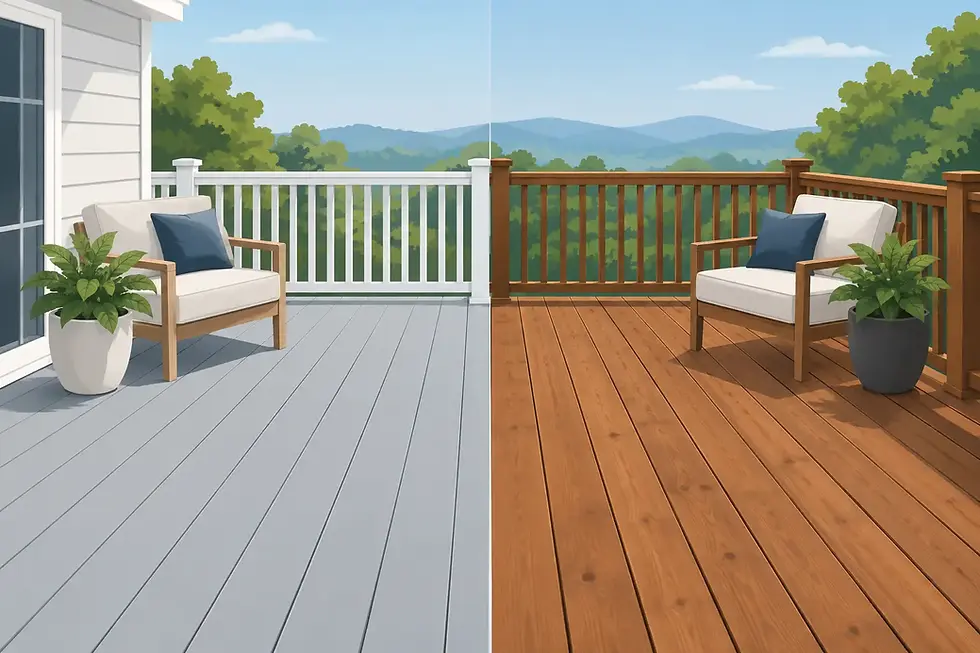
There is also the question of what happens next. Cleaning exposed wood is only part of deck care. If the existing stain has worn away, the deck may need time to dry, surface preparation, and a properly selected protective treatment. Skipping those steps can leave freshly cleaned boards exposed to sun and moisture just when they need protection most.
Where DIY Cleaning Carries Real Risk
Wood decks are particularly vulnerable because their condition can vary board by board. One area near a downspout may be soft from repeated moisture, while another may be dry, splintered, or covered in old coating residue. A uniform pressure setting does not account for those differences.
Common DIY problems include etched lines across deck boards, fuzzy wood fibers, water pushed into joints, damaged screen doors, stripped paint, and cleaner residue left to dry in the sun. Many homeowners also underestimate how quickly algae and mildew return if the surface is cleaned without addressing drainage, shade, or failed protective coatings.
Safety deserves equal attention. Wet decks are slippery, ladders can become unstable, and high-pressure water can cause injury. Cleaning solutions need to be handled with care around children, pets, gardens, and nearby bodies of water. The most visible part of a project may be washing, but the preparation and protection around it often take just as much skill.
Why Professional Washing Protects the Investment
A professional brings more than commercial-grade equipment. Experience provides the judgment to recognize when a surface needs a gentle wash, when a stain needs pre-treatment, and when cleaning alone will not restore the result a homeowner expects.
For deck restoration, that judgment is especially valuable. Proper cleaning can reveal the true condition of the boards, fasteners, railings, and steps. It may expose loose areas that need attention, sections with deep moisture damage, or a coating that is beyond a simple refresh. Finding these issues early helps homeowners make informed decisions before small concerns become larger repairs.
Experienced exterior-care professionals also understand that a polished result depends on details. Edges, vertical surfaces, transitions near the home, and hard-to-reach areas should receive the same care as the center of the deck. Nearby siding, windows, stone, and landscaping must be protected throughout the work.
At Deck Wrangler Power Washing and Painting Co., 33 years of hands-on experience informs each recommendation. That kind of practical knowledge matters when caring for a deck that has weathered many New Jersey seasons. The work is approached as preservation, not high-volume cleaning.
The Cost Question Is Bigger Than the Initial Price
DIY often appears less expensive because the first comparison is simple: equipment rental or purchase, cleaning solution, and a weekend of labor versus the price of a professional service. That comparison is fair, but it is incomplete.
A DIY project can become costly if it damages wood fibers, strips paint that was still sound, or creates a surface that needs extra sanding before staining. Add the value of your time, the challenge of transporting equipment, and the possibility of an uneven finish, and the savings can narrow quickly.
Professional service costs more upfront because it includes trained labor, appropriate equipment, surface-specific methods, and accountability for the work. For homeowners preparing to sell, hosting family outdoors, or restoring a deck they hope to enjoy for years, the value often lies in avoiding preventable damage and extending the life of the surface.
That does not mean professional washing is necessary for every task. A lightly soiled patio may not require a full restoration approach. The right choice depends on the material, level of buildup, prior finishes, condition of the surface, and the standard of result you expect.
When to Call a Professional
Certain signs suggest it is time to move beyond a basic DIY wash. Deep black or green growth, peeling or flaking coatings, gray and splintered wood, persistent stains, slippery steps, and uneven color are all worth a professional evaluation. So are decks that have not been cleaned or protected for several years.
Homeowners should also seek help when they are unsure what material they have or what finish was previously used. Applying the wrong cleaner or coating can create adhesion problems and shorten the life of the work. A knowledgeable assessment can clarify whether the deck needs washing, brightening, sanding, painting, staining, repairs, or a combination of these services.
For siding and painted exterior surfaces, professional care is useful when staining is widespread, paint is failing, or delicate materials need a controlled low-pressure method. The cleanest-looking home is not always the best-treated home if water has been forced where it does not belong.
Choose Care That Fits Your Home
A deck is where meals linger after sunset, children track in summer grass, and families gather when the weather turns warm. It deserves more thought than a quick blast from a rental machine. If the surface is lightly soiled and sound, careful DIY maintenance may keep it looking presentable. If it is weathered, slippery, faded, or ready for a new finish, skilled washing and restoration can protect the character of the space.
Before another season passes, take a close look at the areas that receive the most sun, shade, foot traffic, and moisture. Those details will tell you whether a simple cleaning is enough or whether your outdoor space deserves the steady hand of a deck care professional.

Comments