Top Signs of Deck Decay Every Homeowner Should Know
A deck rarely fails all at once. More often, a once-solid board begins to feel slightly soft underfoot, a railing develops a little movement, or paint starts peeling in the same damp corner year after year. Knowing the top signs of deck decay helps homeowners address trouble while restoration is still practical - and before a beautiful outdoor space becomes a safety concern.
New Jersey decks work hard. They endure humid summers, winter freeze-thaw cycles, heavy rain, falling leaves, and the everyday wear of family gatherings. A close look each season can reveal whether your deck needs straightforward cleaning and protection or more involved repair.
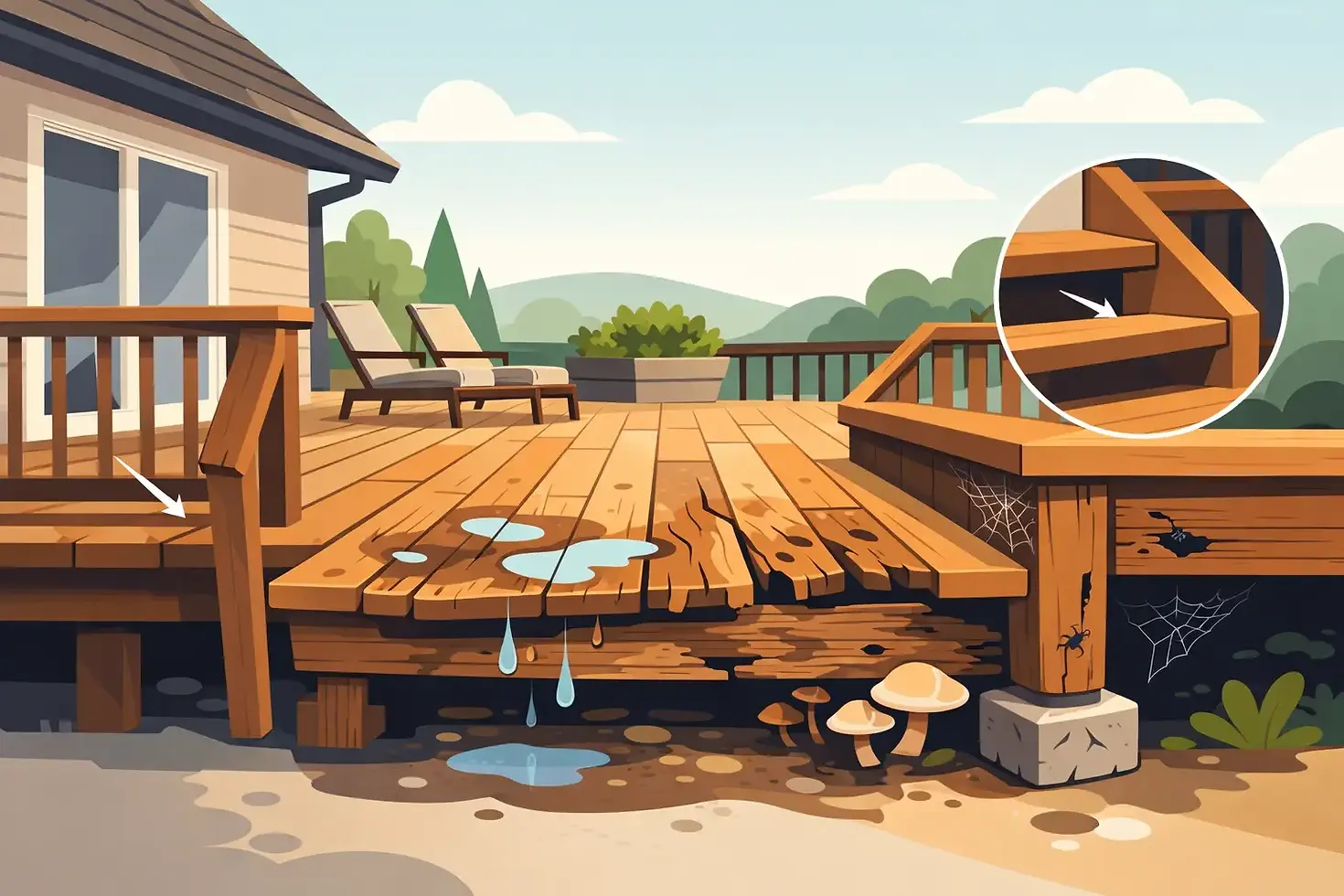
Soft or Spongy Boards Underfoot
A board that gives under your weight is one of the clearest warnings of decay. Sound deck lumber should feel firm and stable. If a section feels springy, soft, or unusually flexible, moisture may have penetrated the wood and begun breaking down its fibers.
Pay particular attention to boards near planters, downspouts, stair landings, and areas shaded by trees. Those locations tend to remain damp longer after a storm. Decay can also begin from the underside, so a board may look acceptable from above while losing strength underneath.
Do not assume a soft area is only a cosmetic problem. Surface treatments can improve the appearance of weathered wood, but they cannot restore a board that has lost its structural integrity. Damaged boards should be assessed and replaced before a proper restoration process begins.
Cracks, Splits, and Deep Checking
Small surface checks are common as exterior lumber expands and contracts through changing seasons. They do not automatically mean the deck is failing. The concern begins when cracks become deep, wide, or concentrated around fasteners, board ends, and high-traffic areas.
Deep splits invite water into the wood. Once moisture settles in those openings, it can stay there long enough to support rot, especially when the deck has an aging or worn protective finish. Splintered edges are another concern for bare feet, children, and pets.
A trained eye can tell the difference between normal weathering and wood that needs repair. In some cases, careful cleaning, sanding, and sealing can preserve a board with minor checking. In others, replacement is the wiser investment. The right answer depends on the depth of the damage and the condition of the framing below.
Dark Staining, Fungal Growth, and Persistent Dampness
Dark patches are not always decay, but they deserve attention. Black, gray, green, or brown discoloration can indicate mildew, algae, fungal growth, trapped moisture, or a failing finish. On a shaded deck, these conditions often overlap.
Look closely at the gaps between boards, the bases of rail posts, and areas where leaves collect. If the wood stays dark long after dry weather returns, it may not be drying properly. Standing moisture is the enemy of a wood deck because it accelerates deterioration and can make the surface slippery.
Professional washing is not simply about making a deck look cleaner. Used with the correct methods and pressure, it removes surface contaminants without tearing into the wood grain. Aggressive pressure washing, on the other hand, can scar the surface, raise fibers, and make the wood more vulnerable to future moisture intrusion.
Peeling Paint or a Failing Stain Finish
Peeling paint, flaking stain, and uneven fading often begin as appearance issues. Left alone, they become protection issues. A coating or stain serves as a barrier against sun, rain, and daily use. When that barrier fails, bare wood takes the full impact of the elements.
Notice whether peeling is limited to a sunny section or appears in damp, shaded spots as well. Sun fading may call for surface preparation and a renewed protective coating. Peeling concentrated near joints, steps, or railings can point to trapped moisture and potentially deeper problems.
It is tempting to coat over peeling areas for a quick improvement. That shortcut usually does not last. Quality deck restoration depends on thorough preparation: cleaning the surface, addressing failed material, allowing proper drying time, and applying a finish suited to the deck's condition. Tradition meets precision when the preparation receives as much care as the final coat.
Loose Railings, Wobbly Posts, and Unsteady Stairs
A deck can look freshly painted and still be unsafe. Railings, stairs, and support posts deserve the same attention as the deck boards because these are the components people rely on for stability.
Test railings with gentle pressure. They should feel firm, not sway or shift at their connections. Check stair treads for movement and look at the post bases where they meet the deck or ground. Rot often develops where wood touches damp surfaces or where water has been allowed to collect around hardware.
Loose connections may come from aging fasteners, but they can also signal deterioration inside the wood. A screw tightened into soft or decayed material will not create a lasting repair. If railings or stairs move, limit their use until the cause is properly evaluated.
Rusted Hardware and Corroded Fasteners
The fasteners underneath a deck carry as much responsibility as the boards on top. Rusting screws, nails that have lifted, corroded brackets, and deteriorated joist hangers can weaken connections even when the wood appears solid.
A few surface marks on older hardware are not always urgent. Heavy corrosion, missing hardware, or fasteners pulling away from the wood are different matters. These conditions can allow boards and framing to shift, opening new paths for water and causing further damage over time.
The ledger board - the section where a deck attaches to the home - deserves special care. This area should be secure, properly flashed, and free of visible rot. Because ledger and framing concerns affect the deck's overall support, they are not issues to cover with paint or postpone until next season.
Sagging, Uneven Lines, or Pooling Water
Stand back from the yard and look along the deck's edges. A sagging section, uneven deck line, or railing that no longer looks level can indicate movement in the framing, posts, or footings. It may be caused by wood decay, soil movement, poor drainage, or a combination of factors.
Water pooling on the deck is another warning. Even shallow puddles shorten the life of finishes and leave boards wet longer than they should be. Clogged board gaps, misdirected downspouts, and low areas can all contribute. Correcting the drainage issue is part of preserving the repair. Replacing boards without solving the moisture source often leads to the same problem again.
Insect Damage and Small Holes in Wood
Small holes, sawdust-like debris, hollow-sounding boards, or tunnels in exposed wood should be investigated. Some insect activity is minor, while other activity can compound existing moisture damage. Wood that has already softened from rot is especially vulnerable.
Do not confuse every knot hole with an active problem. The larger concern is fresh debris, expanding damage, or wood that crumbles when lightly pressed. When in doubt, have the affected area inspected before beginning cosmetic work.
When Weathering Becomes a Restoration Project
Not every faded deck is decaying. Sun bleaching, light surface checking, and a dull finish are often signs that routine maintenance is due, not that the deck needs major repair. The key is whether the wood remains firm, the framing is stable, and water is being managed properly.
A seasonal inspection is a practical habit. Check the walking surface, railings, stairs, board ends, hardware, and the underside of the deck when accessible. Clear leaves from gaps, move planters occasionally, and keep gutters and downspouts from directing water onto the structure.
When you see several warning signs at once, a professional evaluation can prevent guesswork. An experienced restoration contractor can identify what should be cleaned and preserved, what needs repair, and which surfaces are no longer safe to retain. For homeowners in Hamilton and the surrounding New Jersey area, Deck Wrangler brings 33 years of hands-on skill and attention to detail to that decision.
A well-cared-for deck should feel as dependable as it looks. Address the first signs of decay with care, protect the sound material you still have, and your outdoor space can remain a place for everyday living and lasting gatherings.

Comments