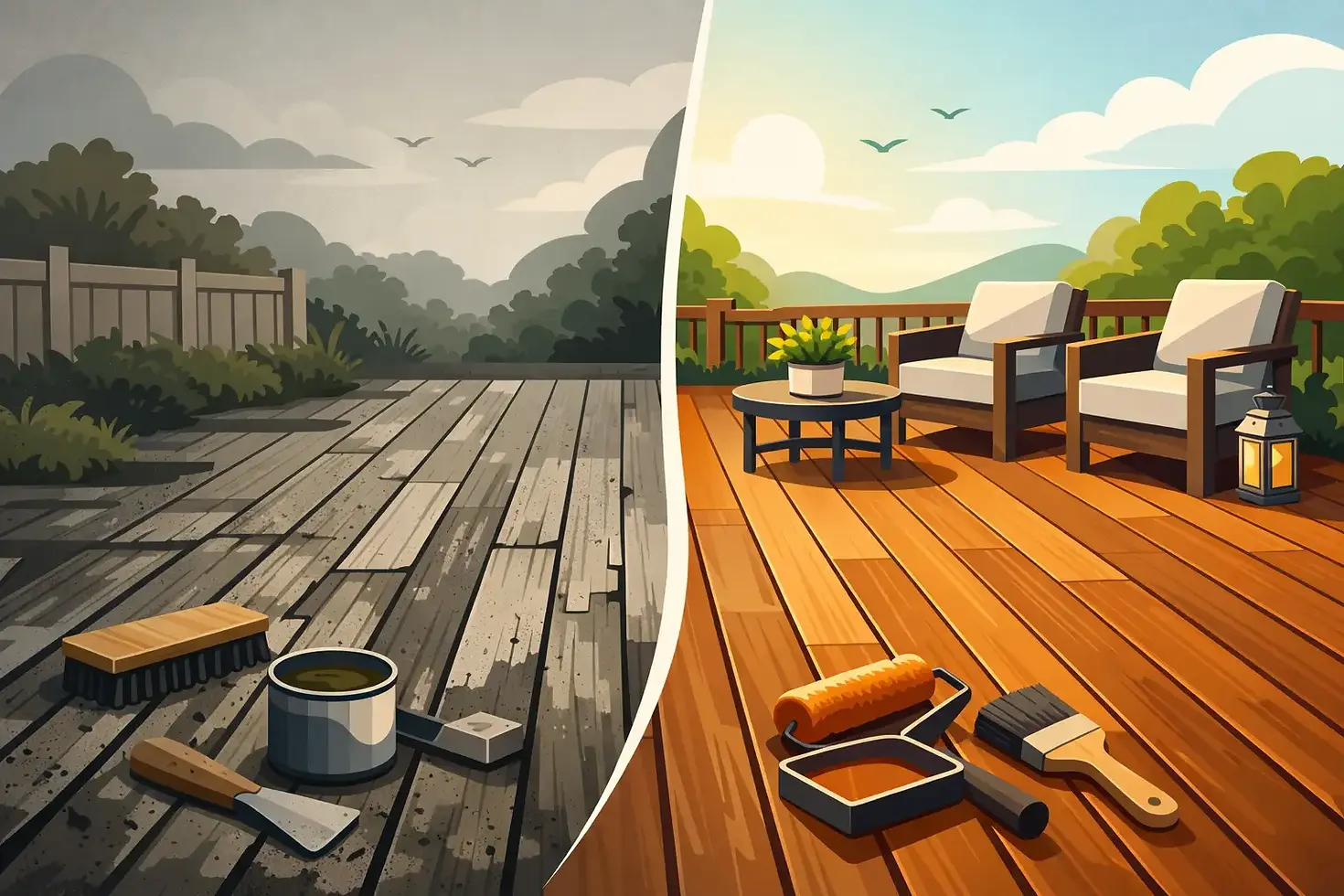
Weathered Cedar Deck Makeover That Lasts
A weathered cedar deck makeover is not a matter of covering gray boards with a fresh coat of stain. Cedar has a distinct grain, natural warmth, and a reputation for durability, but New Jersey rain, humidity, pollen, foot traffic, and winter freeze-thaw cycles can gradually wear down its defenses. Done carefully, restoration brings back the character homeowners loved when the deck was new while helping protect the structure beneath it.
For a deck that has become dull, rough, stained, or splintered, the right process begins with an honest look at the wood. That attention to detail is what separates lasting restoration from a quick cosmetic fix.
What Weathering Really Does to Cedar
Cedar weathers differently from painted lumber or composite decking. Sunlight breaks down the surface fibers and turns the wood silver-gray. Moisture can encourage mildew and dark staining, particularly in shaded areas or beneath planters and furniture. Dirt and airborne debris settle into the grain, making a once-rich deck look neglected even when the boards are still structurally sound.
The gray color itself is not always a sign that cedar has failed. In many cases, it is a surface condition that can be cleaned and renewed. The concern is what may be happening alongside it: raised grain, soft spots, loose fasteners, checking, rot around posts, or finish failure that allows repeated moisture intrusion.
A close inspection matters because a beautiful finish cannot correct damaged framing or decayed boards. Before choosing a color or treatment, a skilled deck professional checks the walking surface, railings, stairs, ledger area, posts, and connections. Homeowners deserve to know whether their deck needs restoration, targeted repairs, or more substantial rebuilding work.
The Right Start for a Weathered Cedar Deck Makeover
A quality makeover starts with surface preparation. This is where patience protects the wood.
Cleaning cedar requires control. Excessive water pressure can fur the grain, carve soft areas of the boards, and leave visible wand marks that become more noticeable after staining. Too little cleaning, however, leaves behind contaminants that interfere with finish adhesion. The goal is to remove dirt, mildew, old failing coatings, and surface discoloration without damaging the cedar underneath.
After an appropriate cleaning solution and measured washing process, the deck needs time to dry properly. This step is often rushed, especially when the weather looks favorable and a homeowner is eager to see progress. Yet applying stain or sealer to damp wood can trap moisture and shorten the life of the finish. Cedar should be dry enough to accept protection evenly, not simply dry to the touch.
Surface preparation may also include sanding. Sanding smooths raised fibers, softens splintered edges, and helps create a more even appearance. It is especially valuable on handrails, stair treads, and high-traffic sections where bare feet and children’s hands meet the wood. Not every deck needs aggressive sanding, and over-sanding can close the grain too much. The correct approach depends on the condition of the boards and the finish being applied.
Repairs Come Before the Finish
A new stain can make a deck look dramatically better, but appearance should never hide a safety concern. Loose railings, popped fasteners, unstable steps, and cracked boards deserve attention before any protective treatment is applied.
Cedar is naturally resistant to decay, but it is not invincible. Areas near the ground, locations where water pools, and boards that stay covered by rugs or furniture can deteriorate faster than the rest of the deck. Replacing isolated damaged boards before finishing helps maintain a consistent appearance and prevents small issues from becoming larger repair projects.
Fasteners deserve a second look as well. Old nails may back out, screws can corrode, and hardware may no longer hold as securely as it should. A deck restoration project is an opportunity to correct those details while access is clear. That is craftsmanship in practice: addressing what the eye sees and what a homeowner may not notice until it becomes a problem.
Choosing a Finish That Fits the Deck
Once cedar is clean, dry, smooth, and secure, the finish choice shapes both the appearance and maintenance schedule. There is no single right answer for every property.
A clear water-repellent treatment offers a natural look, but it provides limited UV protection. Cedar may continue to gray over time, which can be appealing to homeowners who prefer a weathered coastal appearance. A transparent or semi-transparent stain preserves more of the grain while adding color and better sun protection. It is often a strong choice for cedar because it celebrates the wood rather than hiding it.
Solid-color stains provide greater coverage and can create a more uniform look when boards have uneven color, prior stain remnants, or repairs. The trade-off is that solid finishes can conceal much of cedar’s natural grain and may require more preparation when it is time for future maintenance. Paint can be appropriate for certain rail components or previously painted surfaces, but a painted deck floor is not always the best choice for a cedar surface exposed to heavy traffic and standing moisture.
The deck’s exposure should guide the decision. A full-sun deck needs stronger UV defense. A shaded deck needs careful mildew control and a finish that handles damp conditions. Homes with mature trees may need more frequent cleaning because pollen, leaves, and sap can shorten the life of any coating. A dependable professional explains these trade-offs instead of treating every deck like the same job.
Color Should Work With the Home, Not Fight It
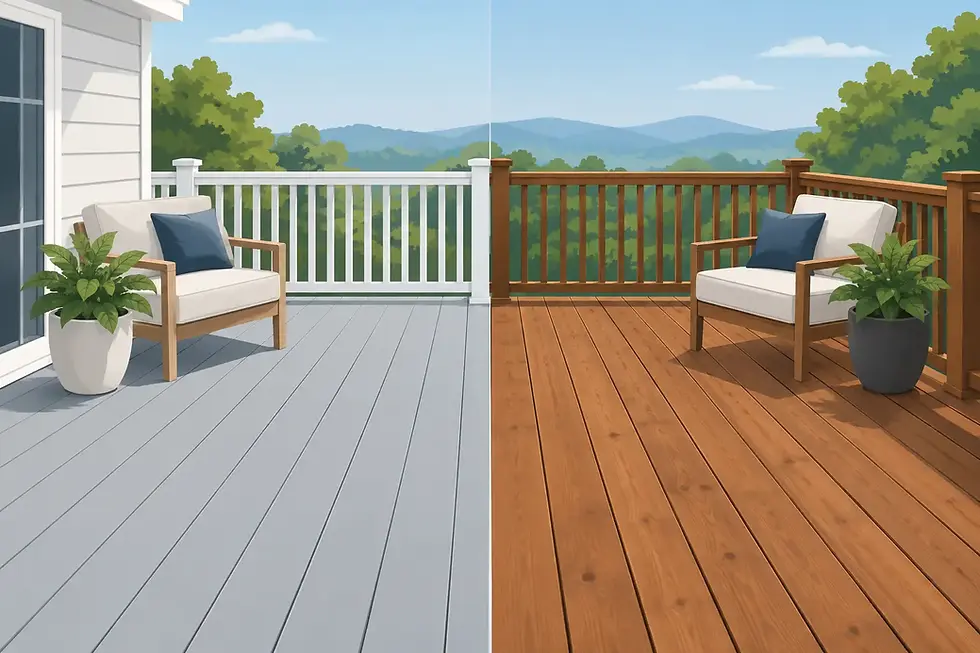
Cedar looks especially handsome when the stain color supports the home’s siding, trim, brick, or stone. Warm honey and cedar tones can brighten a traditional exterior. Medium brown shades can create a grounded, classic look. Richer brown or driftwood-inspired tones may help a deck feel more connected to mature landscaping.
Sample areas are useful because stain can look different in direct sun, shade, and evening light. The original color of the cedar, its age, and any remaining previous finish all influence the final result. A thoughtful test section prevents surprises and gives homeowners confidence before the full deck is completed.
Protecting the Work After Restoration
A restored cedar deck does not need constant attention, but it does benefit from regular care. Sweeping away leaves and debris helps prevent moisture from sitting on the surface. Moving planters and outdoor rugs from time to time allows the deck to dry evenly. Cleaning spills promptly, especially grease from grilling, helps preserve the finish and avoids deep stains.
Homeowners should also watch how water behaves on the boards. When water stops beading and begins soaking in readily, it may be time to plan maintenance. That does not always mean a complete restoration is needed. Depending on sun exposure, traffic, and the type of finish, a maintenance cleaning and recoat can often protect the deck before it reaches a heavily weathered state again.
For Hamilton-area homeowners, seasonal timing matters. Spring is excellent for identifying winter damage and getting outdoor spaces ready for use. Late summer and early fall can also be ideal when temperatures and drying conditions cooperate. The calendar matters less than the wood condition, weather forecast, and preparation process.
Restoration Is an Investment in the Space You Use
A cedar deck is where family dinners stretch into warm evenings, where guests gather, and where a home opens into the outdoors. When its surface is gray, rough, or worn, the entire backyard can feel less inviting. Restoring it thoughtfully improves curb appeal, comfort, and confidence in the condition of the structure.
Deck Wrangler Power Washing and Painting Co. brings 33 years of skill and attention to detail to exterior wood care in Hamilton and surrounding New Jersey communities. The work is approached as preservation, not a rushed cleaning appointment: inspect the wood, prepare it correctly, protect it with the right finish, and leave the space ready to be enjoyed.
Before another season puts more wear on aging cedar, take a close look at the boards underfoot. A well-planned restoration can preserve their natural elegance and give your outdoor space many more years of dependable use.

Comments