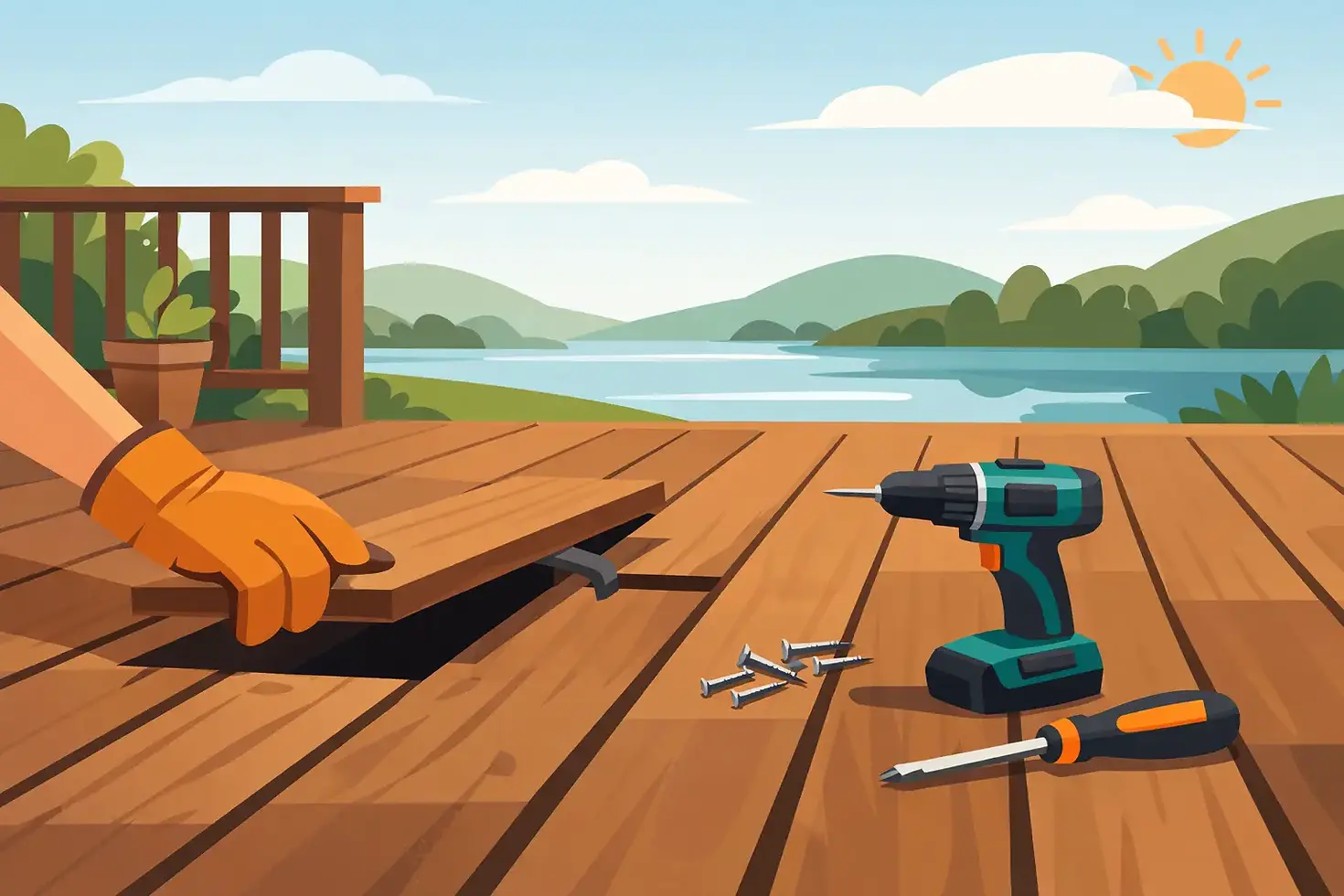
How to Repair Loose Deck Boards on Your Deck
A board that shifts underfoot can turn a relaxing afternoon on the deck into a safety concern. To repair loose deck boards properly, it helps to look beyond the fastener that has risen or the gap that suddenly seems wider. In New Jersey, changing seasons, moisture, sun exposure, and years of foot traffic all work on a deck little by little. The visible movement may be a simple repair, or it may be the first sign that the board, framing, or surface finish needs closer attention.
For homeowners, the goal is not merely to make a deck look orderly again. It is to restore a secure walking surface while protecting the character and long-term condition of an outdoor space that adds real value to the home.
Why Deck Boards Become Loose
Most loose boards begin with movement around the fasteners. Traditional nails can gradually lift as wood expands and contracts through humid summers and freezing winters. Screws can loosen when the wood fibers around them become worn, when the board cups, or when repeated use puts stress on the same area.
Water is often part of the story. A deck surface that holds moisture after rain can develop swelling, surface checking, rot, or soft spots. If water reaches the top of a joist or remains trapped beneath a board, the wood may lose its ability to hold a fastener securely. This is why a loose board near a stair landing, railing post, planter, or shaded area deserves special attention.
Sometimes the issue is not the board at all. Framing can shift as joists age, hardware corrodes, or support members deteriorate. A board that moves across a broad section of the deck, rather than at one isolated point, may indicate a problem below the surface. Covering that warning with a new screw is not a lasting repair.
How to Assess a Loose Deck Board Safely
Begin with a careful visual check on a dry day. Look for popped nail heads, missing screws, cracks near fasteners, dark staining, soft wood, splintering, and boards that sit higher or lower than the surrounding surface. Step lightly near the affected area. If the board flexes significantly, feels spongy, or produces a sharp cracking sound, avoid putting more weight on it until it has been assessed.
Pay attention to the pattern. One firm board with a single raised fastener may need a localized correction. Several loose boards in one area can point to moisture damage or failing joists. If boards are loose near a railing, steps, or the outer edge of the deck, the repair deserves added care because those locations are closely tied to safe movement and structural support.
A screwdriver can be useful for a basic surface check. Gently press the tip into suspicious dark or soft areas, especially around screw holes and board ends. Sound wood resists penetration. If the tool sinks in easily, the board may be decayed rather than simply loose.
Repair Loose Deck Boards When the Wood Is Still Sound
When a board is solid, straight enough to sit properly, and the framing beneath it is in good condition, replacing failed fasteners may be appropriate. The repair should use exterior-rated deck screws of sufficient length to securely engage the joist below. Screws made for outdoor use resist corrosion far better than ordinary interior fasteners, which can stain the wood and fail prematurely.
Before driving a new screw, the loose board should be pressed back into its proper position. A fastener installed while the board is lifted, cupped, or pulled away from the joist will not correct the underlying movement. In some cases, a pilot hole helps reduce splitting, particularly on dry, older boards or near the end grain.
Avoid simply driving a new screw directly beside a loose nail or screw without checking the existing hole. If the wood around the old fastener is enlarged or damaged, the new screw may have little holding power. Moving to a sound section of the board, while still fastening into the center of the joist, is often the better approach. The old failed fastener should be removed where practical, or set safely below the walking surface if it cannot be extracted without damaging the board.
Fasteners should sit flush with the deck surface, not buried deeply enough to create a pocket where water collects. Overdriven screws can weaken the board face and make a clean restoration finish more difficult later.
When a Board Should Be Replaced Instead
A board with rot, deep splits, severe cupping, widespread splintering, or repeated fastener failure should usually be replaced. Refastening compromised wood may make it feel stable for a short time, but it does not restore its strength. This is particularly true where a board has softened around multiple fasteners or where its underside has been exposed to prolonged moisture.
Replacement boards should be compatible with the existing deck in thickness, spacing, and material. A new board installed unevenly can create a trip edge or interfere with drainage. If the deck is due for cleaning, staining, painting, or protective treatment, replacing damaged boards before surface preparation helps produce a more uniform and durable result.
Do Not Ignore What Is Beneath the Boards
Deck surfaces receive the attention because they are what everyone sees and walks on. Yet the joists beneath them determine whether repairs will hold. Once a board is lifted or removed, inspect the joist top for rot, cracks, insect damage, and areas where the wood has become soft or darkened.
The end of a joist can appear sound while its upper surface has deteriorated beneath years of trapped moisture. Corroded joist hangers, loose ledger connections, and weakened framing require more than cosmetic attention. These conditions call for a qualified deck professional or contractor who can determine the proper scope of repair.
This is also where experience matters. A careful assessment distinguishes a board that needs a new fastener from a deck section that needs reconstruction. The difference affects safety, cost, and the quality of every restoration step that follows.
Cleaning and Finishing After Repairs
Repair work is an opportunity to consider the entire deck surface. Dirt, mildew, old failing coatings, and embedded grime can hold moisture against the wood and hide early signs of wear. Proper cleaning reveals the true condition of the boards and prepares the surface for a protective finish.
Pressure washing should be handled with care. Too much pressure, an incorrect tip, or working too closely to the wood can raise the grain, leave visible wand marks, and damage already weathered boards. A deck should be cleaned according to its material and condition, not treated like a driveway.
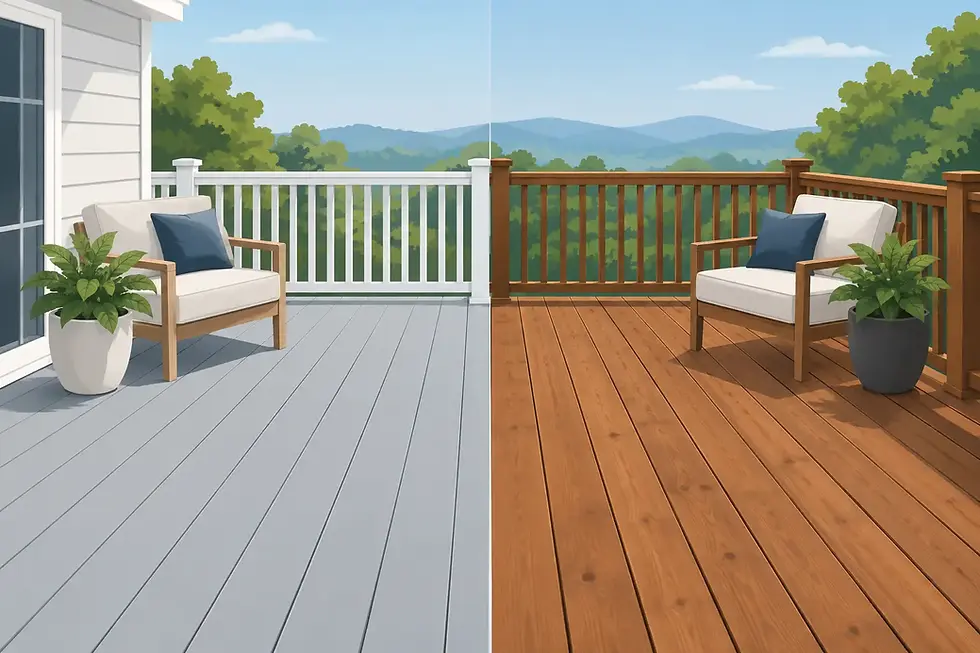
Once repairs are complete and the wood has dried properly, a suitable stain, paint, or protective treatment can help limit water intrusion and sun damage. The right product depends on whether the deck is bare wood, previously painted, stained, or showing widespread coating failure. Preparation remains the foundation. Even a premium finish cannot perform well over loose boards, failing paint, or damp wood.
When to Call a Deck Care Professional
Homeowners can often identify a raised screw or isolated board movement, but there are clear times to bring in experienced help. Professional evaluation is a wise choice when there are multiple loose boards, visible rot, spongy areas, recurring fastener problems, damaged railings, or signs that framing may be affected.
It is also worthwhile before a major cleaning or refinishing project. Repairing boards after new paint or stain has been applied can disrupt the finish and create mismatched areas. Addressing structural and surface concerns first allows the restoration process to move forward with precision.
For homeowners in Hamilton and surrounding New Jersey communities, Deck Wrangler Power Washing and Painting Co. approaches deck care as preservation work, not a quick surface fix. With 33 years of hands-on experience, the focus is on careful preparation, appropriate treatment, and details that support both beauty and dependable use.
A deck should feel solid under every step and look worthy of the time spent on it. Taking care of a loose board early protects that confidence, while a thoughtful inspection can keep a small repair from becoming a larger restoration later.

Comments