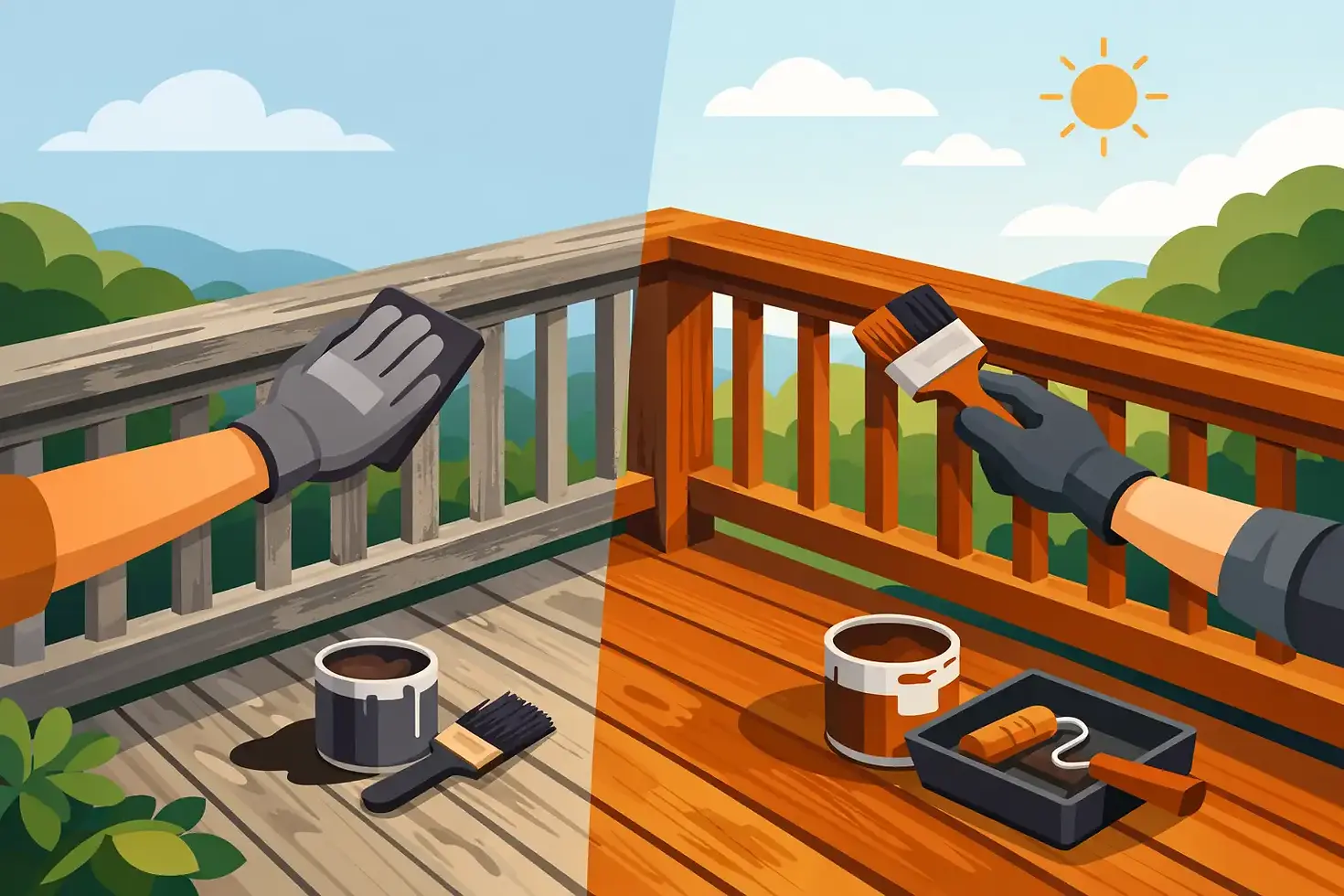
Wood Railing Restoration for a Better Deck
A deck railing can tell the story of every New Jersey season. Sunlight fades the finish, rain drives moisture into exposed grain, and winter freeze-thaw cycles widen small cracks that once seemed harmless. Wood railing restoration addresses more than a tired appearance. Done properly, it helps protect the handrails, balusters, posts, and connections that make an outdoor space feel safe, polished, and ready to enjoy.
For homeowners, the difference is often visible before the work begins. A railing may feel rough under the hand, show gray weathering around the top rail, or carry peeling stain where water has repeatedly settled. Those conditions deserve careful attention before cosmetic damage turns into more extensive wood deterioration.
Why Railings Need Different Care Than Deck Boards
Deck boards take the brunt of foot traffic, but railings face their own set of challenges. Their horizontal surfaces catch rain and hold pollen, leaves, and dirt. Their vertical pieces create narrow areas where debris collects, and the end grain around cut balusters or post caps can absorb water quickly.
A railing is also one of the first things guests touch. Splinters, flaking paint, loose sections, and mildew stains are not simply visual distractions. They can affect comfort and raise valid concerns about the condition of the deck itself.
The right restoration approach depends on the wood species, its age, the existing coating, and the cause of the damage. A faded railing with sound wood may only need thorough cleaning, surface preparation, and a fresh protective finish. A railing with soft spots, rot at the base of posts, or unstable connections may require repairs or replacement before any finishing work begins. Applying stain over compromised wood can make a problem less visible for a short time, but it does not correct it.
What Professional Wood Railing Restoration Involves
Quality work starts with an honest inspection. This is where experience matters. A seasoned deck care professional looks beyond surface discoloration to assess loose fasteners, cracked balusters, water-damaged post bottoms, deteriorated caps, and areas where a previous coating is failing.
Cleaning Without Damaging the Grain
Power washing can be valuable, but more pressure is not better. Excessive pressure can fur the wood, carve soft grain, or force water into places it should not go. The goal is to remove embedded dirt, organic growth, and failed finish residue while respecting the condition of the wood underneath.
Appropriate cleaning methods bring back the natural character of the railing without turning a restoration project into a repair project. For painted railings, careful washing also reveals whether the paint is merely dirty or truly losing adhesion.
Preparation Is Where Results Are Won
A beautiful finish depends on what happens before the first coat goes on. After cleaning, the railing needs adequate time to dry. Moisture trapped in wood can interfere with stain penetration and paint adhesion, especially in the humid conditions common across central New Jersey.
Preparation may include sanding rough fibers, smoothing weathered areas, removing loose coating, and addressing minor imperfections. Detail work around balusters, corners, and rail joints takes patience. These are the places where rushed work is most noticeable and where finish failure often begins.
Any repairs should come before the final coating. Loose hardware needs to be secured, damaged sections need appropriate attention, and any source of recurring water exposure should be considered. A new finish is only as dependable as the surface beneath it.
Choosing Paint, Stain, or Clear Protection
There is no single best finish for every wood railing. The right choice comes down to the look you want, the wood's condition, and the maintenance level you are prepared to keep up with.
Semi-transparent stain allows wood grain to remain visible and can be an excellent fit for railings with attractive, sound lumber. Solid-color stain provides more coverage and is often useful when weathering, old color variation, or prior coatings make a uniform appearance desirable. Paint can deliver a crisp, classic look, particularly on porch-style railings, but it requires disciplined preparation and ongoing inspection because peeling can develop where water finds an opening.
Clear sealers preserve a more natural appearance, though they generally offer less color protection from ultraviolet exposure than pigmented products. On rail tops that see direct afternoon sun, a lightly pigmented finish may hold up better than a clear one. This is a practical trade-off between the exact appearance homeowners prefer and the level of protection the railing needs.
Signs Your Railing Should Be Restored Soon
Not every mark calls for a full restoration, but waiting too long makes routine care more complicated. Watch for a finish that has worn thin on top rails, exposed gray wood, raised grain, mildew growth, cracked coating, or stains that return soon after cleaning.
More serious warning signs include movement when the railing is grasped, visible rot, soft wood, rusting fasteners, separated joints, or balusters that have cracked near their ends. These conditions should be evaluated before a family gathering or another season of regular deck use. Railings are safety features first, and attractive architectural details second.
Homeowners should also pay attention after a hard winter or prolonged wet weather. Water damage does not always announce itself dramatically. It can begin in a concealed joint, beneath a post cap, or where the railing meets the deck framing. Early attention is typically less disruptive and more cost-effective than waiting for widespread deterioration.
The Value of a Restoration Plan, Not a Quick Cover-Up
A quick coat of stain may improve color for a little while, but it rarely provides the lasting result property-conscious homeowners expect. Restoration is a sequence: inspect, clean, prepare, repair where necessary, allow proper drying time, and apply a suitable protective coating with close attention to coverage and detail.
Timing matters as well. Mild, dry conditions are generally favorable for exterior wood care, but a professional evaluates the forecast, surface moisture, and product requirements rather than working to a calendar alone. Rushing a finish ahead of rain or applying it to overheated wood can compromise the result.
This is also why local accountability matters. Homes in Hamilton and surrounding New Jersey communities face real seasonal swings, tree debris, humidity, and strong summer sun. A restoration plan should reflect how the railing is actually exposed, not rely on a one-size-fits-all method.
With 33 years of hands-on experience, Deck Wrangler Power Washing and Painting Co. approaches exterior woodwork with the care of a skilled trade, combining appropriate cleaning technology with meticulous surface preparation. The objective is not simply to make a railing look newly coated. It is to preserve the character, safety, and service life of a part of the home people use every day.
Maintaining a Restored Wood Railing
Once the railing has been restored, regular observation goes a long way. Sweep away trapped leaves and pollen, especially from rail corners and post caps. Clean bird droppings, spills, and mildew promptly with an appropriate gentle method. Avoid leaning planters or wet objects against the railing where they can hold moisture against the finish.
An annual visual check is worthwhile. Look closely at horizontal rails, end grain, cut edges, and areas near steps or gates, since these are common points of wear. If a small area begins to fail, timely touch-up can often prevent a larger refinishing project.
The maintenance interval will vary. A shaded railing may develop organic growth sooner, while a sun-exposed railing may fade and dry out faster. Painted surfaces can remain attractive for years when preparation and drainage are sound, while transparent stains may need more frequent renewal to retain their protective performance. The goal is to respond to actual wear, not wait for the entire railing to look neglected.
A well-kept railing changes how a deck feels before anyone steps onto it. It offers a clean line, a confident handhold, and a clear sign that the home has been cared for with intention. When weathering starts to show, addressing it with skilled restoration is a practical way to protect both the outdoor space and the years of enjoyment still ahead.

Comments