
Signs Your Deck Needs Refinishing This Season
A deck rarely fails all at once. More often, it sends small warnings: a faded path where chairs sit, a rough board that catches bare feet, or rainwater that no longer beads on the surface. Knowing the signs your deck needs refinishing gives you a chance to restore its protection before ordinary New Jersey weather turns surface wear into a more expensive repair.
For homeowners in Hamilton and the surrounding area, a deck has to stand up to humid summers, winter moisture, direct sun, pollen, and regular family use. A quality refinishing project does more than improve color. Proper cleaning, preparation, and protective treatment help preserve the wood beneath the finish so your outdoor space remains safe, attractive, and ready to enjoy.
Fading or Uneven Color Is Often the First Warning
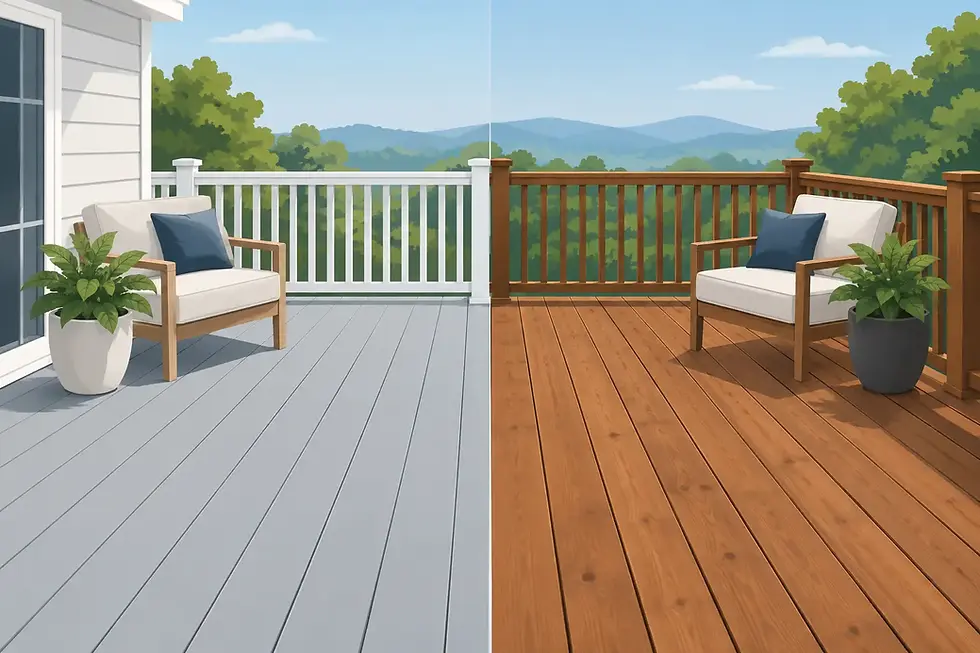
Wood that once had a rich, even tone can begin to look pale, gray, or blotchy as its protective coating breaks down. Sunlight is usually the main cause, especially on open decks with southern or western exposure. You may notice that covered areas remain darker while exposed boards have lost their color.
Fading alone does not always mean the deck is damaged. It does mean the finish is no longer providing the same level of UV protection it once did. Waiting too long allows the wood fibers to dry out and weather, making the eventual restoration more involved. Refinishing at this stage can often renew the appearance while protecting sound boards from further exposure.
Water Soaks In Instead of Beading Up
A simple water test can reveal a great deal about your deck's condition. Sprinkle a small amount of water on several clean areas of the boards. When a finish is still doing its job, the water should bead or sit on the surface for a while. If it darkens the wood and absorbs quickly, the protective barrier has likely worn away.
This is one of the clearest signs your deck needs refinishing because moisture is wood's persistent enemy. Repeated absorption can contribute to swelling, shrinking, checking, mildew growth, and gradual deterioration. It does not mean every wet board is beyond saving, but it does mean the deck should be evaluated before another season of rain and snow has its say.
Splinters, Rough Grain, and Raised Fibers Need Attention
If your deck feels rougher underfoot than it used to, look closely at the grain. Weathered wood can develop raised fibers and small splinters as moisture and sunlight wear away the surface. This often appears first on stair treads, handrails, and the boards that receive the heaviest foot traffic.
A few isolated splinters may be corrected during routine maintenance. Widespread roughness, however, points to a finish that has worn thin or failed. A careful restoration process addresses cleaning and surface preparation before a new protective treatment is applied. Covering rough, weathered wood with a new coating without adequate preparation can leave the finished deck looking uneven and may shorten the life of the work.
Peeling, Flaking, or Cracking Finish Is Not Just Cosmetic
Paint and solid-color coatings can peel when they lose their bond with the wood. Transparent and semi-transparent stains may not peel in the same way, but they can wear away in patches, crack, or leave bare areas exposed. These changes are especially common on horizontal surfaces, where sun, standing water, and foot traffic are most demanding.
It is tempting to coat over peeling areas and hope for the best. That shortcut usually creates a patchwork result and can trap an unstable layer beneath the new finish. The failed coating needs to be assessed, removed or properly prepared where necessary, and matched with a suitable product for the deck's current condition. The right approach depends on what is already on the wood and how much of it has failed.
Dark Stains and Mildew Can Signal Trapped Moisture
Not every dark mark is a structural problem. Leaves, pollen, grill residue, and ordinary outdoor dirt can discolor a deck and may come off with professional cleaning. But persistent black, green, or dark gray staining can point to mildew, algae, or moisture that is lingering where it should not.
Pay close attention to shaded sections, boards beneath planters, areas near downspouts, and spaces where furniture prevents the surface from drying. Cleaning restores a fresher appearance, but the underlying cause matters just as much. Improving drainage, allowing air to circulate, and restoring the deck's protective finish can help prevent the same stains from returning quickly.
Board Ends, Railings, and Stairs Are Wearing Faster
Decks do not weather evenly. Board ends readily absorb moisture, while railings and top caps receive plenty of sun and rain. Stairs can show premature wear simply because they carry more daily traffic. When these areas appear noticeably more faded, rough, or stained than the rest of the deck, they deserve attention even if the main deck surface still looks acceptable.
Targeted maintenance can sometimes extend the life of a finish when the problem is caught early. But if high-wear areas are bare and weathered, a complete refinishing plan generally creates a more durable and consistent result. The goal is not merely to make those spots look better for a few weeks. It is to give the entire deck a sound, even layer of protection.
Fasteners Are Exposed and Boards Are Beginning to Check
As wood loses moisture and protection, small cracks known as checks can form along the grain. Minor checking is common in exterior wood and does not automatically mean replacement is needed. Still, widespread checks, exposed nail or screw heads, and boards that are starting to split should be inspected before refinishing begins.
A new finish cannot repair loose boards, decayed framing, or deteriorated steps. Any compromised materials should be corrected first, then the deck can be cleaned, prepared, and protected properly. This is where experienced craftsmanship matters. A responsible contractor distinguishes between a deck that needs renewal and one that requires repair work before a finish can perform as intended.
The Deck Looks Tired Soon After Cleaning
A thorough cleaning can remove surface dirt and brighten a weathered deck, but it cannot replace missing protection. If your deck looks refreshed immediately after washing and dull again a short time later, the wood may be clean but still unsealed.
Pressure alone is not a cure-all. Used incorrectly, it can scar wood fibers or force water where it does not belong. The best results come from choosing cleaning methods that suit the material and condition of the deck, followed by deliberate surface preparation and a protective coating designed for exterior exposure. That combination respects the wood rather than treating the job as a quick cosmetic wash.
When Refinishing Is the Right Choice - and When It Is Not
Refinishing is often a wise investment when boards are structurally sound but the surface has faded, dried out, stained, or lost water resistance. It can restore the deck's visual character and help slow the cycle of weather-related damage. The exact timing depends on the deck's exposure, the previous coating, the type of wood, and how the space is used.
However, refinishing is not the answer for active rot, extensive insect damage, unstable railings, or severely split and soft boards. Those conditions call for repair or replacement before cosmetic restoration. An honest assessment protects both your home and your budget.
With 33 years of skill and attention to detail, Deck Wrangler approaches deck care as preservation work, not a one-size-fits-all cleaning task. If your deck is beginning to show these warning signs, addressing them while the wood is still sound can help preserve a comfortable, polished outdoor space for many seasons to come.

Comments